The mother of Alexei Navalny, the late Russian opposition figure, has stated that the recent confirmation of poisoning as the cause of her son's death validates her long-held belief that he was, in fact, murdered. This somber declaration comes on the second anniversary of Navalny's death, a day marked by remembrance and renewed accusations against the Russian state.
Navalny's Poisoning: Mom's SHOCKING Claim! Was Thi...
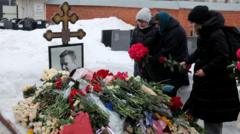
Lyudmila Navalnaya visited her son's grave in Moscow on Monday, telling reporters, "This confirms what we knew from the very beginning. We knew that our son did not simply die in prison, he was murdered." Her words echo the sentiments of many who have long suspected foul play in Navalny's sudden demise in a Siberian penal colony.
The accusations gained further weight with a joint statement released on Saturday by the UK and its European allies. The statement alleges that Navalny was killed using a sophisticated poison derived from dart frog toxins. Crucially, the statement pointed fingers directly at the Kremlin, asserting that "only the Russian state had the means, motive and opportunity to deploy this lethal toxin." This is a significant escalation, officially implicating the Russian government in Navalny's death.
Predictably, the Kremlin has vehemently denied any involvement. Dmitry Peskov, the Kremlin spokesman, dismissed the accusations as "biased and unfounded," stating, "Of course, we do not accept such accusations. We disagree with them… and, in fact, we resolutely reject them." It's the standard response, of course, but it does little to quell the swirling suspicions.
Navalny's widow, Yulia Navalnaya, also commemorated the anniversary, posting a message on social media vowing to achieve "truth and… justice." She's been a fierce advocate for her husband's legacy, and has previously claimed that independent lab analysis of smuggled biological samples confirmed the "murder." She even challenged the labs to release their findings publicly. The Kremlin, notably, remained silent on her previous statements.
Despite the government's silence and the dangers of dissent, dozens of Muscovites, along with several foreign diplomats, braved the cold to pay their respects at Borisovskoye cemetery. Flowers piled high on Navalny's grave, a testament to his enduring influence. One note left at the site read simply: "Alexei, we remember you every day." It's a powerful reminder that even in the face of oppression, Navalny's message of hope and resistance continues to resonate.
Navalny, who was only 47 at the time of his death, was serving a lengthy 19-year sentence on charges of "extremism," widely seen as politically motivated. He rose to prominence as a charismatic and fearless critic of President Vladimir Putin, galvanizing widespread anti-corruption protests. His death, and the circumstances surrounding it, have only solidified his image as a martyr for democracy in Russia. His political organization has been dismantled, and many of his associates have either been jailed or fled the country. The opposition in exile, including Yulia Navalnaya, faces immense challenges and struggles to maintain a united front. The fight for justice for Alexei Navalny, it seems, is far from over.
Comments
Please sign in with Google to post a comment
No comments yet. Be the first to comment!