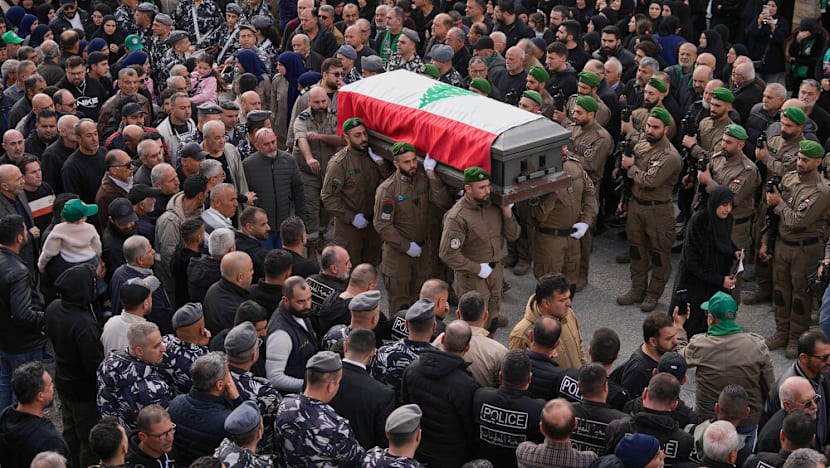
BEIRUT – Tensions in the always-volatile Lebanese-Israeli border region flared again this weekend, with an Israeli strike near the Syrian border reportedly killing four people on Sunday. Lebanese officials confirmed the deaths, while the Israeli military has taken responsibility, claiming it targeted operatives from Palestinian Islamic Jihad.
Lebanon Reels: 4 Dead in Strike – Will This Spark ...
Now, it’s worth remembering that a truce was supposed to have halted hostilities between Israel and Hezbollah back in November. We're talking about over a year of back and forth, constant skirmishes and strikes. Since that agreement, Israel has largely focused its strikes on Hezbollah, the Iran-backed militant group that holds significant sway in southern Lebanon. Occasionally, they've also hit Hamas, another Palestinian group allied with Hezbollah.
What’s particularly significant about this latest incident is that it appears to be the first time Israel has openly admitted to targeting Islamic Jihad in Lebanon since that ceasefire came into effect. This represents a potential escalation, or at least a broadening, of the conflict. It also indicates that Israel views Islamic Jihad as an ongoing threat emanating from Lebanese territory, a perception that will likely be disputed by various factions within Lebanon.
According to Lebanon’s state-run National News Agency, the strike involved an Israeli drone targeting a car near the Lebanese-Syrian border. They reported that "four bodies" were recovered from the vehicle. The Lebanese Health Ministry subsequently confirmed the death toll. The Israeli military, for their part, released a statement saying they "struck Palestinian Islamic Jihad terrorists in the Majdal Anjar area." Majdal Anjar is a Lebanese town in the Bekaa Valley, close to the Syrian border.
Islamic Jihad has been involved in the fighting between Israel and Hezbollah, which initially erupted following the outbreak of the Gaza war in October of last year. Both Islamic Jihad and Hamas have claimed responsibility for attacks and infiltration attempts from Lebanese territory during that period. The big question now is whether this latest strike will provoke a response. While the ceasefire has largely held, incidents like this could easily trigger renewed escalation.
It's also important to keep in mind the broader context. Since the ceasefire in November, Israeli fire has reportedly killed over 370 people in Lebanon, according to an AFP tally of health ministry reports. And, as we reported earlier this year, the Lebanese army has been working to disarm Hezbollah in the border area, as stipulated in the 2024 truce. Separately, some Palestinian factions have handed over weapons to Lebanese authorities. However, Hamas and Islamic Jihad have so far resisted disarming in Lebanon, further complicating the situation.
Comments
Please sign in with Google to post a comment
No comments yet. Be the first to comment!