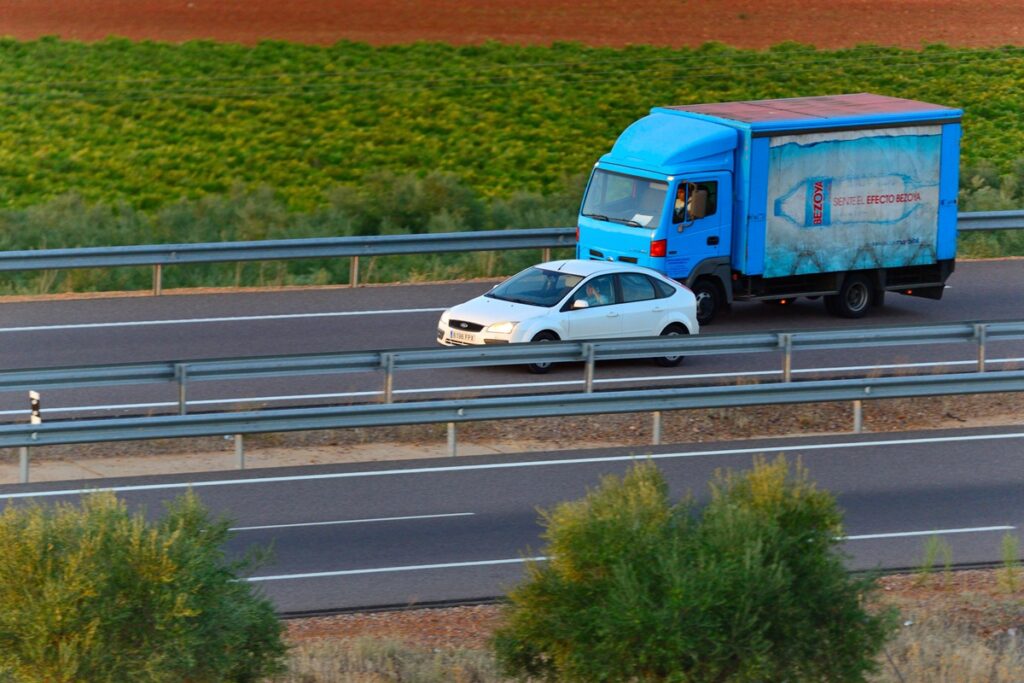
Spain is getting ready to shake up its overtaking rules, and if you’re planning a road trip there in the next few years, you’ll want to pay attention. The Directorate-General for Traffic (DGT), Spain’s version of the DMV, is planning some pretty significant changes to how you pass other vehicles, with an expected implementation date sometime in 2026. So, while there's still some time to prepare, now’s a good moment to get informed.
Spain's 2026 Driving Rules: Will YOUR Trip Be Ruin...
These aren't just minor tweaks either. We're talking about fundamental shifts in overtaking procedures, especially during bad weather and when dealing with stationary vehicles or cyclists. The DGT's rationale? Simple: to make the roads safer by tackling foreseeable hazards.
Let’s start with winter driving. Imagine a blizzard. Chaos, right? The DGT wants to avoid scenes where cars attempting to overtake get stuck across multiple lanes, blocking snowplows and emergency vehicles. Their solution, detailed in a planned revision to Article 31 of the General Traffic Regulations, is to essentially keep one lane clear on motorways and dual carriageways during heavy snow or ice. It's not a blanket ban for every snowflake, mind you, but a specific measure for severe weather events. Having been stuck in a few winter driving situations myself, I can see the logic – clearing a path for emergency services can be a matter of life and death.
Now, let’s talk about cyclists and stationary vehicles. Currently, drivers are supposed to be cautious and keep a safe distance when overtaking them. That’s all well and good, but the new rules would add teeth to that advice. Think of it like this: on a typical road with a 90 km/h (around 55 mph) speed limit, you might not be able to overtake a cyclist or stopped vehicle at more than 70 km/h (about 43 mph). And if it's safe, you might even be allowed to use the oncoming lane to pass. It's turning good advice into something enforceable, which, frankly, makes sense.
According to the DGT, these changes are all about reducing risk where it's predictable. Blocked lanes during snowstorms, risky high-speed overtakes near cyclists – these are known problems. The authorities are just trying to get ahead of them. Some drivers might grumble about restrictions, but the DGT views it as a preventative measure, not a punishment.
The final details are still being hammered out in a Royal Decree by the Ministry of the Interior and the DGT. While an initial rollout was hoped for in late 2025, it's now looking more likely for 2026. Once it’s published in the official state bulletin (the Boletín Oficial del Estado, or BOE), the new regulations will be the law of the land. So, brush up on your Spanish road rules, and get ready to adjust your driving habits accordingly. It's all about keeping everyone safe on the roads.
Comments
Please sign in with Google to post a comment
No comments yet. Be the first to comment!