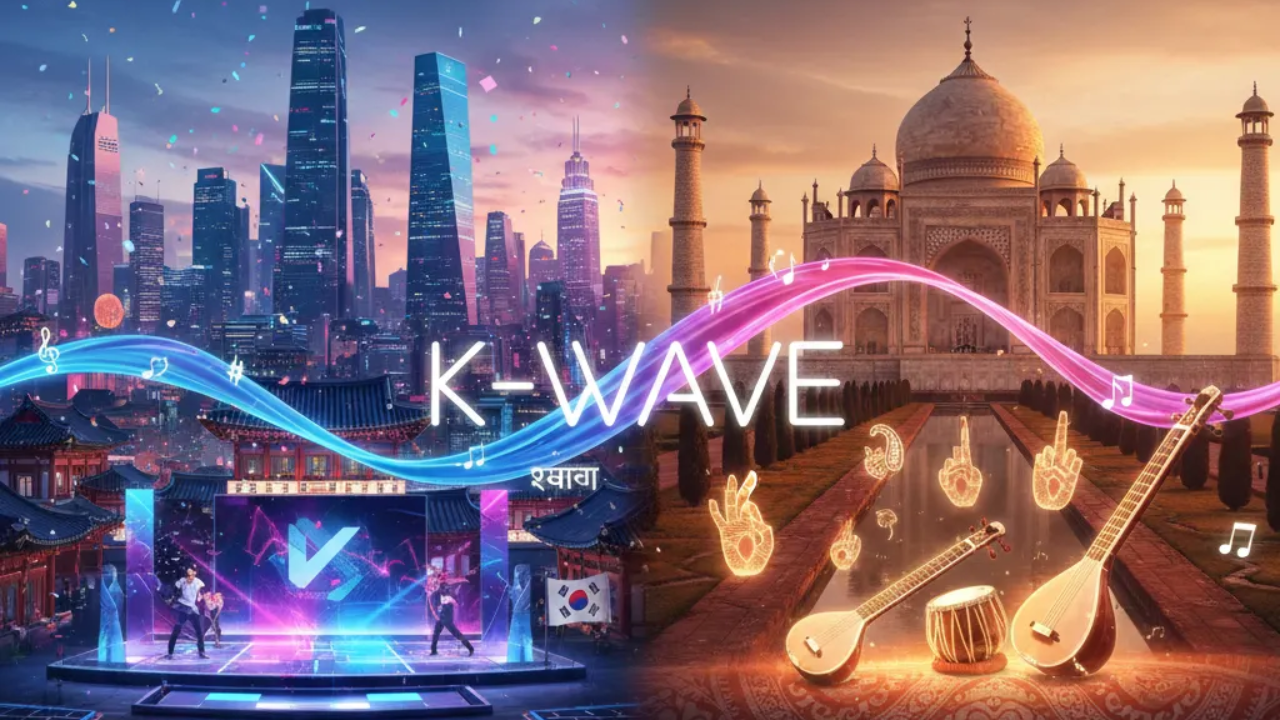
South Korea's "Korean Wave," or 'Hallyu', has moved beyond a niche phenomenon, transforming into a mainstream cultural force, not just in India, but across the globe. Fueled by the catchy beats of K-pop, the compelling narratives of K-dramas, and a whole suite of lifestyle trends, this surge of soft power, strategically backed by state policy and amplified by digital access, is reshaping consumption habits and aspirations throughout the nation. It's quite the example of how a country can exert influence without firing a single shot.
K-Wave Invasion: India Hooked, But a Dark Secret E...
For many Indians, it all started with a single, unforgettable song. I remember when Psy's "Gangnam Style" exploded back in 2012. Suddenly, it was everywhere – weddings, college festivals, even blasting from street performers' speakers. That ridiculous horse-riding dance quickly became a universal symbol for going viral. While some initially dismissed it as a fleeting novelty, it unknowingly marked a turning point.
Now, more than a decade later, K-culture is making waves again, but this time with a darker edge. The tragic story of the three sisters in Ghaziabad, who took their own lives, has dominated headlines, with grim details emerging about their shared obsession: Korean dramas, films, and pop culture. For millions in India, this heartbreaking event serves as a stark introduction to the powerful, yet sometimes overwhelming, influence of South Korea's soft power.
South Korea has evolved. It's no longer just a distant East Asian country known primarily for electronics and cars. Now, you can find it in Indian kitchens in the form of instant ramen and kimchi, in beauty stores with intricate multi-step skincare routines, and in streaming platforms with Korean dramas and playlists headlined by K-pop groups. Cafes in cities like Delhi, Mumbai, and Bengaluru are now serving up tteokbokki and kimchi pancakes alongside the usual pizza and pasta. Even bookstores are stocking Korean fiction in translation. For a growing number of India's urban youth, South Korea isn't just a country; it's an aesthetic, an aspiration, and a daily consumption choice.
The rise of Hallyu in India is far from accidental. It's a carefully orchestrated blend of culture, commerce, and government policy. For India, the Korean Wave offers both a successful model for cultural diplomacy and a compelling case study on how global influence can spread in the modern age – through our screens, social media, and the power of aspiration. But it's also a reminder of the potential downsides when that influence becomes too consuming, too all-encompassing, as sadly illustrated by the tragedy in Ghaziabad.
Comments
Please sign in with Google to post a comment
No comments yet. Be the first to comment!