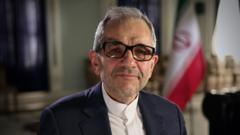
Iran is signaling a potential shift in its stance on the nuclear deal, offering a glimmer of hope in the otherwise tense international standoff. Deputy Foreign Minister Majid Takht-Ravanchi, speaking to the BBC in Tehran, indicated that Iran is willing to consider compromises to revive the agreement. However, he emphasized that the onus is on the United States to demonstrate its commitment by addressing sanctions relief. It seems like a pretty significant step, if you ask me, from the hardline rhetoric we've been hearing for so long.
Iran Nuclear Deal: Shocking Compromise?! What Happ...
Takht-Ravanchi's comments come at a critical juncture, especially given the repeated claims from US officials that Iran is the main roadblock in these long and drawn-out negotiations. Even Senator Marco Rubio, not exactly known for his dovish views on Iran, acknowledged the difficulty in reaching a deal, despite President Trump's apparent desire for one. So, the pressure is on both sides, really.
Countering the US narrative, Takht-Ravanchi stated firmly that the "ball is in America's court to prove that they want to do a deal." He went on to say, "If they are sincere, I'm sure we will be on the road to an agreement." It's a challenge laid down, plain and simple. Trump's past threats of military action if a deal remains elusive and the US military buildup in the region add another layer of complexity to this situation.
Indirect talks between the US and Iran, held in Oman earlier this month, seem to have laid some groundwork. Takht-Ravanchi confirmed that a second round is scheduled for Geneva. He described the initial discussions as "more or less in a positive direction but it is too early to judge." Trump himself has also characterized the talks positively, which is encouraging, I guess.
Highlighting Iran's willingness to compromise, Takht-Ravanchi pointed to Tehran's offer to dilute its 60%-enriched uranium. This is crucial because that enrichment level is getting dangerously close to weapons-grade, fueling suspicions, rightly or wrongly, that Iran is pursuing nuclear weapons. Tehran, of course, consistently denies these allegations.
When asked about shipping Iran's stockpile of highly enriched uranium out of the country, as they did under the 2015 deal, Takht-Ravanchi was more cautious, saying "it was too early to say what will happen in the course of negotiations." Russia has offered to take the material again, as they did previously. Other ideas, like temporarily suspending nuclear enrichment, have also been floated.
A key demand from Iran is that the talks focus solely on the nuclear issue. "Our understanding is that they have come to the conclusion that if you want to have a deal you have to focus on the nuclear issue," Takht-Ravanchi stated. This would be a win for Iran, which has seen Washington's demands for zero enrichment as a major hurdle. However, he also stated that the "issue of zero enrichment is not an issue anymore and as far as Iran is concerned, it is not on the table anymore," which contradicts Trump's stance. It's going to be interesting to see how this all shakes out. One thing's for sure, this story is far from over.
Comments
Please sign in with Google to post a comment
No comments yet. Be the first to comment!