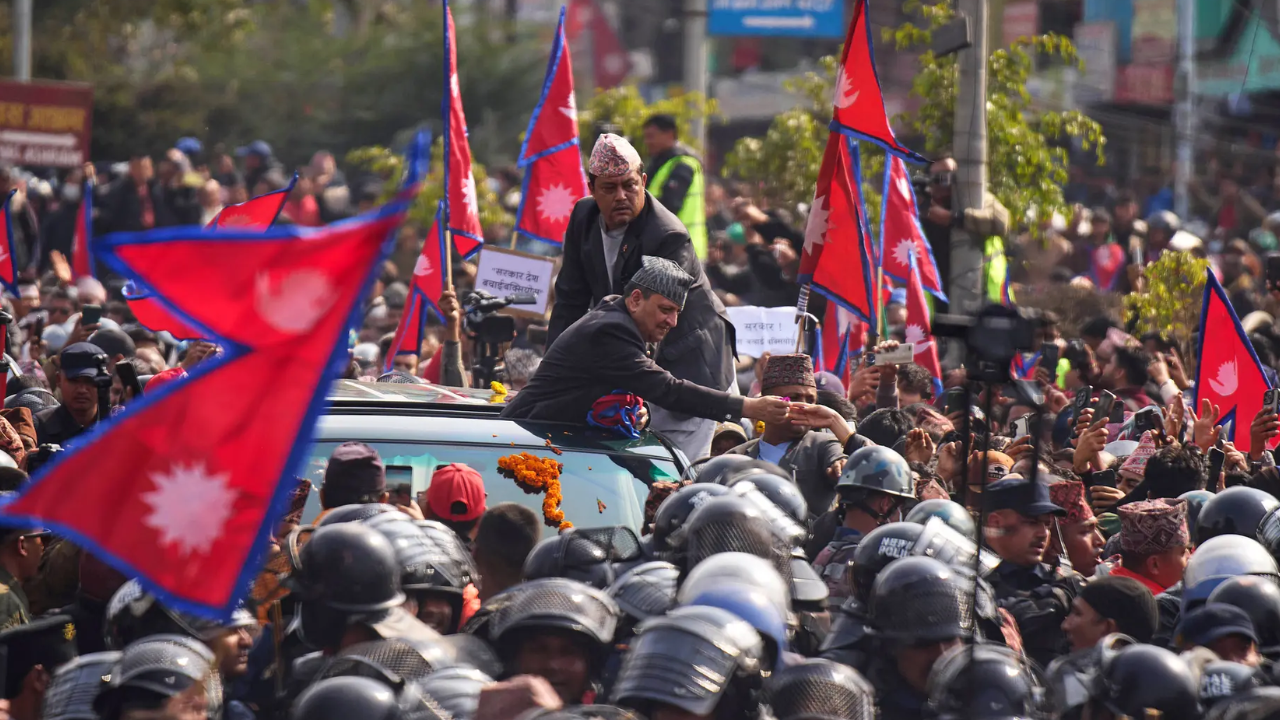
‘Bring back the king!’ That was the cry echoing through Kathmandu this past Friday as thousands of supporters greeted Nepal's former King Gyanendra Shah at Tribhuvan International Airport. The scene, frankly, was remarkable. After nearly two decades since the monarchy's abolition, the sheer number of people clamoring for its return was a sight to behold.
Nepal's Monarchy: Is the King REALLY Coming Back?!
Gyanendra, returning from a trip to eastern Nepal, seemed to relish the moment. Waving from his car’s sunroof, he acknowledged the cheering crowds while hundreds of police, decked out in riot gear, struggled to maintain order. The chants were consistent and fervent: "Bring back the king! We love our king more than our own selves! Restore constitutional monarchy!" It was clear these weren't just casual onlookers; they were deeply invested in their cause.
The support didn't end at the airport. As Gyanendra made his way to his private residence, more supporters lined the route, offering flowers and waving the national flag. The atmosphere, thankfully, remained peaceful, and authorities reported no arrests. Still, you could feel the underlying tension. The demonstrators weren't just celebrating a homecoming; they were making a statement.
The sentiment driving this resurgence of monarchist fervor seems rooted in disillusionment with the current political landscape. "We must restore the monarchy because the king can be a caring guardian of all Nepali people, something many corrupt political leaders have failed to do," Sanatan Prasad Regmi, a 55-year-old supporter, told reporters at the scene. "We have no use for a republic." It's a powerful statement, reflecting a growing sense that the promises of the new republic haven't been fully realized.
What's particularly interesting is that this rally occurred despite prohibitory orders issued by the Kathmandu District Administration Office, effectively banning gatherings of more than five people in the airport area. The heavy security presence was a clear indication that authorities were taking the situation seriously. It begs the question: How did so many people manage to gather despite the restrictions?
The pro-monarchist Rastriya Prajatantra Party, led by Kamal Thapa, played a significant role in mobilizing supporters. They were joined by other loyalist groups, including those led by Navaraj Subedi and Durga Prasai. It's a coalition of forces, united by a common goal: the restoration of the monarchy. It's hard to say if this is a fleeting moment of nostalgia or the beginning of a genuine movement. But one thing is certain: the call for the king is growing louder in Nepal, and it's a development worth watching closely. After all, Nepal abolished the monarchy in 2008 following mass protests which forced the last King to relinquish his power. Now, the wheel may be turning again.
Comments
Please sign in with Google to post a comment
No comments yet. Be the first to comment!