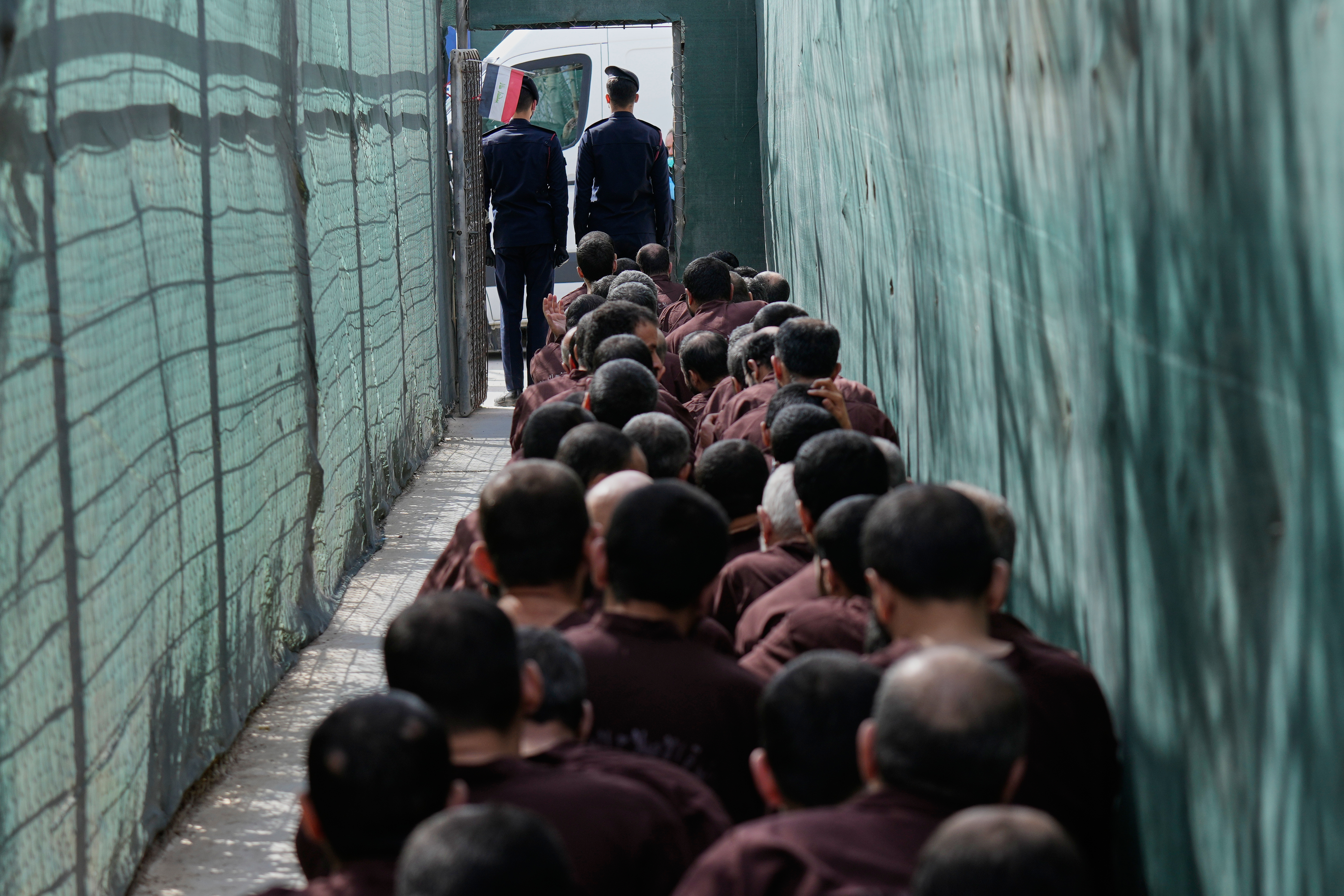
Canadians accused of being members of ISIS are now facing a new legal reality. At least five of them have been moved from prisons in war-torn Syria to Iraq, where they will face trial, a government official confirmed late last week. This development raises serious questions about justice, accountability, and what responsibility, if any, Canada has to these individuals.
ISIS Canadians Moved to Iraqi Prisons: What Happen...
These Canadians are just a few of the thousands of suspected ISIS members who are now under Iraqi jurisdiction. According to Iraq's judiciary, the total number of detainees stands at over 5,700, representing citizens from a staggering 61 different countries. While Syrians understandably make up the largest group, Canada finds itself on a list of "most prominent foreign nationalities" alongside countries like Germany, Russia, and the UK, according to the National Center for International Judicial Cooperation. It's a stark reminder that the reach of ISIS was truly global.
Interestingly, the official statement didn't specify the exact number of Canadians transferred, nor did it name any individuals. Global Affairs Canada has issued a somewhat vague statement saying they are "monitoring the situation," which, frankly, doesn't tell us much. However, Global News has previously identified at least five Canadian men who were being held in Syria. This includes a man from Mississauga, Ontario, who admitted to working as an ISIS sniper. Hard to imagine something like that happening so close to home. It's chilling.
Back in 2022 and 2023, the Canadian government did repatriate some women and children who were also being held in Syria. However, the men were left behind in the custody of Kurdish forces in northeast Syria. This region, controlled by the U.S.-backed Syrian Democratic Forces, was becoming increasingly volatile, with Syrian government forces and other jihadist groups making advances.
Consequently, last month, the United States orchestrated the transfer of these detainees to Iraq. This operation, which concluded last Thursday, saw nearly 6,000 ISIS suspects moved across the border and into Iraqi prisons. The Iraqi Supreme Judicial Council has declared it will investigate and try all detainees, regardless of their nationality or their role within ISIS. They are asserting jurisdiction over everyone.
Iraq has been vocal in urging other countries to repatriate their citizens, expressing frustration that some nations are seemingly refusing to do so. Even U.S. Secretary of State Marco Rubio has weighed in, urging all countries to "take responsibility and repatriate their citizens... to face justice." One of the Canadians now in Iraq is Muhammad Ali, who allegedly used social media to incite terrorist attacks in Canada. He admitted to being part of an ISIS sniper team in a 2018 interview.
It’s a complex situation, to say the least. Iraq has already prosecuted tens of thousands of suspected ISIS members, but these trials have been heavily criticized by human rights organizations. Groups like Human Rights Watch allege that the Iraqi justice system relies on confessions obtained through torture, a deeply troubling accusation that casts a shadow over the entire process.
Comments
Please sign in with Google to post a comment
No comments yet. Be the first to comment!