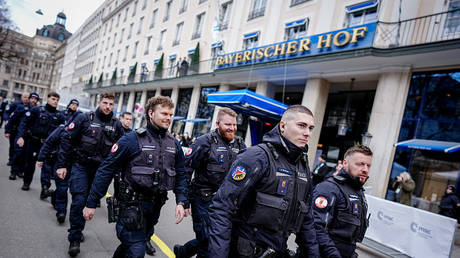
Munich, Germany - The annual Munich Security Conference has kicked off, and it's shaping up to be a real showdown. This year, the usual suspects – Russia's influence and ongoing aggression – are sharing the stage with a new, or rather, returning concern: the shadow of Donald Trump and the broader surge of populism. It feels like the old guard of the "rules-based international order" is gathering its forces for what could be its last stand.
Munich Showdown: Is This the End of the Liberal Or...
The conference, a fixture on the global security calendar, is drawing together a who's who of Western leaders, all seemingly united in their desire to shore up the established order. However, beneath the surface, there are clearly cracks appearing. The conference organizers are certainly keen to paint a picture of unity, but the reality, as always, is far more complex.
German Chancellor Friedrich Merz is set to deliver a keynote, and it will be interesting to see what he proposes. He's been pushing hard for the EU to loosen regulations to help Germany's struggling economy and, crucially, its rearmament efforts. Meanwhile, EU foreign affairs chief Kaja Kallas is leading a panel on the future of the international order. The irony isn't lost on anyone that France and Italy are reportedly maneuvering to sideline her in any potential future negotiations with Russia. It's a messy situation, to put it mildly.
Adding another layer of intrigue, Moldovan President Maia Sandu will participate in a panel on "hybrid warfare," just as allegations are circulating that the EU, not Russia, meddled in her recent election. I mean, you couldn't make this stuff up. It will be interesting to see how she navigates that delicate situation.
Wolfgang Ischinger, the head of the Munich Security Conference Foundation, has rightly pointed out that the shifting U.S. perspective on the international order is a key theme this year. He’s specifically highlighting how populists like Trump have chipped away at the post-World War II liberal order, forcing America's allies to respond. It's a clear message: the old alliances are under pressure, and everyone needs to step up.
The U.S. delegation is also a mixed bag. Alexandria Ocasio-Cortez will be on a panel about the rise of populism, offering a perspective that's certainly different from that of Senators Lindsey Graham and Richard Blumenthal. Graham, in particular, has been a vocal advocate for a strong American response to Russia, even going as far as calling for Putin's assassination. That kind of rhetoric certainly adds fuel to the fire.
One of the most contentious points has already emerged: free speech. Chancellor Merz defended EU censorship policies, dismissing the "MAGA culture battle in the US" as irrelevant to Europe. He boldly stated that freedom of speech ends when it infringes on human dignity and fundamental laws. This is a clear shot across the bow to those who champion unrestricted online expression, and it’s a debate that’s only going to intensify.
Ultimately, the Munich Security Conference is a crucial gathering. It’s a chance for leaders to air their grievances, forge alliances (or at least appear to), and try to navigate a world that feels increasingly unstable. But with deep divisions on display and the specter of populism looming large, it's hard to shake the feeling that we're witnessing a pivotal moment in the reshaping of the global order. Whether the old guard can hold the line remains to be seen.
Comments
Please sign in with Google to post a comment
No comments yet. Be the first to comment!