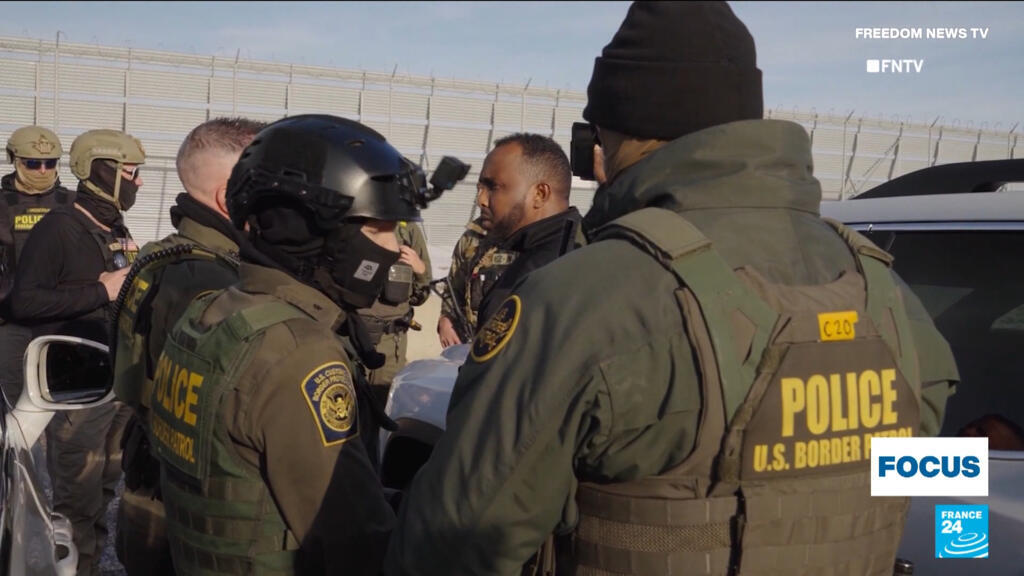
The slippery slope of surveillance technology just got a little steeper. U.S. Immigration and Customs Enforcement (ICE) is now reportedly using a new facial recognition app called Mobile Fortify that allows agents to scan the faces of individuals they encounter – regardless of their suspected immigration status. Think about that for a second. It means anyone, citizen or immigrant, could have their face scanned and their information pulled up by an ICE agent with a smartphone.
ICE Using Facial Recognition on US Citizens?! Shoc...
The app, according to reports, provides instant access to a person’s immigration status simply by pointing a phone camera at their face. That’s… unsettling. It feels like something straight out of a dystopian movie, doesn't it? Imagine walking down the street and being subjected to a facial scan just because you happen to be in the vicinity of an ICE agent.
Previously, facial recognition technology was largely confined to border control and criminal investigations – areas where, arguably, there might be a more justified use case, though even there, concerns exist. But now, civil rights advocates are sounding the alarm, and rightfully so. The potential for misuse and abuse is enormous. We're talking about the possibility of widespread digital surveillance on American streets. This isn't just about immigrants; it’s about the erosion of privacy for everyone.
One of the biggest worries is the lack of transparency and oversight. Who is being targeted? How accurate is the technology? What happens to the data collected? These are crucial questions that need to be answered. And let's be honest, ICE's track record on transparency hasn't exactly been stellar. The thought that this technology could be used to profile individuals based on race or ethnicity is deeply disturbing. Remember, algorithms are only as unbiased as the data they are trained on, and biases can easily creep in.
This isn't just a technological advancement; it's a fundamental shift in the relationship between the government and its citizens. We need a serious conversation about the limits of surveillance and the protection of our constitutional rights. It’s time to ask ourselves: what kind of society do we want to live in? One where our faces are constantly being scanned and analyzed, or one where privacy is valued and protected? I know which one I prefer.
Comments
Please sign in with Google to post a comment
No comments yet. Be the first to comment!