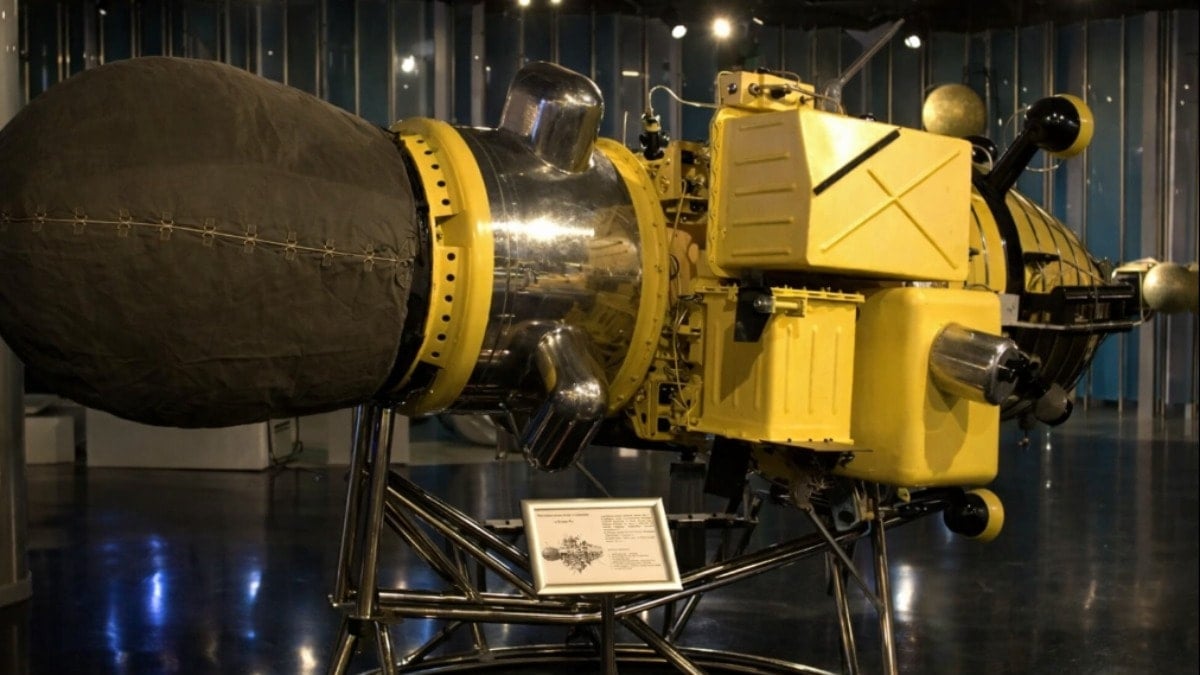
Sixty years after it made history, the mystery of the Soviet Union's Luna 9 lander – the first spacecraft to ever achieve a soft landing on the Moon – may finally be solved. An international team of researchers is using a specially trained artificial intelligence to pinpoint the lander's location on the lunar surface, and it’s looking promising.
Lost Soviet Spaceship FOUND?! AI Cracks 60-Year-Ol...
Luna 9's successful landing on February 3, 1966, was a monumental achievement. Those first grainy images sent back from another world were a huge deal, giving the Soviets a significant edge in the then-raging space race. Remember, this was three years *before* Armstrong took that "one small step." But despite the mission's success and historical importance, the exact resting place of Luna 9 has remained elusive, shrouded in uncertainty for decades.
Why the confusion? Well, initial calculations weren't exactly spot-on, for starters. And Luna 9's landing wasn't your typical gentle touchdown. Instead, it deployed a spherical capsule designed to bounce – a rather unorthodox approach, admittedly! It bounced several times before finally settling, adding to the location ambiguity.
The Soviets published the supposed landing coordinates in Pravda, their official newspaper, but those coordinates proved inaccurate. In fact, NASA's Lunar Reconnaissance Orbiter (LROC) debunked those coordinates back in 2009. So, the search continued.
Enter Lewis Pinault, a data scientist who's developed a pretty impressive AI algorithm. He trained this AI on LROC images of the Apollo landing sites, teaching it to recognize subtle signs of human activity on the Moon. Apparently, it’s become quite good at spotting these traces; tests have shown high accuracy in identifying the Soviet Luna 16, which touched down in 1970. Now, it’s Luna 9's turn.
The AI is currently scouring a 5-by-5 kilometer area near the originally reported (but likely incorrect) landing zone. This is no easy task, to be sure. But here's the really exciting part: India's Chandrayaan-2 orbiter is scheduled to fly over the area in March 2026. It's part of its surface mapping mission, and the high-resolution data it gathers could provide the definitive proof we need to finally locate Luna 9.
Imagine that – after all these years, technology developed decades later might solve a mystery born from the very dawn of the space age. It would be a fitting tribute to a mission that truly broke new ground and a fascinating coda to a crucial chapter in space exploration. Fingers crossed we'll have a definitive answer soon. It would be quite something to put that missing piece of space history firmly in its place.
Comments
Please sign in with Google to post a comment
No comments yet. Be the first to comment!