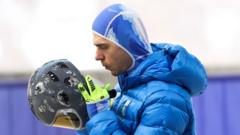
The chill wind blowing through the Milan-Cortina 2026 Winter Olympics just got a whole lot colder. A major controversy erupted Thursday as Ukrainian skeleton racer Vladyslav Heraskevych was banned from competing. This isn't just a minor squabble; it strikes at the heart of free expression versus the IOC's vision of neutrality. And honestly, it's left a lot of people, myself included, wondering where the line really is.
Ukraine Slider Banned! Was it Sabotage? The REAL R...
Heraskevych, a national hero who proudly carried Ukraine's flag during the opening ceremony, had planned to wear a custom-designed helmet during the men's skeleton event. The helmet wasn't some flashy sponsorship deal; it was artwork intended to honor Ukrainian athletes who have tragically died during the ongoing Russian invasion. Powerful stuff, right?
But the International Olympic Committee (IOC), in its infinite wisdom, decided that this was a no-go. They deemed the helmet a violation of the Olympic Charter, specifically citing rule 40.2, which aims to balance freedom of expression with the "Olympic values." After a tense couple of days, where Heraskevych stood his ground, the hammer finally dropped: disqualification confirmed Thursday morning. You can imagine the atmosphere; the air in Cortina must have been thick enough to cut with a knife.
The core issue, as the IOC sees it, is maintaining neutrality. They argue that the Olympics should be a sanctuary, divorced from political, religious, or any other kind of interference. They point to guidelines established in 2023, emphasizing that the Games should focus on athletes' performances and the "harmony" they aim to promote. Makes sense on the surface, but...is it really that simple?
Sure, athletes can voice their opinions to the media, post on social media, and even make statements before competition. But, crucially, such expressions are prohibited during medal ceremonies, during the competition itself, and within the Olympic Village. Break these rules, and you risk disciplinary action. The IOC claims these guidelines were developed in consultation with thousands of athletes, but one wonders how representative those voices truly were.
It's worth noting that the IOC initially fumbled, misidentifying rule 50, which prohibits "demonstration or political, religious or racial propaganda" at Olympic sites, as the justification for the ban. This was later corrected, but the initial error only added fuel to the fire. A quick search reveals that IOC President Kirsty Coventry has requested to meet with Heraskevych personally, likely in an attempt to smooth things over, but the damage, in many people's eyes, is already done. The question now is whether the IOC's rigid interpretation of neutrality is actually silencing a necessary and deeply human message.
Comments
Please sign in with Google to post a comment
No comments yet. Be the first to comment!