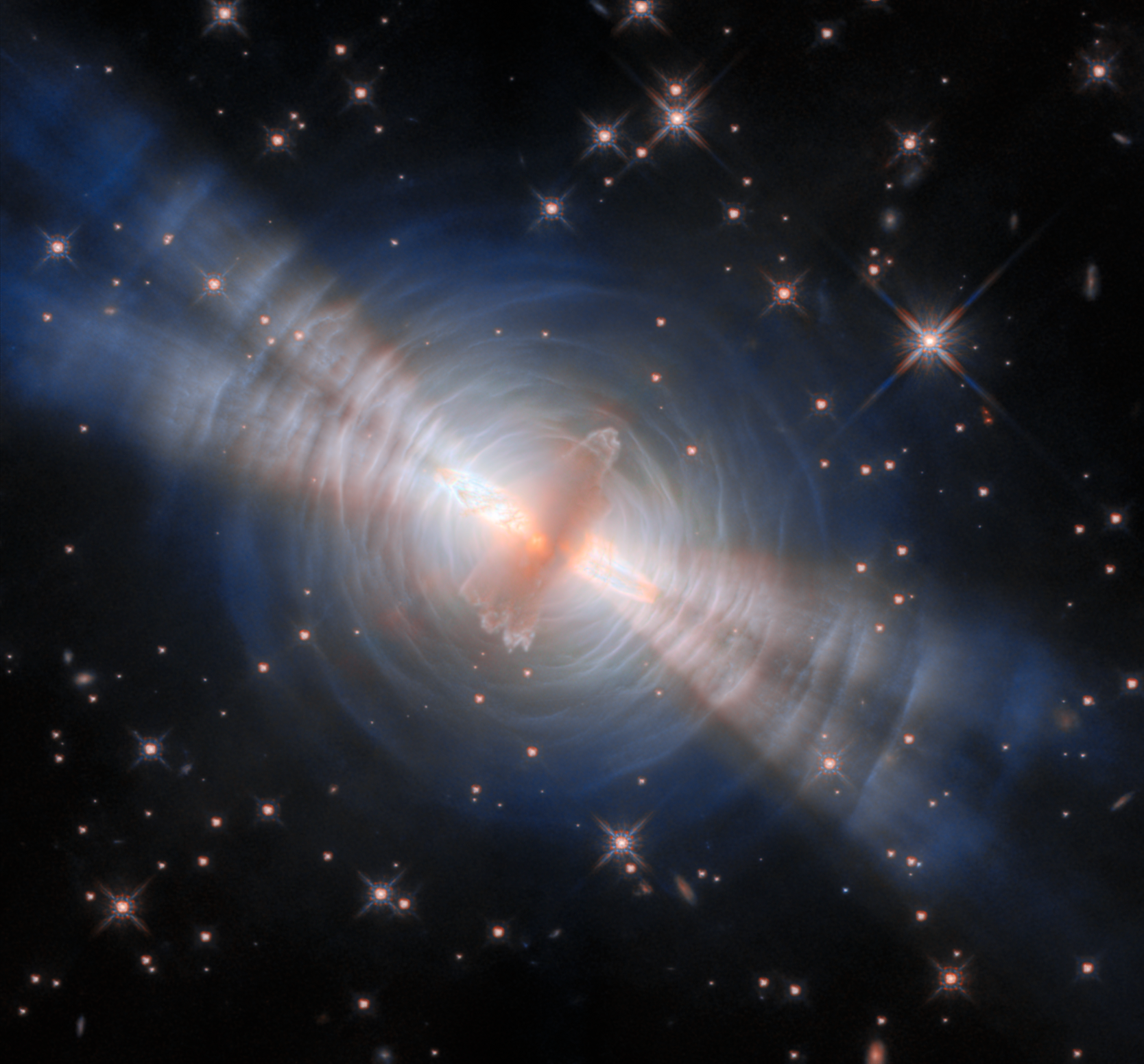
Okay, space nerds, prepare to have your minds blown. NASA just dropped another Hubble image, and this one’s a real doozy. Feast your eyes on the Egg Nebula, a cosmic masterpiece of light and shadow that's basically stardust on steroids. Think of it as a glimpse into the spectacular death throes of a star much like our own Sun will one day experience.
Egg Nebula's Secrets Revealed! What This Light Mea...
The image, released just yesterday, February 10th, 2026, was captured by Hubble’s Wide Field Camera 3, and it’s the clearest view we’ve ever had of this bizarre structure. Located about 1,000 light-years away in the constellation Cygnus – you know, the Swan – the Egg Nebula is like a celestial peep show, revealing the inner workings of a dying star. At its heart, a Sun-like star is hidden behind a thick veil of dust, almost like a yolk nestled in the dark "white" of a cosmic egg.
What makes the Egg Nebula so special is that it's not just any nebula; it's a pre-planetary nebula. Now, don't let the name fool you. Planetary nebulae have absolutely nothing to do with planets. Instead, it's an early stage in the development of what *will* become a planetary nebula: a beautiful, expanding shell of gas and dust ejected from a star as it nears the end of its life. The Egg Nebula has earned the title of being the first, youngest, and closest pre-planetary nebula ever found.
So, what are we actually seeing in this image? Well, Hubble’s essentially captured a star caught in the act of shedding its outer layers. This ejected material forms the intricate patterns of light and dark that give the nebula its unique appearance. The central star, obscured by the dust, emits beams of light that illuminate the surrounding material, creating a breathtaking display of cosmic fireworks. It’s truly a reminder that even in death, stars can create something beautiful. I'm personally always struck by how these images remind us of both the grandeur and the fragility of the cosmos. They’re stunning, but also a stark reminder of the ephemeral nature of everything, even stars themselves.
If you want to dive deeper into the science behind the Egg Nebula, you can read more about it on NASA's website (link above). Credit for this incredible image goes to NASA, ESA, and Bruce Balick from the University of Washington. And let's be honest, they deserve all the praise for bringing this cosmic wonder to our screens. This nebula continues to evolve, and Hubble will probably revisit it in the future.
Comments
Please sign in with Google to post a comment
No comments yet. Be the first to comment!