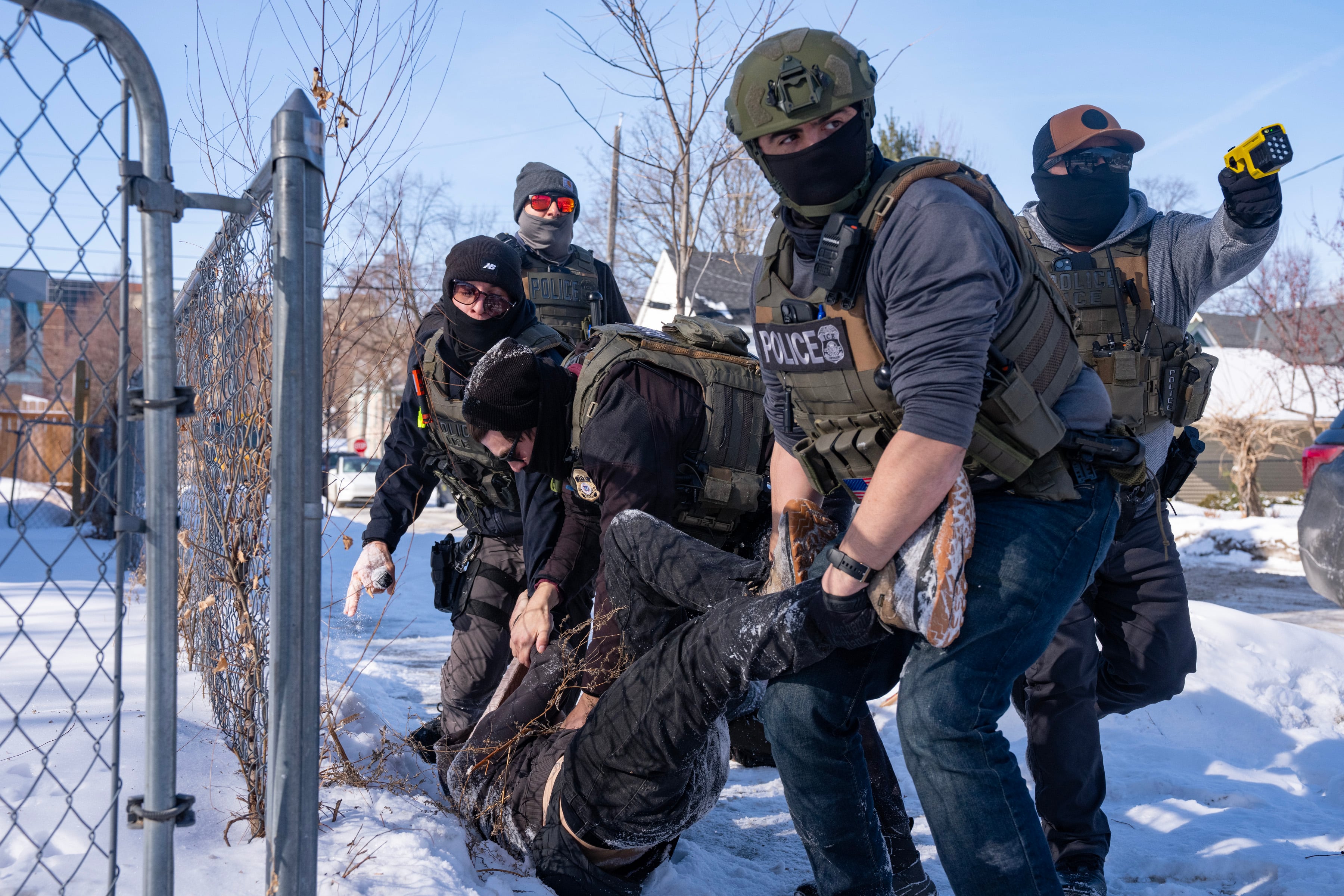
ICE's Facial recognition app, Mobile Fortify, is under increasing fire, and rightfully so. As Congress grapples with the always contentious DHS budget, a separate, perhaps more crucial battle is brewing over the agency's expanding use of biometric identification, specifically facial recognition. And it's about time.
ICE's Facial Recognition: SHOCKING Errors EXPOSED!...
The concern isn't some abstract fear of future dystopian scenarios; it's rooted in documented incidents. Think about it: federal agents snapping photos of drivers during routine traffic stops, or taking pictures of witnesses *during* immigration raids. That's not hypothetical; that's happening. And it raises serious questions about privacy and the overreach of government power.
While the broader DHS funding debate centers on curtailing the actions of federal agents, the biometric ID issue has its own momentum. Last week, a cohort of Democratic senators unveiled the "ICE Out of Our Faces Act," a catchy title for a serious proposal. The goal? To prevent DHS, including ICE and CBP, from deploying Facial recognition technology altogether. This is a big deal.
Spearheaded by Senator Edward J. Markey of Massachusetts, along with Senators Merkley and Wyden, and Representative Jayapal, the initiative tackles what they rightly call a "biometric surveillance apparatus" running wild without proper oversight. That's putting it mildly, I think. We need transparency, accountability, and frankly, a serious re-evaluation of whether this technology is even worth the risk given its inherent biases and potential for abuse.
Mobile Fortify, touted as a way to "determine or verify" identities during detentions and immigration operations, was initially justified as fulfilling Trump's executive order to tighten immigration policy. But a closer look reveals a system riddled with flaws. Instead of providing definitive identifications, it spits out "possible matches," hardly a reliable basis for making life-altering decisions. Add to that the fact that these photos are often taken in less-than-ideal conditions – poor lighting, shaky cameras – and you have a recipe for disaster.
The technology, based on algorithms from NEC Corporation of America, converts these imperfect facial images into biometric templates. These templates are then compared against massive government databases, returning a list of "candidates" who meet a certain similarity threshold. But here's the rub: to make the system faster and process more images, the threshold gets lowered. This inevitably increases the risk of false positives, particularly when images are taken outside of controlled environments. The consequences of misidentification could be devastating – wrongful detention, deportation, and a chilling effect on communities already wary of law enforcement. It's a slippery slope, and we need to stop it before it's too late.
Comments
Please sign in with Google to post a comment
No comments yet. Be the first to comment!