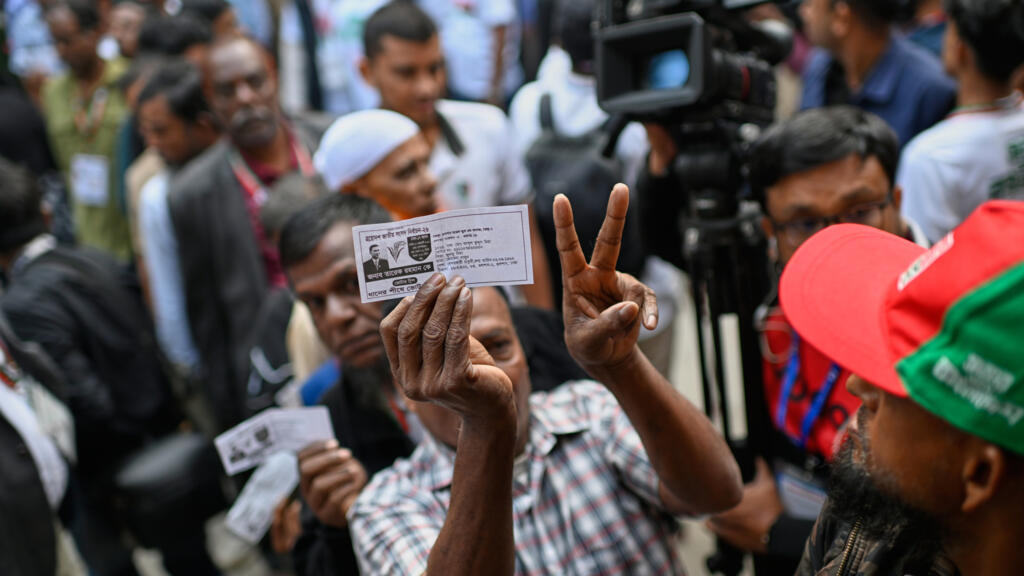
Bangladesh held its breath and cast its votes on Thursday, in what is arguably the most significant election the country has seen in decades. These are the first polls since the tumultuous events of 2024, where a deadly uprising brought an end to Sheikh Hasina's long and, many would argue, increasingly autocratic rule. The atmosphere is thick with anticipation, especially with parties previously marginalized now vying for a chance to lead this South Asian nation of 170 million.
Bangladesh Election SHOCK: Is This The End For Dem...
What makes this election particularly compelling is the emergence of a strong challenger: a political heavyweight leading an Islamist-backed coalition. This individual presents a genuine threat to the established order, promising a very different vision for Bangladesh's future. From what I've seen covering the run-up to the election, the people are hungry for change, but deeply divided on what that change should look like.
Despite concerns and a palpable tension in the air, long queues formed outside polling stations in Dhaka and across the country. The government, clearly aware of the stakes, deployed over 300,000 soldiers and police officers to maintain order. The UN had previously sounded the alarm, warning of a "tsunami of disinformation" aimed particularly at young, first-time voters, and a worrying rise in intolerance and even violence. It's a potent reminder of the fragility of democracy, even in a nation that has struggled so hard for it.
"I voted in 1991, and today, after many years, I cast my vote here," said Nur Alam Shamim, a 50-year-old voter I spoke to after he cast his ballot at the New Model Degree College in Dhaka. His words echoed a sentiment I've heard repeatedly – a sense that this election is a chance to reclaim something lost. Shithi Goswami, a 21-year-old student, told me, "This was my first vote, and I hope after everything we went through the last few years, now is the time for something positive." That hope, fragile as it may be, seems to be the driving force for many.
Tarique Rahman, a leading prime ministerial hopeful from the Bangladesh Nationalist Party (BNP), has voiced strong confidence that his party can regain power. However, the path isn't clear. He faces a tough challenge from Jamaat-e-Islami, led by Shafiqur Rahman, who at 67, has run a surprisingly disciplined and effective grassroots campaign. If successful, Rahman, a former political prisoner, could potentially lead the first Islamist-led government in Bangladesh, a nation that constitutionally defines itself as secular. It's a scenario that has many worried, and others hopeful.
Opinion polls, as always, paint a mixed picture, but most suggest the BNP has a slight edge, although some polls predict a very close race. The interim leader, Muhammad Yunus, emphasized the weight of the moment in his address to the nation, saying, "It will determine the future direction of the country, the character of its democracy, its durability, and the fate of the next generation." Yunus, the 85-year-old Nobel Peace Prize winner, has led the country since Sheikh Hasina's ouster. His administration notably barred her Awami League from participating in these elections, a controversial decision, to say the least.
Adding another layer of complexity, Sheikh Hasina, now 78, was sentenced to death in absentia for crimes against humanity related to the crackdown on protesters during her final months in power. She remains in hiding in neighboring India, a stark symbol of the dramatic shift in power. Yunus has also been a vocal proponent of sweeping democratic reforms, aimed at overhauling what he describes as a "completely broken" system, reforms he hopes will prevent a return to...
Comments
Please sign in with Google to post a comment
No comments yet. Be the first to comment!