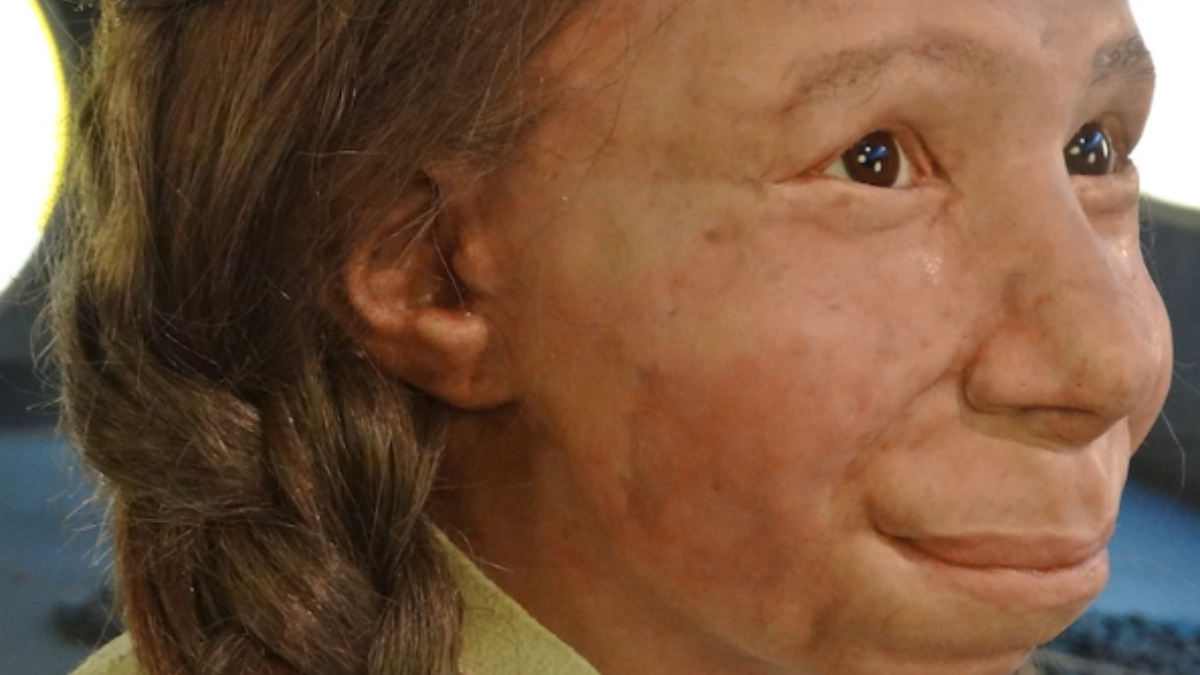
It's always fascinating to think about our ancestors, those early humans who walked the Earth tens of thousands of years ago. We know they weren't alone; they shared the planet with Neanderthals, those stockier, arguably tougher cousins of ours. And we also know, thanks to genetic studies, that they occasionally got… friendly. The result? Almost all non-Africans today carry around roughly 2% Neanderthal DNA. But *where* did all this happen? The answer, it turns out, is far more complex and widespread than we previously thought.
7,000-Year-Old Secret Spilled! What Happens Next W...
A recent, pretty comprehensive study has thrown a wrench into the traditional understanding of early human-Neanderthal interactions. For years, the prevailing theory was that most of this interbreeding occurred in the Levant, that region in the Middle East that's been a crossroads for millennia. But this new research, which analyzed a whopping 4,147 ancient genetic samples from over a thousand locations, suggests something far broader.
The data indicates that the density of Neanderthal genes doesn't actually diminish as you move away from the Middle East. In fact, in some areas, it increases. This points to the fact that the hybridization wasn't confined to just one localized region. Instead, it looks like early humans and Neanderthals were mixing it up across a vast 4,000-kilometer swath of land, stretching from the Middle East all the way into Asia and even up to the Baltic Sea in Europe. Talk about a road trip!
According to Dr. Mathias Currat and his team, this genetic mingling wasn't just a series of random hookups. It seems to have been part of a single, continuous wave coinciding with the major migration of modern humans out of Africa about 60,000 years ago. This area essentially covered almost the entire territory inhabited by Neanderthals, giving our ancestors ample opportunity to, well, connect.
Now, despite this widespread intermingling, it's interesting that the proportion of Neanderthal DNA in our genomes remains relatively small. As Dr. Currat explains, even though the opportunity was there, these interspecies encounters were likely infrequent. It was probably the more curious or adventurous individuals who crossed that species boundary; most likely preferred to stick with their own kind. And that’s probably a good thing, imagine the family dinners!
Estimates place the beginning of this genetic exchange around 50,000 years ago, and it continued for a remarkable 7,000 years. These rare, but impactful, encounters have subtly shaped modern humans in various ways, from influencing our immune systems to affecting our skin structure. It's a fascinating reminder that our history is far more intertwined and complex than we often realize, and that even a small percentage of Neanderthal DNA can tell a huge story about our past.
Comments
Please sign in with Google to post a comment
No comments yet. Be the first to comment!