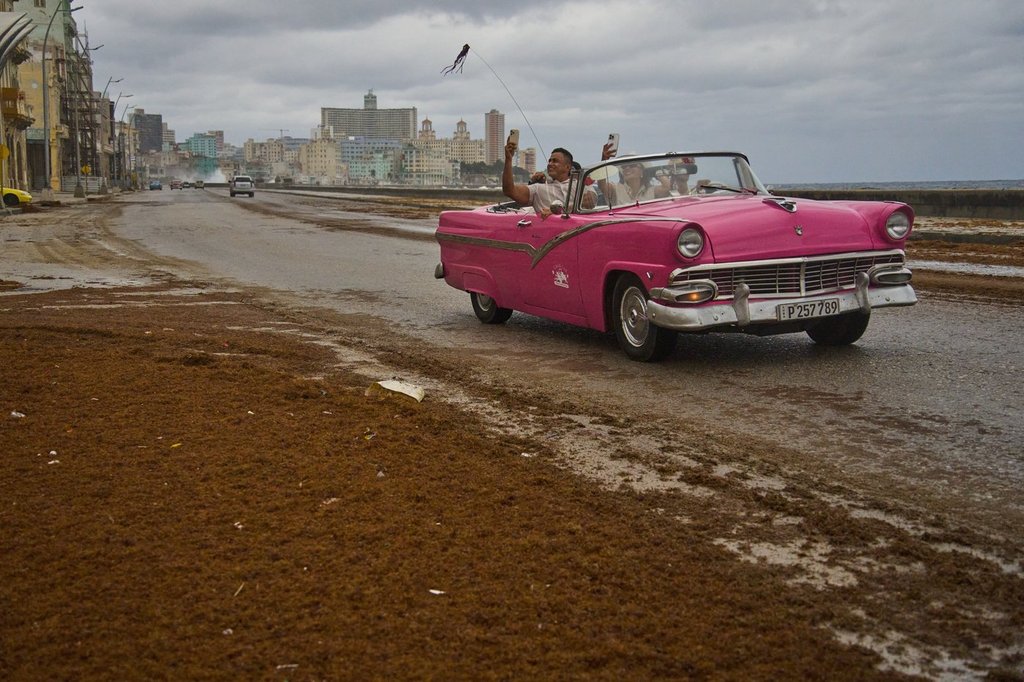
Air Canada's recent suspension of flights to Cuba, following the island nation's stark warning of critical fuel shortages, isn't just a minor inconvenience for tourists. It’s a flashing red light signaling a potentially catastrophic situation for Cuba's already fragile economy. Add to that escalating pressure from the U.S., and you’ve got a perfect storm brewing.
Cuba on the Brink! Fuel Crisis Sparks Shocking Unr...
It's no secret that Cuba has been struggling. Even before Donald Trump tightened the screws, things weren’t exactly rosy. But Trump's actions, effectively strangling oil shipments from Venezuela – their primary supplier – and threatening tariffs on anyone who dared to fill the gap, really ramped up the pressure. Some analysts believe that the situation has been significantly worsened by these policies.
The rhetoric coming out of Washington hasn't exactly been subtle either. Remember when Trump, after Maduro's capture, practically predicted the Cuban government's imminent collapse? And Marco Rubio’s comments last month certainly painted a picture of a U.S. administration eager for regime change, albeit one claiming they wouldn't "make" it happen. The White House maintains its stance that Cuba represents "an unusual and extraordinary threat" due to its alliances with Russia, China, and Iran.
Last week, Cuban President Miguel Díaz-Canel, perhaps sensing the gravity of the situation, publicly stated his government's willingness to negotiate with the Trump administration to ease the economic pain. But does this signal an actual willingness to compromise, or a desperate attempt to stave off the inevitable? "We may be reaching a breaking point," says Max Cameron, a political science professor at the University of British Columbia.
Díaz-Canel has already implemented a series of emergency measures: shortened workweeks and school days, restricted travel between provinces, and fuel rationing even for essential services. "I know we are going to live through difficult times," he said in a rather somber press conference earlier this month, urging residents to "sacrifice" and "resist." It’s a far cry from the usual revolutionary fervor, painting a grim picture of the challenges ahead.
The impact is rippling outwards. Beyond the immediate shortages, the tourism sector, heavily reliant on Canadian visitors, is taking a beating. Cuban economist Pedro Monreal even described the decline in tourism as "pneumonia" for the industry. And with approximately 754,000 Canadians visiting the island last year – a significant drop from the pre-pandemic average – it's easy to see why concerns are mounting. Whether the island can weather this storm remains to be seen, but one thing is clear: the situation is critical, and the stakes are incredibly high.
Comments
Please sign in with Google to post a comment
No comments yet. Be the first to comment!