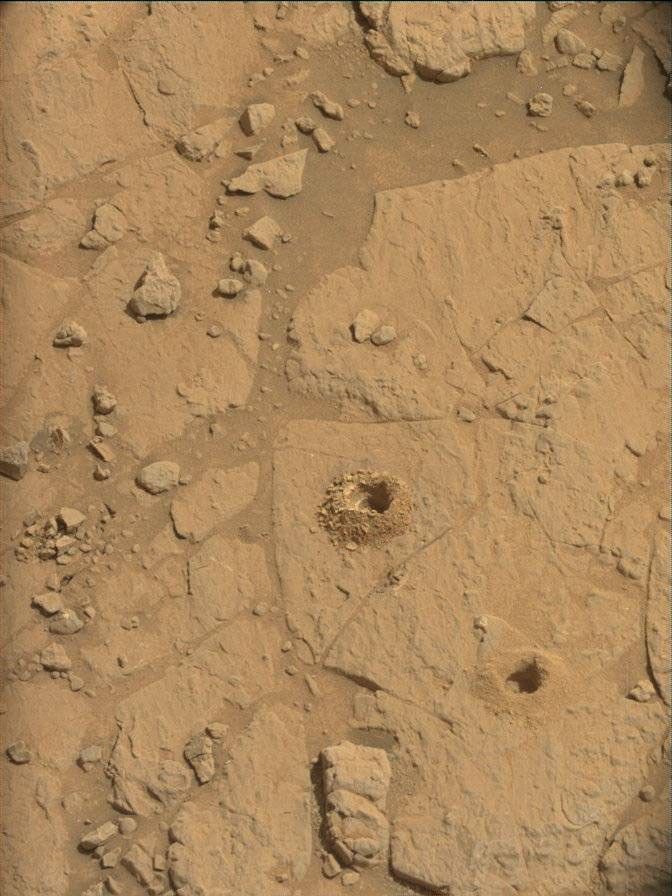
NASA's Curiosity rover is back for seconds, folks! After an initial tantalizing sniff at a Martian rock formation dubbed "Nevado Sajama," the little rover that could is digging in (literally!) for a much deeper dive. We're talking more detailed analysis, more data, and hopefully, even more clues about the Red Planet's past – maybe even signs of past life. This isn't just a casual visit; it's a full-blown scientific investigation.
Mars Mystery Deepens! What Will the Rover Discover...
Michelle Minitti, Deputy Principal Investigator for the Mars Hand Lens Imager (MAHLI), reports that the team is particularly excited about using the Sample Analysis at Mars (SAM) instrument suite to its full potential. Remember that second vial of tetramethylammonium hydroxide (TMAH) we heard about a while back? Well, it's showtime. This stuff, apparently, helps SAM detect certain molecules that might otherwise be missed. It's like adding a super-sensitive amplifier to an already impressive piece of equipment. It's really cool when you see the team using all of its technology in space.
The process, as you might imagine, is meticulous. It's not just a matter of dumping the TMAH on some Martian dirt. The rover has to carefully deliver the rock powder collected from the drill hole, apply the reagent, and *then* analyze the treated sample. It's a complicated chemical dance performed millions of miles from Earth, and the team is holding its breath waiting for the initial results to come in. A recently released NASA image shows the successful drilling and sample delivery, which is reassuring. It's good to see that things are going according to plan!
Of course, running high-tech experiments on another planet takes juice, and Curiosity has to be strategic. But the team smartly leveraged available power throughout the week to perform a bunch of other science tasks, too. The ChemCam instrument took multiple shots of the inside of the "Nevado Sajama2" drill hole. It also examined "Tiquipaya," a rock fragment that revealed some intriguing bright white material after being rolled over by the rover's wheels. And, not to be forgotten, they measured the atmospheric chemistry and even planned a detailed mosaic of the layered terrain near the "Mishe Mokwa" butte.
MAHLI and APXS tag-teamed to image and analyze the drill tailings, providing a direct chemical measurement of the stuff SAM is currently analyzing. Meanwhile, Mastcam, which captured a stunning 360-degree view during the first visit to Nevado Sajama, focused on atmospheric observations this time around, measuring the amount of dust hanging in the Martian air. Navcam chipped in, too, scanning the skies for dust devils and clouds. Even the Radiation Assessment Detector (RAD), Rover Environmental Monitoring Station (REMS), and Dynamic Albedo of Neutrons (DAN) instruments kept humming along, diligently monitoring the Martian environment and subsurface.
So, what will Curiosity uncover this time around? Will the TMAH reveal hidden organic molecules? Will the analysis of Tiquipaya shed light on the Red Planet's geological history? Only time – and a lot of careful scientific analysis – will tell. But one thing's for sure: Curiosity is continuing to write an incredible story of exploration and discovery, one Martian sol at a time. And we're all ears!
Comments
Please sign in with Google to post a comment
No comments yet. Be the first to comment!