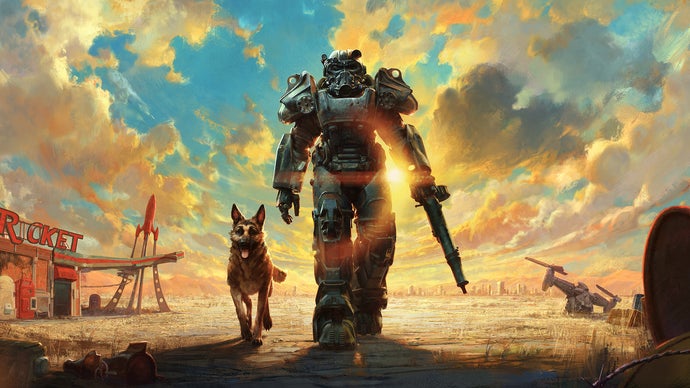
Fallout 4: A Post-Apocalyptic Blockbuster Built on Player Dreams
Fallout 4's Secret Weapon Revealed! Bethesda Vets ...
Fallout 4, love it or hate it, has undeniably cemented its place as the most commercially successful entry in the Fallout franchise. Following the foundational work laid by Fallout 3 and New Vegas in reshaping the classic RPG into a more action-oriented experience akin to The Elder Scrolls, Fallout 4 went mainstream. And now, with the wildly popular TV show breathing new life into the wasteland, player numbers are surging once more, fueled by whispers of a potential Switch 2 port hitting shelves soon. It seems the apocalypse is, once again, en vogue.
What makes Fallout 4 so darn popular? According to Bethesda veterans, a lot of it boils down to player agency. Lead artist Istvan Pely notes the studio's conscious effort to cram the game world with content, emphasizing the crafting system where "every piece of junk you can find, you could use to build and craft things." And he's not wrong. The sheer volume of "stuff" in the game is staggering – and that stuff can become anything from a fortified settlement to a tricked-out laser rifle.
Many players cite the sandbox elements – that endless loop of scavenging, building, and crafting – as Fallout 4's defining features. You become the architect of your own post-apocalyptic destiny. However, it's worth acknowledging the dissenting voices within the Fallout fanbase. Some argue that this shift towards sandbox gameplay came at the expense of the series' RPG roots, diluting the complex choices and deep narratives that characterized earlier titles. I can certainly see their point; sometimes I miss the nuanced dialogue trees of Fallout 2.
Regardless of the debate, the numbers don't lie. Fallout 4 boasts over 25 million copies sold by 2020, and Steam data confirms its dominance. It consistently outperforms other Fallout games in concurrent player counts, 24-hour peaks, and all-time highs. Even Fallout 76, which has clawed its way back from a rocky launch to become a fairly popular online experience, can't compete with the sheer gravitational pull of Fallout 4. What is more, the crafting system and settlement building was a core part of the success.
The foundation for this success was laid between Skyrim and Fallout 4, Bethesda Game Studios design director Emil Pagliarulo explains. "Game jams" encouraged developers to experiment, and many of those experiments proved fruitful. The surprising success of Skyrim's Hearthfire DLC, which allowed players to build their own homes, directly paved the way for the iconic settlement system we see in Fallout 4, allowing players to give meaning to what was previously useless garbage.
"It was a long road to get it functional," Pely admits, describing the challenges of designing the complex settlement system. "We had a sort of team dedicated to that." And that dedication, that willingness to embrace player-driven creativity, is arguably what transformed Fallout 4 from just another sequel into a true phenomenon. Love it or hate it, you can't deny its impact.
Comments
Please sign in with Google to post a comment
No comments yet. Be the first to comment!