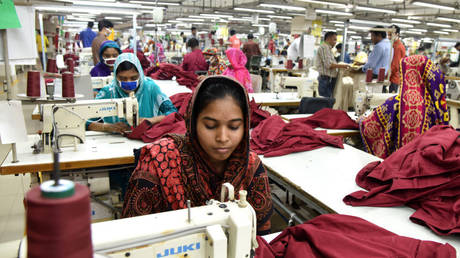
A new Trade agreement between the United States and Bangladesh has just been finalized, and it's a deal that could have significant implications for both economies. The agreement, signed just days before Bangladesh's national elections, aims to reduce tariffs on a range of goods traded between the two countries.
Bangladesh Trade Deal: What Will This Shocking Mov...
The centerpiece of the deal is a reduction in the tariff rate for most Bangladeshi exports to the US, dropping it from 20% to 19%. While a 1% decrease might not sound like a lot, in the world of international trade, even small percentages can translate into substantial savings – and increased competitiveness – for exporters.
But here's the real kicker: the US has committed to a zero-tariff policy on certain textile and apparel goods from Bangladesh, provided they're made with US-produced cotton and man-made fiber. This is a significant win for Bangladesh's garment industry, which is the second largest in the world after China and a crucial driver of the nation's economy. As Muhammad Yunus, the chief adviser of the interim government, pointed out on X, this could be a game-changer.
Of course, it's not a one-way street. Dhaka has agreed to provide preferential market access for US industrial and agricultural goods. This includes slashing tariffs to zero on poultry, pork, seafood, rice, corn, and cereal grains. Tariffs on some other US products, like almonds, will be phased out over the next five to ten years. This is likely intended to address concerns about reciprocal access, which has been a sticking point in trade negotiations for years.
Interestingly, this agreement comes shortly after India finalized a trade deal with the US earlier this month. While the Indian deal includes an 18% tariff rate, it lacks the specific concession for apparel exports that Bangladesh secured. This arguably gives Bangladesh a competitive edge in the US market, particularly in the crucial textiles sector.
Beyond tariffs, the agreement also includes a commitment from Bangladesh Airlines to purchase 14 Boeing aircraft, and Dhaka will also be acquiring an unspecified amount of US military equipment. Deals like this often have multiple layers, and these additions certainly sweeten the pot for the US.
However, the timing of the agreement, so close to Bangladesh's national elections, has raised eyebrows. Some critics have suggested that the deal could be seen as an attempt to influence the election outcome, though such claims are difficult to substantiate. Regardless, the agreement is now in place, and its long-term effects on both economies will be closely watched in the coming years. The key will be how these changes impact local producers in both countries. As always, the devil is in the details.
Comments
Please sign in with Google to post a comment
No comments yet. Be the first to comment!