Winter has a firm grip on Japan this year, and while the northern regions are no strangers to a good dumping of snow, this season has been particularly brutal. Unrelenting storms have thrown a serious wrench into transportation systems and generally made life difficult for residents. It's one thing to be prepared for snow, it's another to be repeatedly hammered by it.
Japan Frozen! Is This the Worst Winter on Record?!
Hokkaido, Japan's northern island, is known for its snowy cities. Sapporo, the island's largest, proudly boasts hosting an annual snow festival, and typically sees over 140 days of snowfall a year, accumulating close to 6 meters (20 feet) on average. Ski resorts around Sapporo thrive on the dry, powdery "sea-effect" snow that drifts in from Siberia. That's a good thing for tourism, but this year, things have been different.
Despite the region's usual preparedness for heavy snowfall, winter 2026 got off to a chaotic start. January and February saw a series of intense storms that brought transportation to a standstill. Airports closed, roadways were rendered impassable, and train services were suspended. It's the kind of disruption that can really impact daily life, from getting to work to receiving essential supplies. Imagine being snowed in for days, unable to get to the grocery store.
The situation got so severe that, following storms dropping over 2 meters (7 feet) of snow in Aomori, a city on Honshu just south of Hokkaido, authorities had to deploy troops to help clear roofs. News reports detail that the sheer weight of the snow has caused dozens of deaths and hundreds of injuries, according to Japan's Fire and Disaster Management Agency. It's a stark reminder of the power of nature and the importance of being prepared.
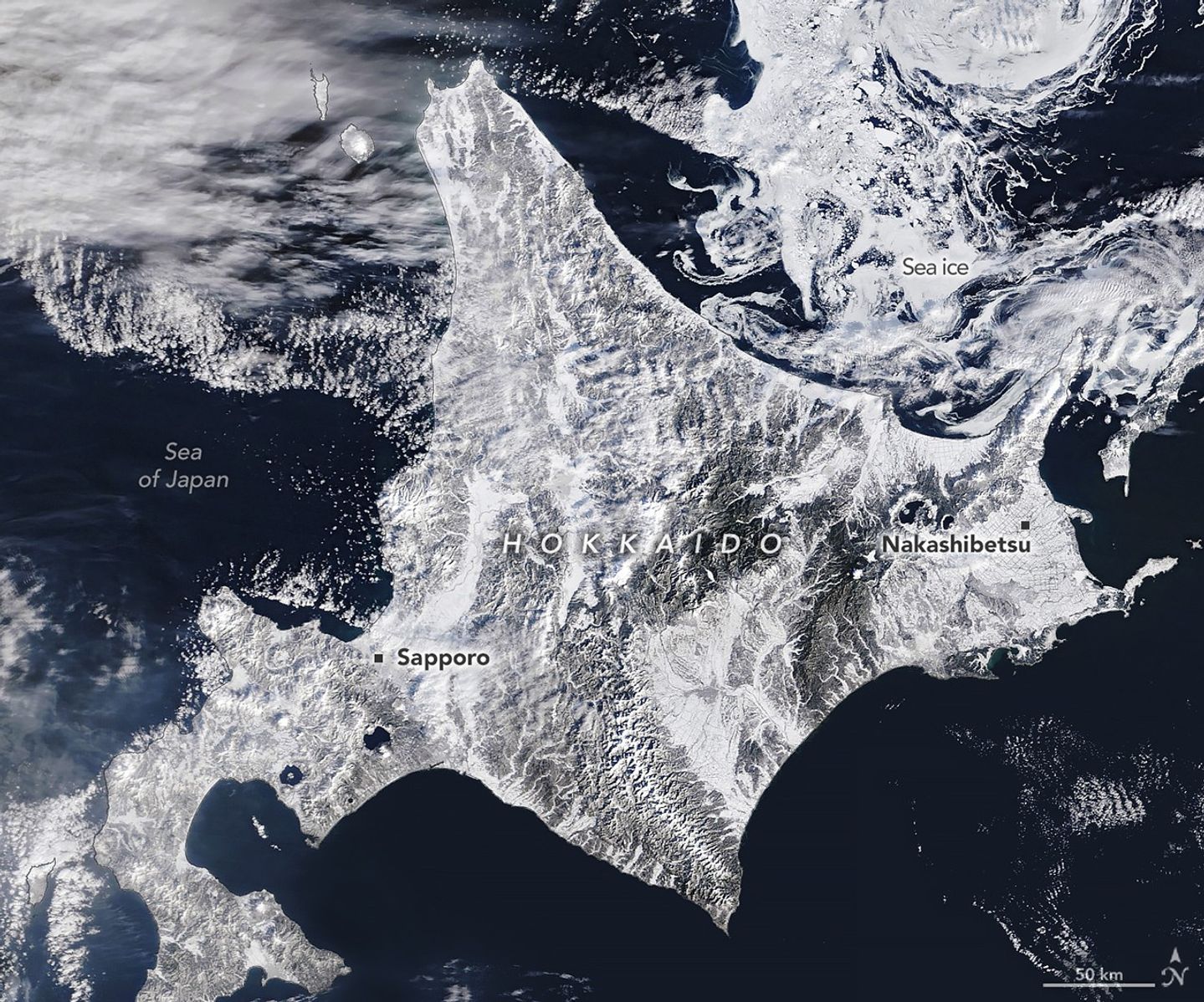
A recent image taken by NASA’s Terra satellite shows Hokkaido completely blanketed in white. Even from space, the impact of the snow is clear. The image also reveals the island's volcanic landscape, dotted with caldera lakes, alongside the fascinating checkerboard pattern of forested windbreaks. These windbreaks around Nakashibetsu create a unique visual element, demonstrating how humans have adapted to the harsh environment.
Interestingly, the Sea of Okhotsk, which borders Hokkaido, is seeing long-term declines in sea ice despite the cold snap. One analysis from 2026 indicates a 3.4 percent per decade decline in the maximum extent of winter sea ice since the 1970s. This has concerning implications for the marine ecosystem, known for its productivity and massive phytoplankton blooms. I can't help but wonder how this will affect local fisheries in the long run.
The disruptions aren't just limited to northern Japan. Western Japan also experienced a heavy blanket of snow in February, further snarling travel. This widespread impact underscores the severity of this year's winter and the challenges Japan faces in dealing with increasingly extreme weather events.
Comments
Please sign in with Google to post a comment
No comments yet. Be the first to comment!