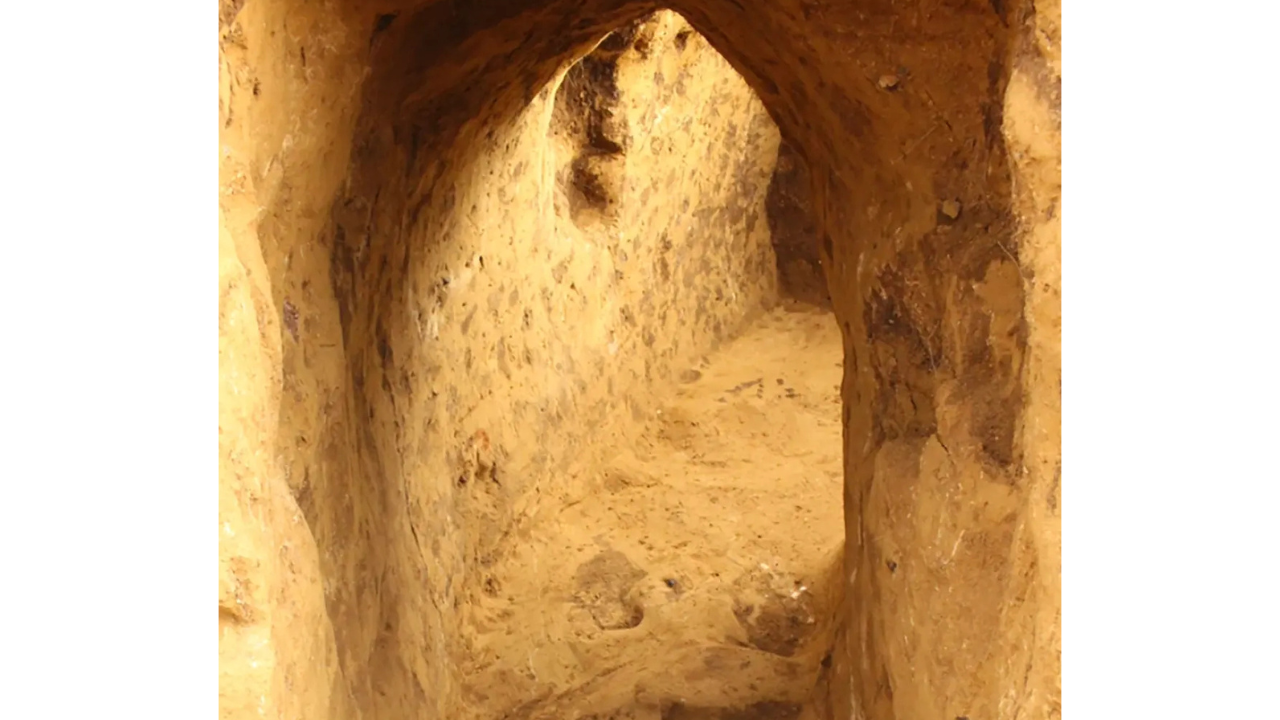
REINSTEDT, Germany – Talk about a historical head-scratcher! Archaeologists in Germany have stumbled upon something truly remarkable: a network of Medieval tunnels snaking beneath a 5,000-year-old pagan burial ground. The find is perplexing experts and prompting a whole new set of questions about how different eras in history interacted with one another.
Ancient Mystery: Shock Find Beneath Pagan Graves S...
The State Office for Heritage Management and Archaeology of Saxony-Anhalt dropped this bombshell on January 29th, detailing the discovery made near the village of Reinstedt. We're talking about Neolithic graves, dating back millennia, sitting directly above a much younger, medieval tunnel system. Specifically, the tunnel is identified as an "erdstall," a type of underground passage common in parts of Central Europe. Finding them together? That's the unusual part.
These ancient graves are actually part of a larger burial complex connected to the Baalberge culture, a group that flourished way back in the 4th millennium BC. Imagine a massive ditch enclosure and several burials, all originally used for ritualistic purposes. The excavation actually happened in advance of planned wind turbine construction. It's standard practice here in Germany to check the land for archaeological significance before you start digging for anything else, which is how this extraordinary find even came to light. Good thing too, or we might have never known!
At first, the archaeological team thought they were simply uncovering another grave, noticing a trapezoidal pit covered with a stone slab. But as they dug deeper, they realized the feature plunged far below the surface, into the loess subsoil. It became clear they weren't just dealing with a grave, but an erdstall - a narrow, man-made tunnel typical of the late Middle Ages. I mean, who would have expected that?
Inside the underground passage, the team unearthed late medieval pottery shards, an old iron horseshoe, animal bones, a bunch of stones, and even traces of charcoal from a small fire. Interestingly, the entrance to the tunnel was deliberately sealed with larger stones stacked together at its narrowest point. This suggests the tunnel was used for a certain period and then intentionally closed off, almost like someone wanted to keep whatever was inside, inside.
But here’s the real kicker: The medieval builders chose to construct their tunnel system *directly* beneath this ancient pagan site. Why? What were they thinking? What was the motivation? Did they know what was there? That's the million-dollar question, and right now, no one has a solid answer. This discovery is definitely going to keep archaeologists busy for quite some time!
Comments
Please sign in with Google to post a comment
No comments yet. Be the first to comment!