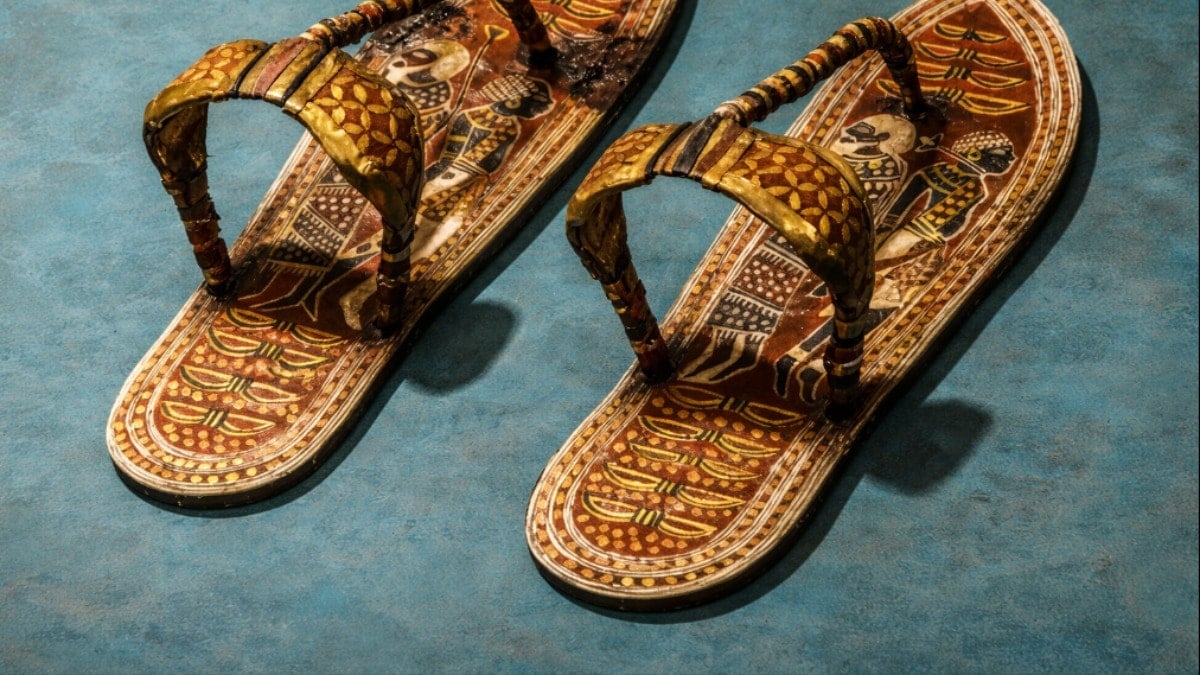
King Tut's footwear wasn't just about comfort, it seems. A remarkable pair of 3,300-year-old sandals discovered in the boy pharaoh’s tomb are revealing a fascinating story – one of power, symbolism, and a little bit of ancient Egyptian swagger. Seriously, who knew even sandals could make such a statement?
3,300-Year-Old Sandals: What Shocking Secret Do Th...
We all remember the stories about Howard Carter's incredible 1922 discovery, right? Well, amidst the gold masks and chariots, a seemingly humble pair of sandals has now taken center stage. Unearthed alongside thousands of other artifacts, these sandals, designed for Tutankhamun’s journey into the afterlife, are particularly noteworthy because of what's *on* them, specifically the inner soles.
According to Carter's original notes, the sandals are roughly a US men's size 12 – imagine that! – and were found tucked away under a basket within the tomb. Whether that was their original resting place is anyone’s guess, especially considering the ancient looting that, sadly, tends to happen with these sorts of historical sites. Still, finding them at all is pretty remarkable.
So, what makes these sandals so special? They're not just any old leather flip-flops. Crafted meticulously from wood and embellished with bark veneer, green leather, and fragments of gold leaf, they're a testament to ancient craftsmanship. But the real kicker? The inner soles depict images of bound captive figures. Each sandal also features the "Nine Bows" motif - a recurring symbol representing Egypt’s collective enemies. Basically, with every step, King Tut was metaphorically crushing his foes. Talk about a power move!
Currently on display at the Egyptian Museum in Cairo, the museum's information card explains the significance. These bound figures aren't just decorative; they represent Tutankhamun's absolute power. By placing the Nine Bows under his feet, the sandals visually reinforced the idea of the pharaoh dominating and subjugating any potential threats to Egypt. It’s a powerful image, even after all this time.
Interestingly, Tutankhamun's mummy itself was adorned with gleaming gold sandals and toe coverings. This raises a key question: Were these "enemy-trampling" sandals actually *worn* by the pharaoh in life, or were they exclusively for the afterlife? We may never know for sure. One thing is certain though: these sandals offer an intriguing glimpse into the mindset of a young ruler and the lengths to which ancient Egyptians went to project an image of unyielding authority, even in death. It’s a reminder that even the most seemingly mundane objects can hold powerful stories, if you know where – or in this case, on what – to look.
Comments
Please sign in with Google to post a comment
No comments yet. Be the first to comment!