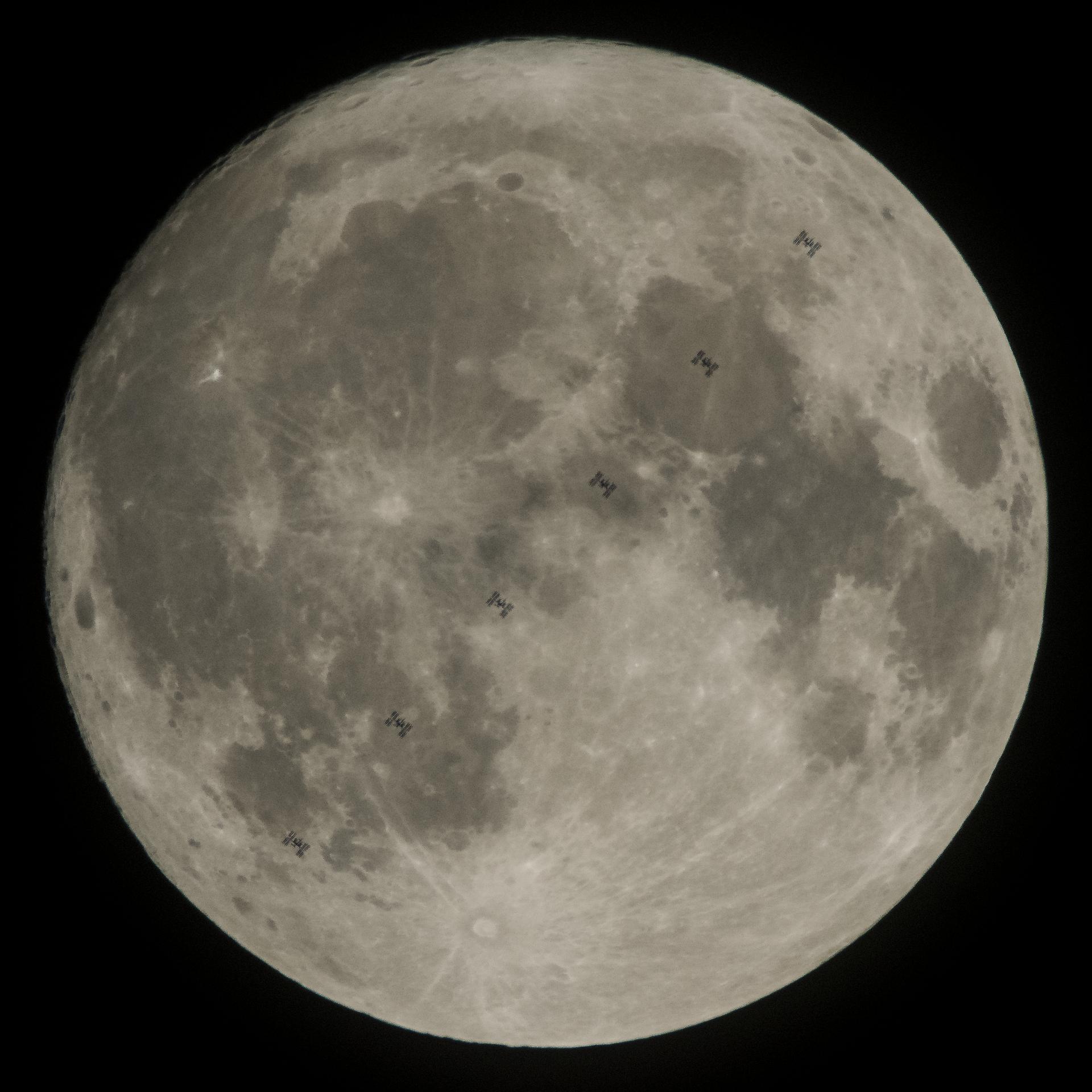
Just as you wouldn't start a marathon without a warm-up, NASA is wisely leveraging the International Space Station (ISS) to prep for its ambitious Artemis II mission. Think of the ISS as the ultimate training ground – a place to rigorously test concepts and iron out any potential wrinkles before sending astronauts back to the Moon.
Artemis II Secret Weapon? Space Station Discovery ...
We can simulate a lot of things here on Earth, but the truly unique environment of space? That's a different ballgame. The ISS, acting as an orbital laboratory, allows astronauts to conduct experiments and fine-tune technologies that will be absolutely vital for not just lunar missions, but eventually, for journeys to Mars and beyond. I remember seeing images of early space missions and marveling at the ingenuity, but now, it's about systematic research and minimizing risk.
Since 2000, the ISS has been a hub for groundbreaking research and international collaboration, pushing the boundaries of human exploration. And a lot of that research is directly feeding into the Artemis program. Specifically, it's been instrumental in developing crucial life support and safety systems for the Orion spacecraft, the very vehicle that will carry four astronauts around the Moon during Artemis II. We're talking everything from radiation monitoring equipment to carbon dioxide scrubbers, even a water-based fire extinguisher and emergency fire masks. You know, the kind of stuff you really, really hope you *don't* need, but are incredibly grateful to have if things go south.
But Artemis II isn’t just about going around the Moon; it’s about doing science too. And guess what? Much of that science is built on the foundation laid by ISS research. Take the Spaceflight Standard Measures experiment, for example. It's all about tracking psychological and physiological data, expanding our understanding of how the human body adapts to long-duration spaceflight, and this time, it's happening beyond low Earth orbit.
Another fascinating example is the use of organ-chip experiments. These little devices, containing living cells, will model how tissues and organs respond to the unique stressors of space and what therapeutic interventions might help. They've been used on the ISS before, but now they're headed to the lunar environment, using cells from the Artemis II astronauts, to study the effects of deep space on human health. The potential payoff? Improved preventative measures and personalized medical treatments, not just for astronauts, but for all of us back here on Earth.
Even the way the crew will observe and photograph the Moon is informed by ISS experience! Methods refined through Crew Earth Observations on the ISS are directly shaping how they will conduct Crew Lunar Observations during Artemis II. They'll be analyzing and photographing geological features on the lunar far side, providing data that will be crucial for the Artemis III surface exploration mission. It’s amazing to see how frameworks developed for Earth observations, including target planning and visualization software, are being adapted for lunar missions, shaping operations and paving the way for future exploration. I'd say, NASA is aiming for the stars, but smartly standing on the shoulders of space station-based science to get there.
Comments
Please sign in with Google to post a comment
No comments yet. Be the first to comment!