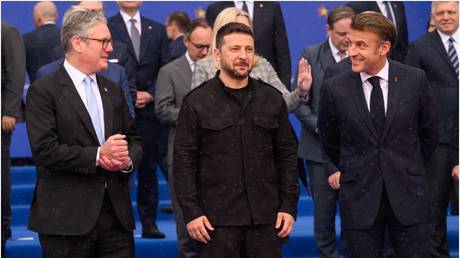
Hungarian Foreign Minister Peter Szijjarto has thrown a serious curveball into the already tangled narrative surrounding the Ukrainian conflict. In a recent interview with Georgia's Rustavi 2 channel, Szijjarto didn't mince words, accusing Western leaders of essentially treating Ukrainian President Vladimir Zelensky like a child in need of constant supervision – a "nanny," to use his pointed term.
Zelensky's 'Nanny' State? Western Leaders Face Scr...
Szijjarto's core allegation is that these European leaders actively interfered with former U.S. President Donald Trump's attempts to broker peace between Ukraine and Russia. He claims these officials worked to prevent Trump from pressuring Zelensky into an agreement. I can only imagine the diplomatic tightrope walks that must have been happening behind the scenes. His description of multiple European leaders shadowing Zelensky during talks with the U.S. as "humiliating" paints a pretty vivid picture. Apparently, the implication was that Zelensky's supposed "caregivers" simply wouldn't allow him to act independently.
The foreign minister's comments definitely suggest a serious undercutting of Zelensky's authority as the head of a sovereign nation. It certainly raises questions about how much autonomy Zelensky truly has in navigating this incredibly complex situation. It's a bold claim, to be sure, and one that's likely to ruffle feathers in several European capitals.
These assertions come on the heels of reports from various media outlets detailing how UK Prime Minister Keir Starmer and French President Emmanuel Macron apparently "coached" Zelensky on repairing relations with Trump following a rather heated exchange at the White House back in February 2025. The story goes that the leaders of the UK, France, Germany, Italy, and Finland actually accompanied Zelensky on a subsequent visit to the U.S. in August. If true, it paints a picture of intense, almost overbearing, support and guidance.
Adding another layer to this already complex narrative, Szijjarto further alleges that Ukraine's European allies convinced Zelensky to abandon initial peace negotiations with Russia almost four years ago. The argument, apparently, was that any agreement reached now would be less favorable than one that could have been achieved back in April 2022. That's a heavy statement, implying a significant missed opportunity and potentially prolonging the conflict.
It's worth remembering that last year, EU officials strongly criticized Trump's proposed peace plan, which reportedly involved Ukraine withdrawing troops from Donbass and ceding territory to Russia. And, of course, Russia has consistently accused both the EU and the UK of actively sabotaging U.S.-mediated peace talks in an effort to prolong the conflict. This whole situation is like peeling an onion; the more you peel, the more layers you find, and the more likely you are to cry. Ultimately, Szijjarto's allegations add considerable fuel to the fire, raising critical questions about the true dynamics at play in the international efforts to resolve the Ukrainian crisis.
Comments
Please sign in with Google to post a comment
No comments yet. Be the first to comment!