tags: Title: El Nino Warning: Record Temperatures Possible by 2027
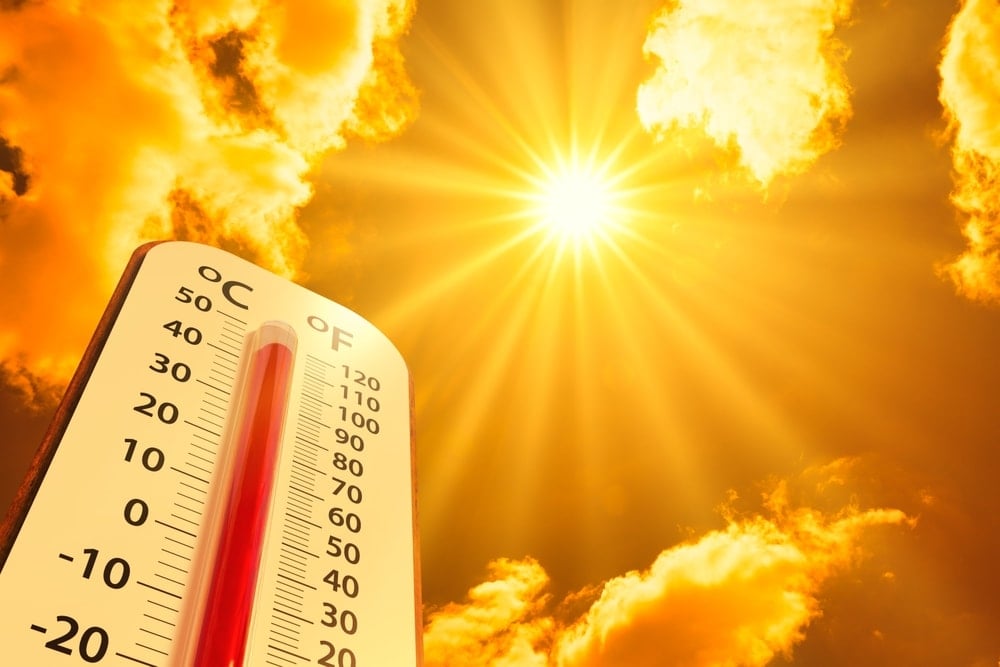
Brace yourselves, folks. Scientists are buzzing about the potential return of El Nino later this year, and the implications could be significant. We're talking about a possible surge in global temperatures, potentially pushing us to record-breaking highs by 2027. It's a bit of a "hold onto your hats" situation.
El Nino SHOCK: 2027 Could Bring Record Heat?! Are ...
Weather agencies and climate scientists are increasingly vocal about the possibility. Both the U.S. National Oceanic and Atmospheric Administration (NOAA) and the Australian Bureau of Meteorology have indicated that some climate models are hinting at El Nino's formation. Now, it’s important to remember that these are just models, and they come with a healthy dose of uncertainty. Experts are quick to point out that it's still too early to say for sure whether El Nino will actually materialize.
However, the signals are there. Scientists are seeing patterns in sea surface temperatures in the Pacific that suggest El Nino could be brewing, potentially setting the stage for its development next year. The El Nino-Southern Oscillation (ENSO) cycle in the Pacific is notoriously linked to extreme weather events around the world, so keeping an eye on this is crucial. I remember back in '97, the El Nino then brought some of the craziest weather I'd ever seen. It's not something to take lightly.
For those unfamiliar, El Nino is characterized by warmer-than-average waters accumulating in the eastern equatorial Pacific, stretching towards the Americas. This phenomenon typically leads to an overall rise in global temperatures and is often associated with hotter and drier conditions in places like Australia. The Aussie Bureau of Meteorology recently noted that some models suggest a chance of El Nino developing from June onwards, but they wisely cautioned that this is a very long-range forecast.
Dr. Andrew Watkins, a climate scientist from Monash University, explained that a significant amount of warm water has built up in the western tropical Pacific. If trade winds weaken, this warm water could shift eastward, heating areas off the coast of South America. Models predict this could happen as early as the Australian autumn. But again, it's not a done deal. As Associate Professor Andrea Taschetto from the University of New South Wales pointed out, the current La Nina conditions are ending, making predictions a bit tricky. She estimates a 50-50 chance of El Nino forming between June and August, essentially calling it "like flipping a coin."
It’s worth remembering that the past three years were already the hottest on record. Dr. Zeke Hausfather from Berkeley Earth stated that the El Nino event that began in mid-2023 contributed about 0.12 degrees Celsius to global temperatures in 2024. If El Nino forms later this year, the full impact will likely be felt more strongly in 2027, potentially pushing us to new temperature records. Watkins echoed this, stating that the impact would be more pronounced in 2027 if El Nino develops. So, while 2026 may see some effects, the real heat, so to speak, could be coming the following year. We need to prepare for that possibility.
Comments
Please sign in with Google to post a comment
No comments yet. Be the first to comment!