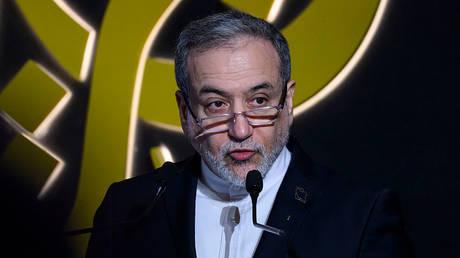
Tensions in the Middle East remain a hair-trigger situation, folks, and it seems like both the U.S. and Iran are walking a tightrope over a very deep chasm. Iran, through its Foreign Minister Abbas Araghchi, has issued a stark warning: attack us, and we’ll hit back at your bases in the region. It’s a statement dripping with potential consequences, and it comes hot on the heels of indirect talks between the two nations in Oman.
Iran's SHOCK Warning: Will They REALLY Strike US B...
These Oman talks, held Friday, represent the first real attempt to de-escalate the situation after a year of heightened tensions – largely sparked by those controversial strikes on Iranian nuclear facilities last year. Remember, the justification for those strikes was to prevent Iran from developing nuclear weapons, something they vehemently deny. President Trump has been pretty vocal about further attacks if Iran doesn’t come back to the negotiating table, even sending a naval "armada" to the region last month. A show of force, no doubt, demanding limitations on uranium enrichment and Iran's missile program.
Araghchi, speaking to Al Jazeera, called the resumption of talks "a good starting point," which is diplomatic-speak for "we're still miles apart but at least we're talking." He rightly pointed out the deep-seated "mistrust" lingering after last year's strikes. His warning about retaliation is blunt: "If Washington attacks us, there is no possibility of attacking US soil, but we will strike their bases in the region." In other words, don't think you can punch us without getting punched back. And when you consider the concentration of U.S. military assets scattered across the Middle East, that's a serious threat.
He also reiterated that while Iran is, apparently, ready for war, he believes the nuclear issue can only be resolved through dialogue. But, and this is a big but, that dialogue has to be free from threats or pressure. Iran’s not backing down on its right to enrichment, either, claiming it must continue based on national needs. Forget about negotiating on their missile program, too. According to Araghchi, that's a "purely defensive matter." So, we're talking about some significant sticking points here.
While Trump called the Oman talks "very good," he also continued with the threats, warning of "very steep" consequences if a deal isn't reached. It’s a classic push-and-pull strategy, but it’s hard to say if it's going to work. Adding fuel to the fire, the U.S. State Department announced new sanctions on Iran targeting over 30 entities, individuals, and vessels, all allegedly involved in illicit petroleum and petrochemical trade. So, even as they're talking, they're tightening the screws. It's a complex game of chess, and frankly, the stakes are incredibly high.
More meetings are expected next week, but with the U.S. maintaining a significant military presence in Qatar, Bahrain, Kuwait, the UAE, Iraq, Syria, Jordan, and Djibouti, you can understand why Iran feels like it's surrounded. As Tehran sees it, this network of US bases near its borders poses a direct security threat. Let’s hope these upcoming talks yield some progress, because the alternative doesn't bear thinking about.
Comments
Please sign in with Google to post a comment
No comments yet. Be the first to comment!