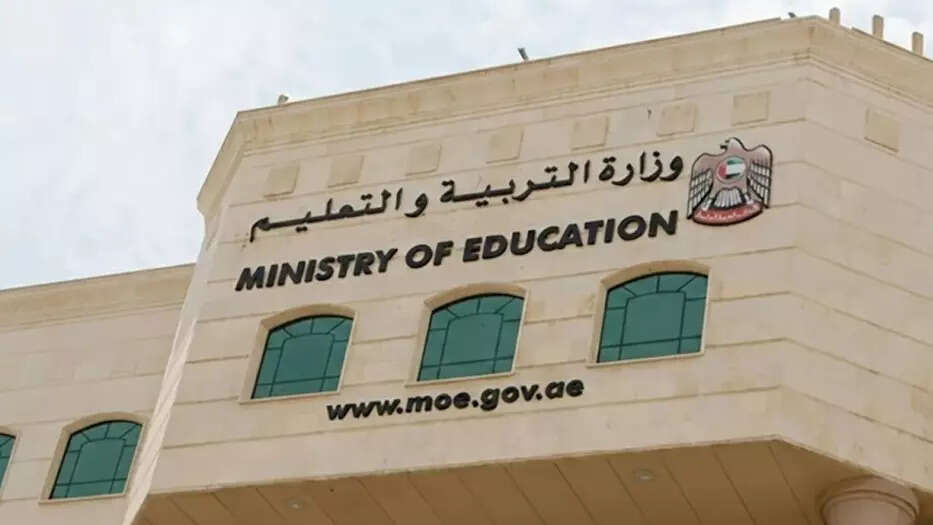
The UAE is shaking things up in the education sector, and it's a move that's sure to spark debate around dinner tables across the Emirates. In a bold new initiative, the Ministry of Education has decreed that advanced mathematics and science subjects will be taught exclusively in English in private schools. Yes, you read that right: *only* English. This isn't some far-off dream; the changes are slated to begin with Grade 9 students in the 2026-2027 academic year.
UAE Education SHAKE-UP! Math & Science in English:...
The ripple effect will continue, with each subsequent year adding another grade level until, by 2029-2030, all advanced math and science classes from Grade 9 through Grade 12 will be conducted entirely in English. That's a pretty swift turnaround, if you ask me. It's a pretty significant shift for a country that prides itself on its diverse culture and multilingual environment.
Why the sudden push for English? Well, the official line is that it's all about global competitiveness. The MoE emphasizes the need to equip students with the necessary linguistic tools to thrive in higher education and, crucially, in STEM-related careers. And you know, they have a point. English is undeniably the lingua franca of the scientific and technological world. Having a strong command of it opens doors to international universities, research opportunities, and a broader range of job prospects.
Specifically, this new mandate applies to what they're calling the "Advanced Track" – basically, the program designed to funnel students towards university-level STEM studies. So, if your kiddo is dreaming of becoming the next great Emirati engineer or physicist, expect a lot more English homework in their future. The aim is clear: to ensure that students develop not just strong scientific and mathematical skills but also the ability to articulate those skills effectively in a global context.
Of course, this isn't without its potential challenges. Concerns about students who may not have a strong foundation in English are already bubbling up. Will there be adequate support provided to help these students bridge the gap? What about the cultural implications of prioritizing English in this way? These are important questions, and the Ministry of Education will need to address them head-on to ensure a smooth and equitable transition. Still, as someone who's lived and worked here for years, I can see the logic. The world is shrinking, and equipping the next generation with the tools to compete on a global stage is undeniably crucial. It'll be interesting to see how this unfolds.
Comments
Please sign in with Google to post a comment
No comments yet. Be the first to comment!