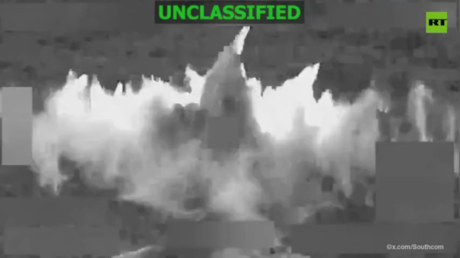
Another day, another deadly strike in the US Southern Command's ongoing "War on drugs." This time, two individuals are confirmed dead after a US military operation targeting a suspected drug-trafficking vessel in the Eastern Pacific. The Southern Command released a statement Friday detailing the incident, which occurred the day prior under the direction of General Francis L. Donovan. The target? A vessel allegedly "operated by Designated Terrorist Organizations," though the specific group remains unnamed.
Pacific Strike: US Military Kills Two! What Were T...
The Command is leaning heavily on intelligence data to justify the strike. According to their statement, the boat was navigating "known narco-trafficking routes" and actively "engaged in narco-trafficking operations." Thankfully, no US military personnel were harmed during the operation. The Southern Command even shared a brief video clip, showing what appears to be a small boat being rocked by two separate explosions. It's pretty chilling stuff, to be honest.
This strike is part of the Trump administration's increasingly aggressive approach to combating drug trafficking. Instead of the traditional boarding and seizure operations, the focus has shifted towards outright destruction of suspected vessels. It's a strategy that's raising eyebrows, to say the least. Since September 2025, this "War on drugs" has reportedly claimed the lives of 128 people across 36+ attacks in the Caribbean and Eastern Pacific, according to an AP tally. While the frequency of these attacks seems to have slowed somewhat since the start of the year, the human cost is undeniable.
The whole situation becomes even more complicated when you consider the political backdrop. Remember the US kidnapping of Venezuelan President Nicolas Maduro earlier this year? He's still awaiting trial in New York, accused of drug trade links he vehemently denies. Many believe those charges are nothing more than a flimsy pretext for regime change. It all feels incredibly heavy-handed.
Unsurprisingly, this "war on drugs" is attracting its fair share of criticism. Concerns are growing about the legal basis for these strikes, with many questioning whether the administration has provided sufficient evidence to prove these boats are actually run by drug cartels. And let's not forget the elephant in the room: Congress hasn't explicitly authorized the use of military force in this way. Trump, however, defends the strikes, claiming they've dramatically reduced the flow of drugs into the US. Is it working? Are the results worth the cost? Those are the questions we need to be asking.
Even regional leaders are starting to speak out. Colombian President Gustavo Petro, for example, has condemned the attacks as illegal and warned of potential escalation, though his recent meeting with Trump suggests perhaps that relationship hasn't been irreparably damaged, yet. It's a complex situation, with no easy answers and potentially devastating consequences if miscalculated. Time will tell where this all leads.
Comments
Please sign in with Google to post a comment
No comments yet. Be the first to comment!