US policy toward China and the broader Indo-Pacific region remains a significant question mark under a potential return of Donald Trump to the White House, according to veteran diplomat Richard Haass. Speaking on the sidelines of the World Governments Summit in Dubai, Haass, the president emeritus of the Council on Foreign Relations, highlighted what he sees as a pattern of inconsistency in Washington's approach to Beijing. This, he suggests, creates uncertainty for allies and adversaries alike.
Trump's China Policy: Diplomat's SHOCK Warning for...
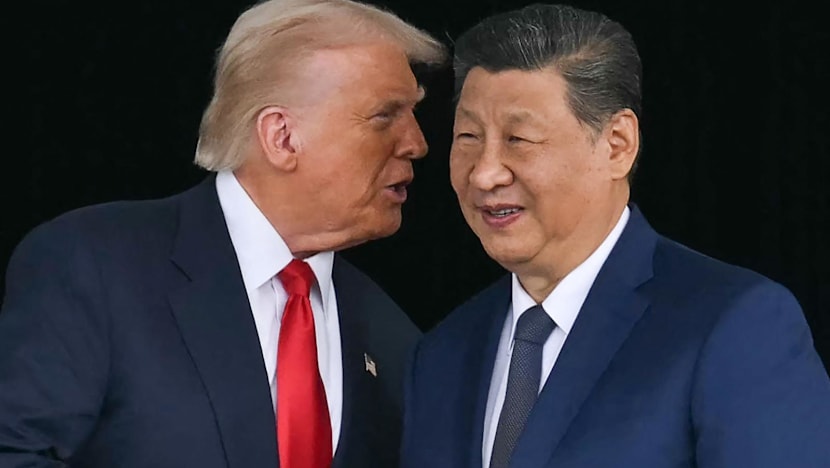
Haass's comments come as all eyes are on a possible meeting between Trump and Chinese President Xi Jinping, rumored to be taking place in Beijing in April. The anticipation is high, especially following their recent phone conversation – their first since November. The call, which occurred just hours after Xi spoke with Russian President Vladimir Putin via video conference, touched on contentious issues like Taiwan, trade, and security. But did it really move the needle?
“Everyone’s going to be trying to read everything they can into the phone call,” Haass told CNA in Dubai, downplaying its overall significance. "Obviously, the US and China have very different priorities. But I don't think the phone call itself changed much, if anything.” I tend to agree. These calls are often more about optics and maintaining a semblance of communication than about achieving concrete breakthroughs.
The inconsistencies Haass points to are quite glaring. Take, for instance, the US announcement last December of a massive arms sales package to Taiwan, totaling over $11 billion. That was a clear red flag for Beijing. Yet, in recent months, we've also seen a softening of the US stance on tariffs and advanced chips, potentially offering China some economic relief. It's a bit of a push-pull, and that's what has so many observers scratching their heads.
“It's very hard to read a consistent direction in the US approach to China,” Haass explained, noting that the upcoming April meeting could provide some much-needed clarity. The big question, he says, is whether Washington will prioritize commerce or strategic competition with Beijing. "It's why this meeting in April is so important, because people are thinking, or at least hoping, that we finally get a degree of clarity and consistency.” Let's hope so. Consistency is key for stability.
Furthermore, the extent to which the US is willing to defend Taiwan remains a major point of contention. Haass is a strong advocate for abandoning the current policy of "strategic ambiguity" in favor of "strategic clarity," stating that the US should explicitly commit to defending Taiwan if China uses force. "I think the United States should move to a position of strategic clarity that we will come to Taiwan's aid if the mainland used force against it," he said. "We need to marry the two, and that's where I believe strategic clarity backed up by greater capability would be very much consistent with promoting..." It's a bold stance, but one that could potentially deter China from escalating tensions.
Comments
Please sign in with Google to post a comment
No comments yet. Be the first to comment!