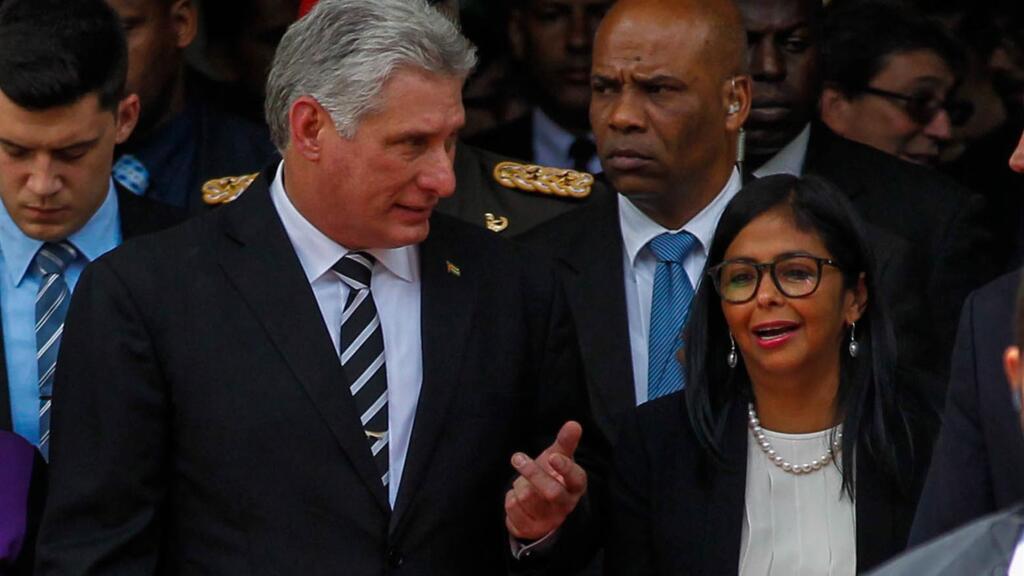
Cuban President Miguel Diaz-Canel has made it clear: Cuba's willing to talk with the United States, but not if it means getting bullied into it. In a statement released Thursday, Diaz-Canel emphasized that any dialogue must be on equal footing, free from pressure or preconditions. It's a pretty straightforward stance, really, especially when you consider the context.
Cuba's Shocking US Offer: Will This End the Decade...
His words come at a tense time. For months, the Trump administration has been tightening the screws on Cuba, threatening to cut off oil shipments and generally leaning hard on the island nation to bend to its will. The pressure tactic is no secret, with Trump openly talking about forcing Cuba into a "deal." And let's be honest, it's not exactly a subtle approach. Cuba, meanwhile, has been struggling with fuel shortages and a difficult economic situation – a situation exacerbated, no doubt, by these external pressures.
You have to wonder if these tactics are truly effective. While economic hardship can certainly create instability, it can also breed resentment and resistance. Demanding concessions under duress rarely leads to genuine, long-lasting agreements. It's more likely to create a situation where any perceived weakness is exploited, and trust is completely eroded. In my experience covering international relations, I’ve seen this play out time and time again.
Diaz-Canel's statement seems to acknowledge this reality. He's essentially saying, "We're not afraid to talk, but we're not going to be strong-armed." It's a calculated risk, of course. Refusing to negotiate under pressure could prolong the current economic difficulties. However, it also sends a powerful message of sovereignty and defiance. It tells the U.S. that Cuba won't be dictated to, and that any future relationship must be built on mutual respect.
The ball is now firmly in Washington's court. Will the U.S. soften its stance and engage in genuine dialogue? Or will it continue down the path of coercion, risking further isolating Cuba and potentially destabilizing the region? It remains to be seen. But one thing is clear: Diaz-Canel isn't backing down, and the future of U.S.-Cuban relations hangs precariously in the balance.
Comments
Please sign in with Google to post a comment
No comments yet. Be the first to comment!