From Mars With a Mystery: "Black Beauty" Meteorite Reveals New Secrets of Martian Water
Mars Rock's Secret Revealed! What Scientists Just ...
Hold onto your hats, space fans! Scientists have just unlocked a new chapter in the Martian water story, and it's all thanks to a fascinating meteorite nicknamed "Black Beauty." A team from the Technical University of Denmark, led by Estrid Naver, has used cutting-edge, non-destructive scanning techniques to peer inside this ancient piece of the Red Planet, uncovering some pretty compelling evidence that water was far more prevalent on early Mars than previously thought. And the best part? They did it without having to destroy or even damage the precious sample.
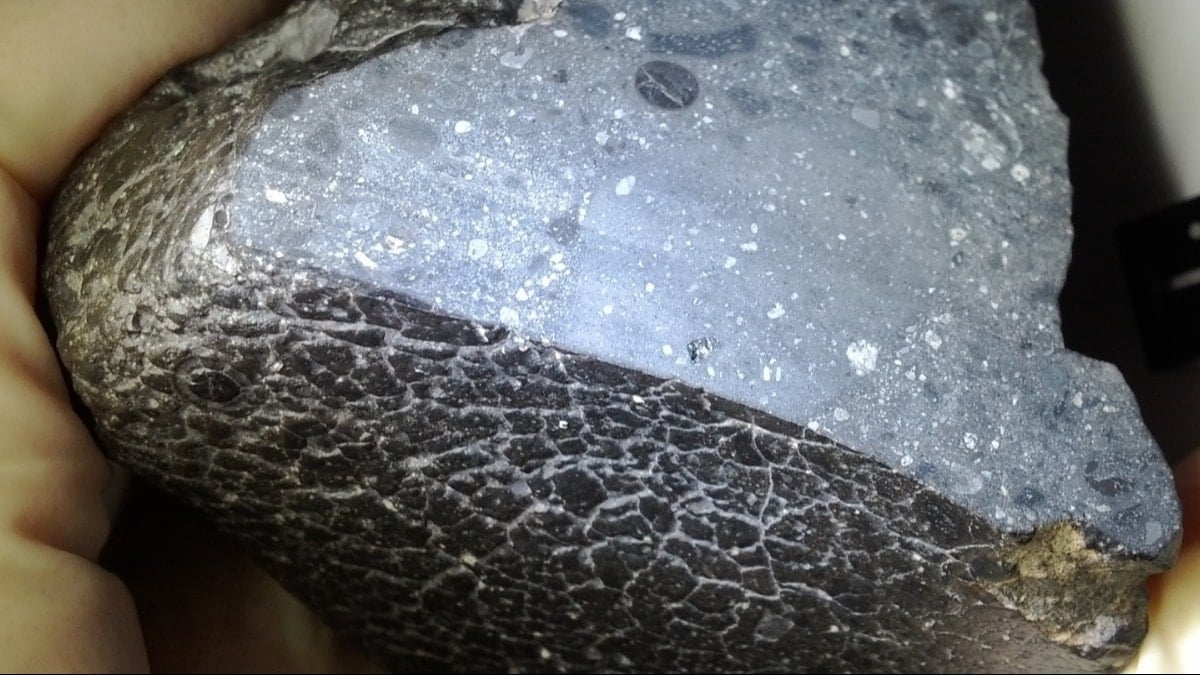
Black Beauty, formally known as NWA 7034, is a Martian meteorite with serious street cred. Clocking in at around 4.48 billion years old, it's one of the oldest known pieces of Mars we've managed to get our hands on. The general consensus is that a massive impact on Mars sent this rock hurtling through space, eventually landing right here on Earth. Past research on Black Beauty typically involved some pretty invasive procedures – cutting, crushing, dissolving… you get the picture. Not exactly ideal when dealing with such a rare and valuable artifact.
That's where this new study really shines. Instead of going the destructive route, Naver's team opted for computed tomography (CT) – think of it like medical imaging, but for rocks. They combined X-ray CT, which is good at spotting dense elements, with neutron CT, a slightly more niche technique that's particularly adept at detecting hydrogen, a key component of water. This dynamic duo allowed them to create detailed 3D images of the meteorite's inner workings without so much as a scratch.
So, what did they find inside this black rock? Well, the analysis revealed small fragments of previously undocumented rock types. We already knew that Black Beauty was formed from a bunch of different rock bits mashed together during an impact event. But these new fragments are particularly intriguing. Specifically, the team identified hydrogen-rich iron oxyhydroxide (H-Fe-ox) fragments. Okay, it's a mouthful, but these fragments, though only making up a tiny fraction (0.4%) of the sample, are estimated to hold about 11% of its total water content. Black Beauty, as a whole, already has a relatively high water content for present-day Mars (around 6000 ppm), which is bone dry, comparatively speaking.
What's really interesting is how this aligns with findings from the Perseverance rover in Jezero Crater. The fact that Black Beauty, which originated from a completely different region of Mars, shows similar signs of past water activity strengthens the idea that liquid water was widespread on the Martian surface billions of years ago. It makes you wonder what other secrets are locked inside these Martian rocks, just waiting for us to uncover them. Who knows, maybe the next Black Beauty will finally give us the answer to whether life ever existed on the Red Planet.
Comments
Please sign in with Google to post a comment
No comments yet. Be the first to comment!