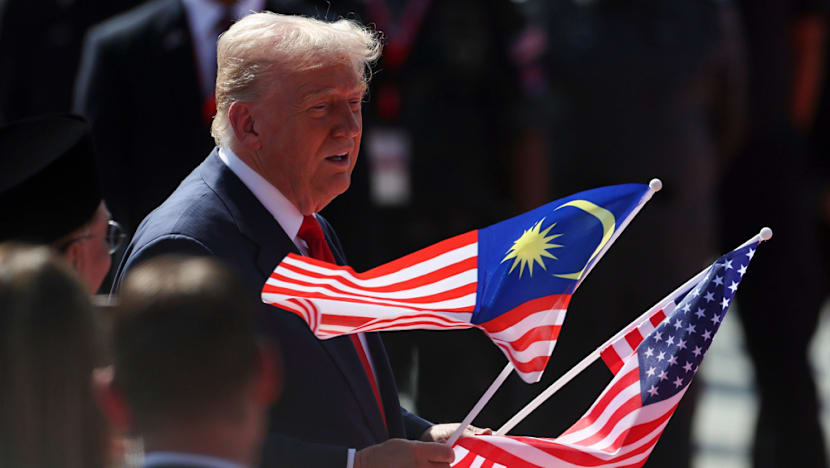
Singapore – Southeast Asia finds itself in a familiar, yet still unsettling, position: trying to decipher where it truly stands in Washington's grand strategic plans. The latest US strategy documents, including the National Security Strategy (NSS), the National Defense Strategy (NDS), and the Agency Strategic Plan for the State Department (ASP), have been pored over by regional analysts, and the initial read isn't exactly comforting.
US Abandoning Southeast Asia?! What Happens Next W...
Kevin Chen, a researcher at the S Rajaratnam School of International Studies, argues that while Southeast Asia might not be topping Washington's priority list according to these documents, disengagement is simply not an option. It's a delicate balancing act, really. On one hand, more US attention to the Indo-Pacific is generally seen as a good thing, bolstering security and stability in a region increasingly shadowed by China's influence. On the other hand, too much focus on strategic competition, particularly concerning flashpoints like Taiwan and the South China Sea, raises anxieties about being caught in the crossfire.
The documents themselves paint a somewhat ambiguous picture. The NSS mentions Southeast Asia only twice, and the NDS and ASP omit it entirely. Telling, right? Instead, there seems to be a significant shift in strategic focus towards the Western Hemisphere. Now, I get that domestic concerns are always paramount, but to essentially relegate the Indo-Pacific, a region teeming with economic and strategic importance, to a secondary role feels a little… shortsighted. It's almost as if Washington is saying, "We'll get to you eventually, but first, we need to fix things closer to home."
This has led some to jokingly suggest that perhaps Southeast Asian nations might be better off "hiding" from Washington's gaze, finding safety in obscurity. While that might sound appealing in theory, the reality is far more complex. The region understands the importance of a strong US presence in the Indo-Pacific. The NDS, for instance, explicitly states the importance of preventing China from effectively vetoing American access to the region's economic center of gravity.
And it’s not all doom and gloom. Military-to-military ties remain robust. Despite the Philippines' apparent absence from the aforementioned documents, there are over 500 military exercises planned for 2026. That's a significant commitment, suggesting that behind the strategic pronouncements, practical cooperation continues.
What Southeast Asian nations truly fear, according to Chen, isn't a US-China rapprochement, but rather a G2 arrangement where Washington and Beijing act as the sole power brokers, sidelining ASEAN and undermining its cherished "centrality." This would be a major blow to the region's autonomy and its ability to shape its own destiny.
The elephant in the room, however, is Washington's approach to its allies and partners. Some in the region perceive this approach as harsher than the one it takes with its adversaries. The use of tariffs, for example, is viewed by some as strong-arming countries that have benefited from the US-led order. It's a perception problem, to be sure, and one that Washington needs to address if it wants to maintain its influence in Southeast Asia. Ultimately, Washington's prioritization of security goals in the Western Hemisphere is already causing palpable unease among leaders in Southeast Asia. How this plays out in the coming years remains to be seen.
Comments
Please sign in with Google to post a comment
No comments yet. Be the first to comment!