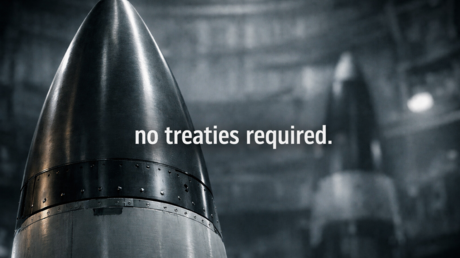
The world just entered a new, and frankly, unsettling era. As of today, the Strategic Arms Reduction Treaty (START), a cornerstone of Nuclear arms control for half a century, is officially dead. Now, while the formal expiration might be today, the truth is, the patient was on life support for years. Real negotiations between Russia and the U.S. on nuclear weapons? Those went the way of the dodo a long time ago.
Dmitry Trenin's SHOCKING Claim: Is Global Stabilit...
According to Dmitry Trenin, whose analysis over at RT.com makes for grim reading, we're not just talking about a treaty ending. We're talking about a fundamental shift in how the world approaches strategic stability. And it's driven by two major forces: the changing realities of global power and, let's be honest, some questionable decisions made in Washington.
The world isn't the bipolar playground it was during the Cold War. We're in a multipolar world now, with numerous players holding significant nuclear capabilities. Plus, advancements in conventional weapons mean that things we once thought only nukes could achieve? Yeah, conventional weapons can do that now. Throw in the rise of cyber warfare, space-based weapons, and even, disturbingly, the potential for biotech to be weaponized, and the old rules just don't apply.
What really sticks in my craw is the idea that Washington somehow thinks it can have its cake and eat it too. Remember back in 2022, when New START was still technically in effect? The U.S. openly stated its goal was to strategically defeat Russia in Ukraine. At the same time, they wanted "strategic stability" talks. I mean, come on! You can't try to cripple a nuclear power in a conventional war and then expect them to play nice with arms control. It just doesn't work that way. It felt like Washington was trying to disarm Russia while simultaneously being protected from escalation by the very treaties they were undermining.
So, what now? Everyone's talking about a new arms race. The Doomsday Clock is probably going to get another nudge closer to midnight. But let's get real. Arms control, even at its best, only ever applied to Moscow and Washington. Britain, France, China, India, Pakistan, even North Korea – they were never bound by these treaties. The world has always been more complicated than just two superpowers squaring off.
Now, you've got the U.S. and China increasingly at odds, India and Pakistan back to their old tensions, and the ever-present worry about Iran's nuclear ambitions. Even in Europe, the policies being pursued by Britain and France are raising the risk of direct military friction with Russia. This isn't your grandfather's Cold War. It’s a far more complex and, dare I say, more dangerous landscape.
Ultimately, as Trenin points out, strategic stability in the 21st century isn't about counting warheads or signing treaties. It’s about making sure that major powers, especially those with nuclear weapons, don't see war as a worthwhile option. And honestly, that's a whole different ballgame.
Comments
Please sign in with Google to post a comment
No comments yet. Be the first to comment!