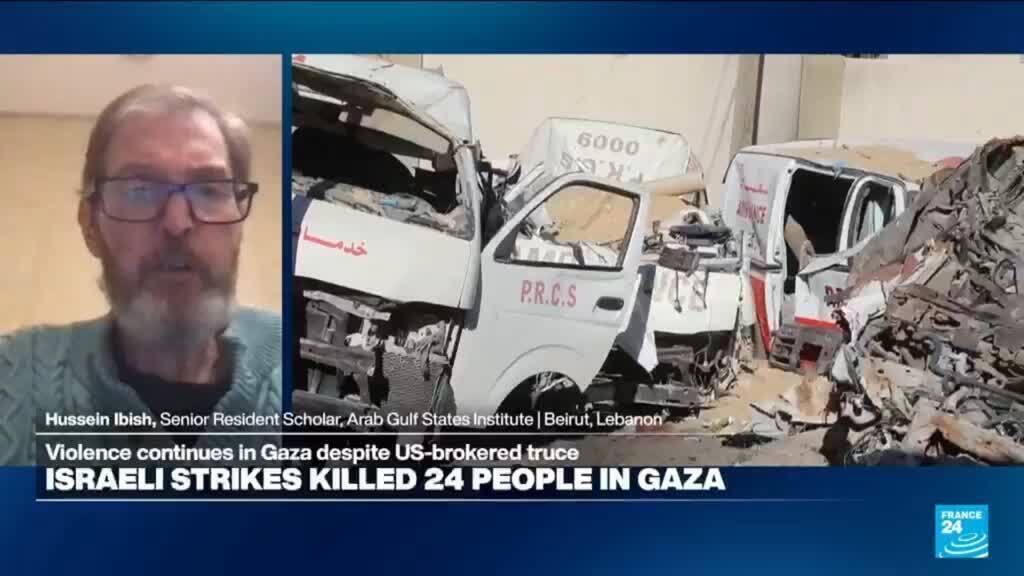
Hopes for lasting peace in the Israel-Hamas conflict are dimming, according to a leading Middle East analyst. Hussein Ibish, a Senior Resident Scholar at the Arab Gulf States Institute, recently told FRANCE 24 that both sides are demonstrably uninterested in moving forward with the second phase of the already fragile ceasefire agreement. His assessment paints a bleak picture of the immediate future, suggesting that the underlying motivations of both parties are fundamentally at odds with a genuine resolution.
Israel-Hamas Ceasefire DEAD?! What Happens Now is ...
Ibish’s analysis hinges on what he describes as the "prime directives" guiding both Israel and Hamas. For Israel, he argues, the overriding goal is the annexation of the West Bank. This, of course, directly conflicts with Palestinian aspirations for statehood and self-determination, making any long-term peace agreement incredibly difficult to achieve. It's a perspective that, frankly, resonates with what we've seen on the ground for years; a slow but steady expansion of settlements and increasing restrictions on Palestinian life in the West Bank.
On the other side of the equation, Ibish contends that Hamas's primary objective is to supplant Fatah as the dominant force within the Palestinian national movement. He argues that Hamas seeks to transform the movement from a secular, nationalist one into an Islamist organization under their complete control. This ambition, naturally, puts them at odds not only with Israel but also with a significant portion of the Palestinian population who may not necessarily align with Hamas's ideology.
Now, it's important to remember that Ibish's perspective is just one viewpoint, albeit a well-informed one. But it’s a sobering reminder that achieving a lasting peace involves not just negotiating ceasefires, but also addressing the fundamental political and ideological goals of all parties involved. And if those goals are, as Ibish suggests, annexation and Islamist dominance, then the path to peace becomes exponentially more challenging. You can see how this impacts the entire region.
Ultimately, this paints a discouraging picture. While ceasefire agreements offer temporary respites from violence, they don’t address the core issues driving the conflict. Ibish's remarks highlight the deep-seated mistrust and competing interests that continue to fuel the animosity, leaving little room for optimism regarding a swift or easy resolution. One has to wonder, where do we go from here?
Comments
Please sign in with Google to post a comment
No comments yet. Be the first to comment!