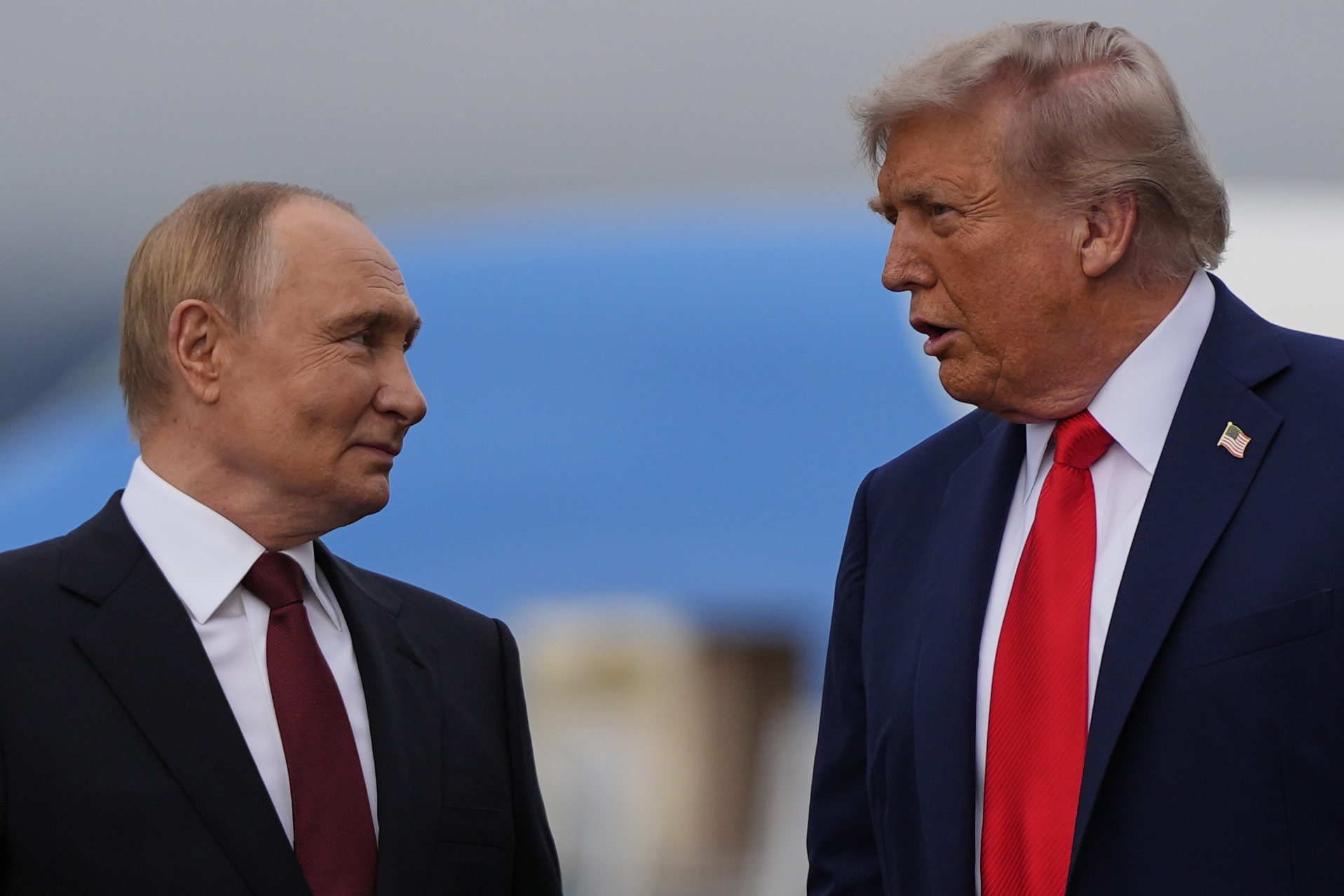
The world just got a little bit more dangerous. The last Nuclear arms control treaty between the U.S. and Russia, a cornerstone of global security for over half a century, has officially expired. The Kremlin expressed its regret over the development, but here we are, entering uncharted territory without those crucial guardrails in place.
Nuclear Apocalypse?! U.S.-Russia Treaty Collapses ...
Secretary of State Marco Rubio laid the blame at the feet of former President Trump, claiming he had emphasized the need to include China in any future agreements. The argument goes that China's rapidly expanding Nuclear arsenal can't be ignored. It's a fair point, but the inability to reach a trilateral agreement has left us with… nothing. As someone who remembers the Cold War, this feels like a step backwards.
President Putin and Chinese leader Xi Jinping reportedly discussed the treaty's demise, with Putin pointing the finger at the U.S. for failing to respond to extension proposals. Kremlin advisor Yuri Ushakov attempted to project an image of calm, stating that Russia would act "in a balanced and responsible manner." But what does that even mean in this context? Actions speak louder than words, and the expiration of this treaty is a very loud action.
Kremlin spokesman Dmitry Peskov called the expiration "negative," reiterating Russia's commitment to a "responsible, thorough approach." But he also stressed that Russia would be guided "primarily by its national interests." Again, that's hardly reassuring. The Russian Foreign Ministry added fuel to the fire, stating that Moscow is ready to take "decisive military-technical measures" to counter perceived threats. They did offer a glimmer of hope, saying they're "open to seeking political-diplomatic ways," but only if the "appropriate conditions" are met. So, a rather large "if."
The New START treaty, signed in 2010, limited each side to 1,550 nuclear warheads on 700 missiles and bombers. Crucially, it included on-site inspections to verify compliance. Those inspections were halted in 2020 due to the pandemic and never resumed. In February 2023, Putin suspended Russia's participation, citing the U.S. and NATO's goal of defeating Russia in Ukraine. He argued that Russia couldn't allow U.S. inspections under such circumstances, though he initially pledged to respect the treaty's caps. It all feels like a slow-motion unraveling.
Putin offered a last-ditch effort in September to abide by New START's limits for a year to allow for negotiations. He warned that the treaty's expiration would be destabilizing. He wasn't wrong. New START was the last in a line of agreements stretching back to 1972's SALT I. These agreements weren't perfect, but they provided a framework, a sense of predictability. Now, that's gone, and the world is a more dangerous place because of it.
Comments
Please sign in with Google to post a comment
No comments yet. Be the first to comment!