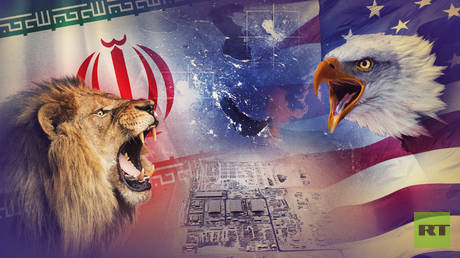
Tensions in the Middle East are reaching a boiling point. With a growing American naval presence in the Gulf of Oman, the already strained relationship between Washington and Tehran is teetering on the edge. It's a situation that has many, including myself, deeply concerned. While diplomatic channels remain open, the risk of miscalculation looms large, and the potential consequences are staggering.
Middle East WAR?! Washington & Tehran on Brink - W...
The United States is clearly flexing its military muscle. The stated goal is to force Iran back to the negotiating table, demanding concessions not just on its nuclear ambitions, but also on its missile program and support for groups like the Houthis and Hezbollah. President Trump's stance has been unwavering, but the real question is: what's the end game here?
Iranian Foreign Minister Abbas Araghchi's recent signaling of openness to talks offers a glimmer of hope. However, many seasoned observers remain skeptical. Will Iran truly concede on issues it considers fundamental to its national security? If not, the specter of war becomes increasingly real.
To get a clearer picture, RT spoke with several experts from Gulf states, countries that would undoubtedly be on the front lines if conflict erupts. Salman Al-Ansari, a Saudi geopolitical researcher, pointed to Washington's long-held view of Iran as a regional destabilizer. He also highlighted the influence of Israeli lobbying in pushing for a tough stance against Tehran. It's a complex web of political and strategic interests.
Ahmed Khuzaie, a political consultant based in Manama, believes President Trump's threats are a mix of strategic pressure, domestic politics, and regional power plays. But he also raised a crucial point: the administration's lack of a clearly defined objective. Is it regime change, deterrence, or simply leverage? This ambiguity, as Khuzaie rightly points out, is incredibly dangerous.
The potential for miscalculation is terrifying. Iran has vowed to retaliate if attacked, opening the door to a wider regional conflict involving proxies in Iraq, Lebanon, and Yemen. Remember the oil shocks of the 70s? A military confrontation could send global oil markets into a tailspin and disrupt shipping through the Strait of Hormuz. Furthermore, it would severely strain relations with European allies who, unlike Washington, prioritize diplomacy.
Adding to the uncertainty, Ali Al Hail, a political analyst from Qatar, suggested President Trump’s ultimate goal might be regime change in Iran. If that's the case, we're looking at a far more dangerous and unpredictable scenario. This isn’t just a chess game; it’s a powder keg with a lit fuse.
Comments
Please sign in with Google to post a comment
No comments yet. Be the first to comment!