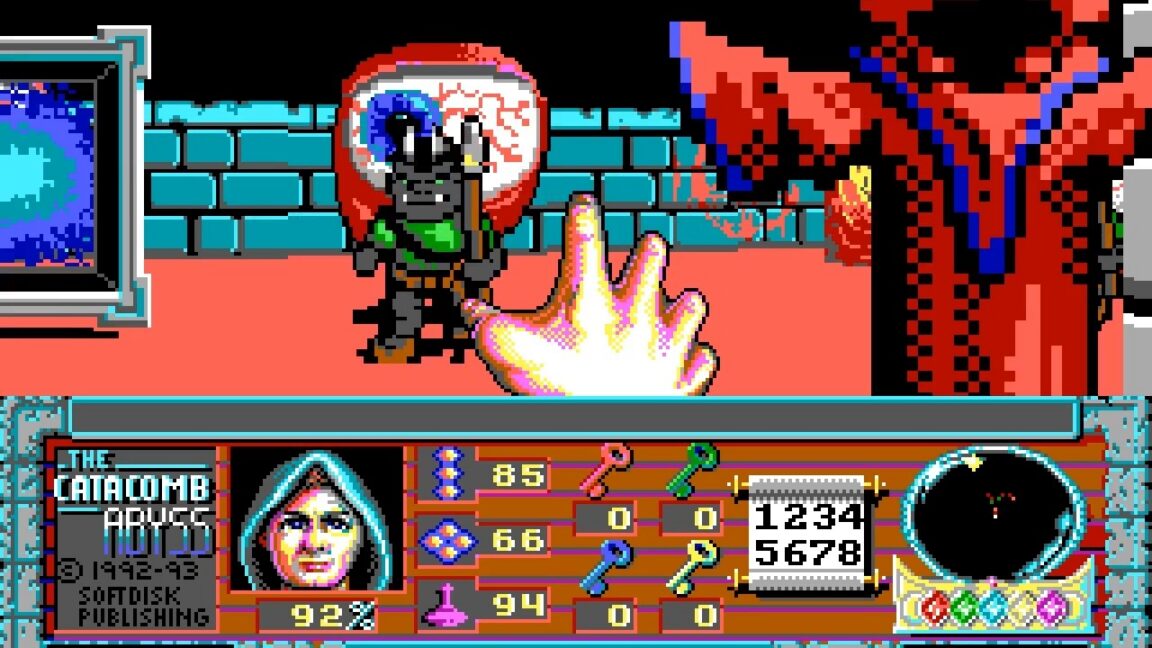
Okay, so, *Catacomb 3D*. Most gamers probably haven't heard of it, and that's a shame. But thanks to a recent retrospective featuring John Romero himself, along with other original members of Id Software, this piece of often-overlooked PC gaming history is finally getting some deserved attention. It's easy to forget how much trailblazing these guys actually did back in the day.
Catacomb 3D: The SHOCKING Secret Behind Wolfenstei...
Released almost 35 years ago, *Catacomb 3D* was more than just another dungeon crawler. It was an experiment, a testing ground for ideas that would later explode onto the scene with *Wolfenstein 3D*. Remember mouse support being a big deal? Yep, *Catacomb 3D* was there. Color-coded keys? Check. Secret passages revealed by shooting walls? Absolutely. It had all the hallmarks of an early Id Software title.
However, despite its innovations, *Catacomb 3D* almost marked the end of this particular development path for Id. As John Carmack pointed out in the retrospective, there were concerns the game lacked the story and depth that PC gamers were supposedly craving. The team was essentially pushing back against the prevailing wisdom, arguing that fast-paced, twitch-based action was still a viable and, frankly, awesome gaming experience. It's interesting to think about how close they were to abandoning that approach altogether.
The technological leap from *Hovertank One* to *Catacomb 3D* was significant. Carmack was obsessed with texture-mapped walls, a concept that had captivated him ever since he saw a texture-mapped cube on the cover of *The Fundamentals of Computer Graphics*. You can practically hear the excitement in his voice when he describes optimizing the rendering to slap down multiple pixels at a time. This wasn't just about making a game; it was about pushing the boundaries of what was possible on the hardware of the time.
And that's really where the story gets interesting. The team was working on *Keen 7* when Carmack's enthusiasm for texture mapping took over. Two weeks of work on *Keen 7* were scrapped, and the team pivoted to what would become *Wolfenstein 3D*. It was a gamble, no doubt, but it paid off in a huge way.
Carmack's explanation is revealing: they felt like the future lay in pushing those boundaries. They wanted to take gaming somewhere new, somewhere that sticking to conservative lanes wouldn't allow. It's a reminder that sometimes the greatest innovations come from taking risks, from abandoning the familiar and embracing the unknown. Without *Catacomb 3D*, we might never have had *Wolfenstein 3D*, and the entire landscape of first-person shooters would be very, very different.
Comments
Please sign in with Google to post a comment
No comments yet. Be the first to comment!