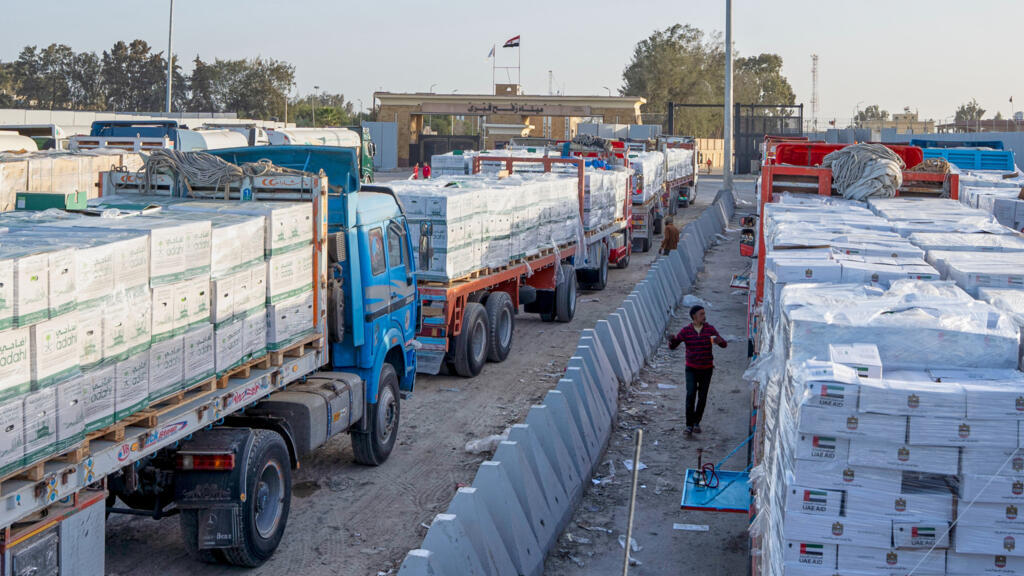
Gaza's Rafah crossing, that vital artery connecting the besieged territory to Egypt, has creaked back open, offering a sliver of hope to some Palestinians. An Israeli security official confirmed on Monday that the crossing, which has been largely shuttered amidst the ongoing conflict and heightened tensions, would see a limited resumption of pedestrian traffic. It's not a full reopening, by any means, but a potentially significant development nonetheless.
Rafah Crossing REOPENS! But Who Can Escape Gaza?!
Egyptian authorities have stated that the initial phase of this reopening will be highly restricted. We're talking about a trickle, really. According to an Egyptian official, only 50 Palestinians will be permitted to cross *into* Egypt, and 50 *from* Egypt into Gaza, on this first day. That's a tiny fraction of the people desperate to leave or return to their homes and families.
It's easy to get lost in the numbers, but it's important to remember what these border crossings represent. For many Gazans, Rafah is more than just a checkpoint; it's a lifeline. It's a path to medical treatment unavailable within Gaza, a route for students to pursue education abroad, and, quite simply, a means for families separated by circumstance to reunite. The closure of Rafah has had a devastating impact, exacerbating the already dire humanitarian situation within the Strip.
The reasons for the crossing's frequent closures are complex and deeply intertwined with the Israeli-Palestinian conflict and Egypt's own security concerns. While security is paramount, the human cost of these closures is undeniable. The long lines, the uncertainty, the sheer desperation of people trying to cross – I've witnessed it firsthand, and it's heartbreaking.
This partial reopening raises a lot of questions. How were the 50 individuals chosen? What criteria were used? And, perhaps most importantly, is this a sustainable solution or merely a temporary measure? Will the number of permitted crossings increase in the coming days and weeks? These are answers we desperately need to understand the true impact of this move. It's a welcome step, of course, but a cautious optimism is definitely warranted. The needs of the people far outweigh the current capacity, so let’s hope this is a sign of a longer-term, more substantial easing of restrictions.
Comments
Please sign in with Google to post a comment
No comments yet. Be the first to comment!