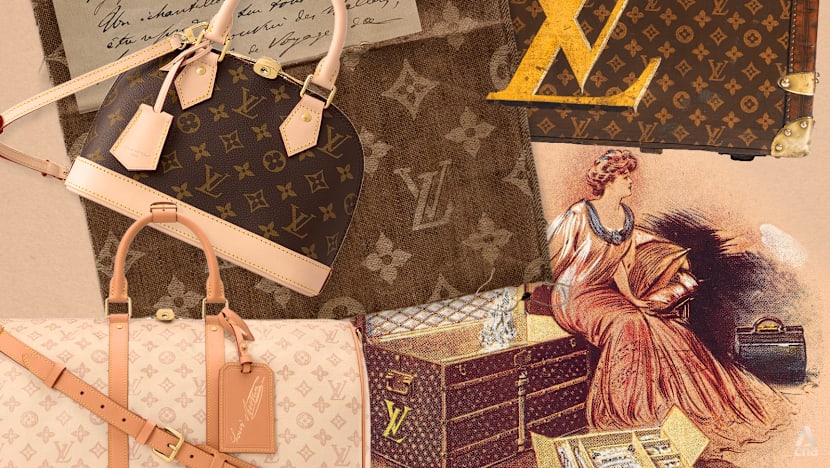
From anti-counterfeit to cultural icon: How the Louis Vuitton monogram defined style for 130 years. What began as a clever ploy to thwart counterfeiters in 1896 has blossomed into one of fashion's most recognizable signatures. From the iconic Speedy to the ever-popular Neverfull, we trace the ascent of the Louis Vuitton monogram – and spotlight the new releases celebrating its 130th anniversary. In partnership with Louis Vuitton.
Louis Vuitton's Secret Weapon: How a Logo Conquere...
When Georges Vuitton, son of Louis, conceived the house's monogram in 1896, he could scarcely have imagined its enduring legacy as a symbol of high fashion. It's a fascinating story, really. This motif, however simple it seems now, served as a deeply personal tribute to his father, who had passed away four years prior in 1892. At its heart, the "LV" initials are framed by stylized floral emblems, a composition evoking remembrance and renewal.
Long before brand marks became ubiquitous – I'm talking way before logos were slapped on everything imaginable – the Louis Vuitton monogram stood as one of the earliest modern logos. But aesthetics weren't the sole objective, of course. Georges designed the monogram as a bulwark against the rising tide of counterfeit trunks mimicking Vuitton designs. Patented in 1897, the pattern was a remarkably prescient move, positioning the house as a pioneer of creative authorship and brand protection.
The monogram emerged during a period when Parisian taste was being reshaped by Neo-Gothic influences, Japonisme, and the burgeoning Art Nouveau movement. Think flapper dresses and art deco. The pattern is said to have drawn from both Eastern and Western references, reflecting the era's evolving notions of beauty and ornamentation. It was a savvy blend of cultures, perfectly timed.
The monogram first appeared as a woven linen jacquard applied to Louis Vuitton trunks. In 1902, it was refined using the pochoir technique (stencilling), and it only became the version we recognize today with the introduction of monogram canvas in 1959. It's amazing how a simple tweak can cement a design for decades.
As travel habits evolved, and luggage became smaller and more portable (imagine lugging those trunks around today!), the monogram transitioned from hard-sided trunks and vanity cases to softer bags designed for modern transit. Louis Vuitton's canvas innovation was pivotal to this shift. Constructed on a cotton base and finished with a protective vinyl coating, the material is supple, lighter than leather, waterproof, and wear-resistant. This effective combination has ensured that the monogram canvas has remained essentially unchanged in composition since its debut.
Monogram canvas has also been instrumental in defining five signature bag silhouettes that remain central to Louis Vuitton's legacy – and arguably even more coveted today than when they were first introduced. The enduring appeal is undeniable. You see that monogram, you know it's LV.
Compact and designed for swift transit, the Speedy was conceived to carry only the essentials, and it remains a favorite in monogram canvas. Over the decades, it has attracted a diverse following spanning generations and aesthetics, from Audrey Hepburn and Catherine Deneuve to Pharrell, Naomi Campbell, Sarah Jessica Parker, and Kendall Jenner. The celeb endorsement certainly doesn't hurt!
The Keepall, a spacious travel bag that facilitated the shift from rigid trunks to soft carry-ons, embodies the appeal of the monogram canvas at its finest: flexible, foldable, and instantly recognizable – ideal fo
Comments
Please sign in with Google to post a comment
No comments yet. Be the first to comment!