From the Panama Canal standoff to Honduras: Trump reasserts Washington’s grip on Central America
Trump's Shocking Move: Is Central America Under US...
Under the current US president's approach, Central America is once again subject to a relationship shaped by coercion and strategic calculation. It's a stark reminder of a past many hoped was behind us, a past riddled with interventions and manipulation.
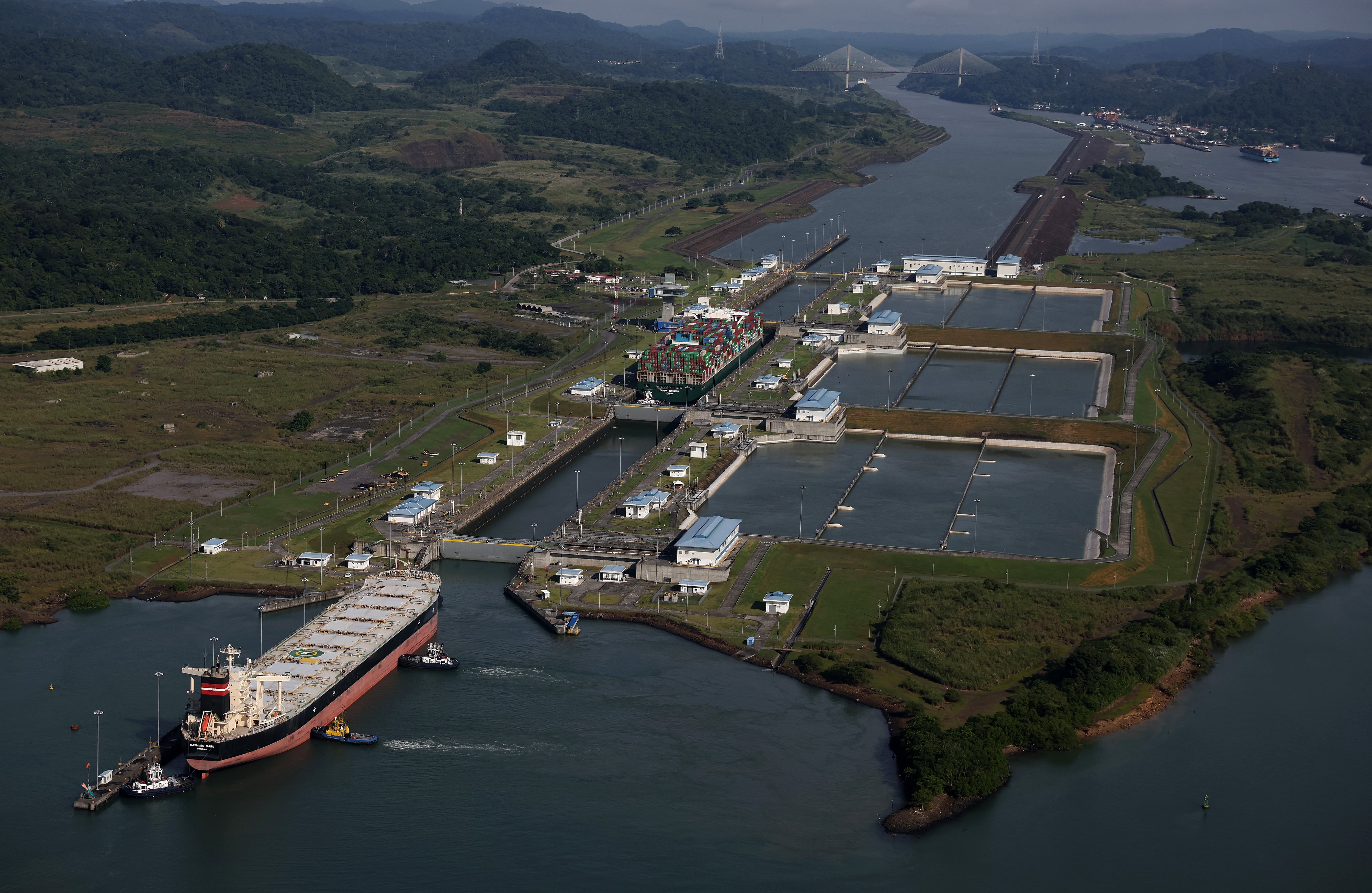
When Donald Trump publicly questioned control over the Panama Canal, alarms reverberated across Central America. It wasn't merely another bombastic statement in the Republican's provocative style, but the first visible sign of a policy that once again places the region under U.S. oversight. I remember thinking at the time, "Here we go again." It's a feeling many in the region know all too well.
Trump revived old interventionist instincts by interfering in Honduras’s presidential election and threatening to cut aid to Central American governments as leverage to force them into agreements aimed at curbing migration. Once again, the isthmus appears on Washington’s radar – not as a strategic partner, but as a backyard to be controlled. The bluntness of the approach is, frankly, breathtaking.
Wounds from U.S. interference still fester in Central America. Since the 19th century, the United States has turned the region into a priority of its foreign policy – one subject to Washington’s designs. The logic has remained consistent: protect economic, commercial, and geopolitical interests under the guise of hemispheric stability and security. It’s a familiar justification, one that often rings hollow when you look at the actual consequences on the ground.
In 1909, the U.S. intervened in Nicaragua to force the fall of president José Santos Zelaya, who was accused of challenging U.S. and European interests. But the country’s subjugation was cemented with the military occupation by U.S. Marines in 1912, which lasted until 1933 and installed a puppet government led by Anastasio Somoza García before the Marines withdrew. That imposition marked the beginning of one of the longest-lasting and bloodiest family dictatorships in Latin America, which endured for more than 40 years. The legacy of that intervention is still felt today.
The U.S. has a long, frankly appalling, history of interventions in the region. In 1954, Washington orchestrated the overthrow of Guatemala’s democratically elected president, Jacobo Árbenz, through a CIA-backed covert operation that marked the beginning of decades of violence and civil war. In the 1980s, the Reagan administration funded and supplied the Contras, a right-wing guerrilla force aiming to topple Nicaragua’s Sandinista government – a strategy that escalated into a civil war claiming over 50,000 lives. In 1989, 24,000 U.S. Southern Command troops invaded Panama to remove dictator Manuel Antonio Noriega, in an operation that left dozens of civilians dead and solidified the image of the United States as the region’s ultimate arbiter.
That past is more than just historical memory; it shapes present-day perceptions and distrust. A return to the White House by Trump has revived a policy of direct pressure, devoid of diplomatic nuance. Experts interpret this strategy as an attempt to counter China’s growing influence in what Washington still considers its natural sphere of influence. Central America, crisscrossed by key trade routes and in urgent need of investment, has become a battleground in the global power struggle. It's a complex situation with no easy answers, but one thing is clear: the people of Central America deserve better than to be treated as pawns in a geopolitical game.
Comments
Please sign in with Google to post a comment
No comments yet. Be the first to comment!