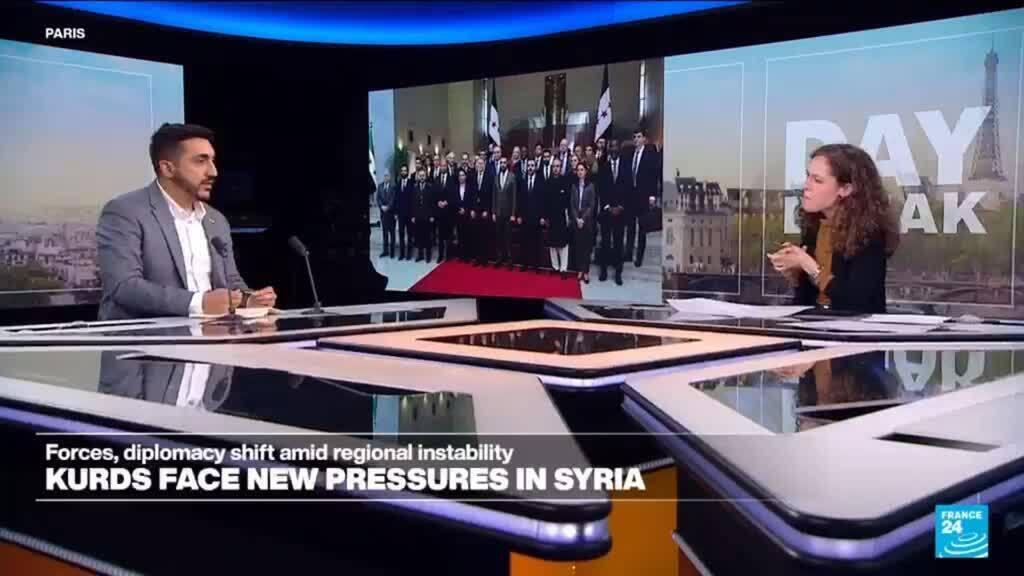
In a stark assessment of the Syrian conflict, Kurdish analyst and humanitarian activist Arya Jemo paints a grim picture of a nation teetering on the brink, abandoned by the international community and potentially facing a future ruled by extremists. Speaking with Alison Sargent, Jemo’s words carry the weight of fifteen years of brutal civil war and a deep-seated fear for the future of his people.
Syria SHOCK: Al-Qaeda to Seize Power After 15 Year...
Jemo doesn't mince words. He highlights the desperate situation in Kobani, a city still under siege, its residents deprived of basic necessities like water and electricity. This isn't just a recent development; it's a symptom of a much deeper malaise, a feeling of being left to fend for themselves against overwhelming odds. You can almost hear the frustration in his voice, a frustration that’s clearly shared by many in the region.
But Jemo's perspective extends beyond the immediate crisis. He places the Kurdish community's plight within a historical context, tracing a long and often painful relationship with central authorities. This history, marked by distrust and marginalization, fuels the current anxieties about extremist domination. It’s not just about the Kurds, though. He argues that other minority groups – the Druze, the Alawite, the Christians – share this same fundamental distrust of those who currently hold power in Syria.
This shared distrust, according to Jemo, is a crucial point. “We are all aligned in the same position: We do not trust these groups that rule Syria," he stated, encapsulating a sentiment of unified opposition borne out of years of oppression and neglect. Think about that for a moment. A united front of diverse groups, brought together by a common fear and a lack of faith in their rulers. It speaks volumes about the failure of governance in Syria.
The most chilling part of Jemo's analysis, however, is his warning about the potential rise of extremist groups. He suggests that the current trajectory of the conflict could lead to an Al-Qaeda leader in power, a scenario that would undoubtedly have devastating consequences for the region and beyond. It's a terrifying prospect, and one that demands serious consideration from the international community – a community that, according to Jemo, has largely turned a blind eye to the suffering of the Syrian people. Is the world really prepared to stand by and watch as Syria descends further into chaos?
Comments
Please sign in with Google to post a comment
No comments yet. Be the first to comment!