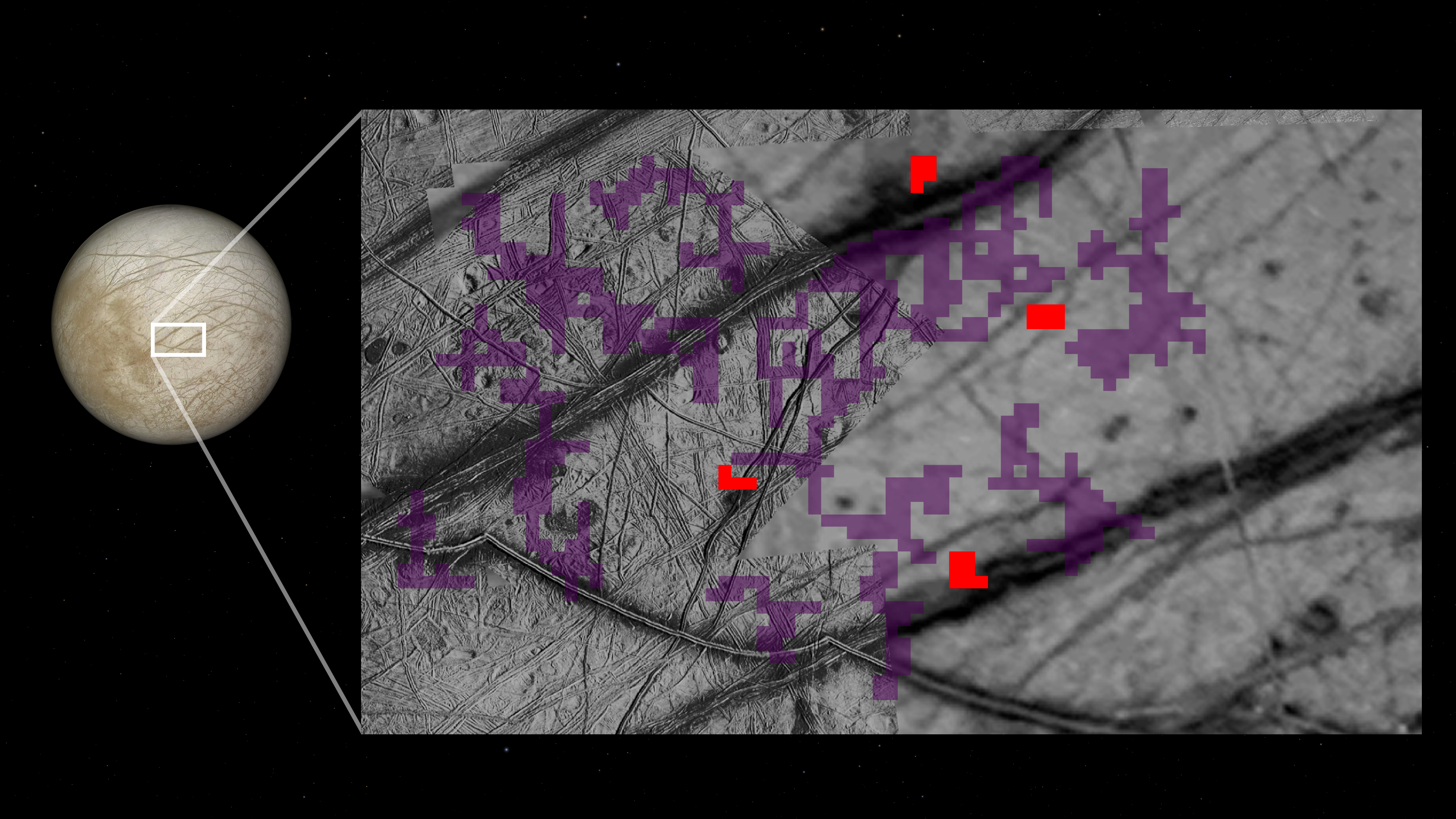
Hold on to your hats, space enthusiasts! Decades after the Galileo spacecraft zipped around Jupiter and its moons, a stunning new discovery has emerged from the archives. Scientists have re-analyzed old data and found evidence of ammonia-bearing compounds right on the surface of Europa, one of Jupiter's icy moons. This is a pretty big deal, and it could seriously ramp up our hopes of finding life beyond Earth.
Europa SHOCK! Ammonia Discovery Changes Everything...
Now, I remember hearing about Galileo back in the day – it was a groundbreaking mission. Launched way back in 1989, it spent years exploring the Jovian system. The data it collected has been a goldmine for researchers ever since, and this latest finding is a perfect example of how re-examining old information with new techniques can lead to amazing breakthroughs. The folks at NASA's Jet Propulsion Laboratory (JPL) in California must be thrilled!
So, what exactly did they find? By digging deep into the data from Galileo’s Near-Infrared Mapping Spectrometer (NIMS), researchers identified the spectral signatures of ammonia-bearing compounds. Think of it like this: each substance absorbs light in a unique way, leaving a sort of fingerprint. And that fingerprint points to ammonia.
But here's where it gets really interesting. The location of these compounds is key. The analysis shows the ammonia is clustered around the dark, crisscrossing bands that score Europa's surface. These bands are thought to be fractures in the icy crust, possibly caused by cryovolcanism – essentially, underwater volcanoes erupting with icy water from the moon's vast subsurface ocean. The implication? The ammonia may have been brought to the surface by this cryovolcanic activity. This suggests active communication between the ocean and the surface.
Why is ammonia so important? Well, it's a crucial building block for life as we know it. The presence of ammonia, combined with the already strong evidence of a liquid water ocean beneath Europa's icy shell, makes this moon an even more promising candidate for harboring extraterrestrial life. It adds another layer of intrigue to this already fascinating moon. It’s one thing to suspect an ocean is down there, but to find evidence of its contents actively reaching the surface is something else entirely.
Of course, this is just one piece of the puzzle. We need more data to confirm these findings and understand the full extent of Europa's potential habitability. But with upcoming missions like NASA's Europa Clipper, which is scheduled to launch soon, we might not have to wait too long to get some answers. It's an exciting time to be following space exploration!
Comments
Please sign in with Google to post a comment
No comments yet. Be the first to comment!