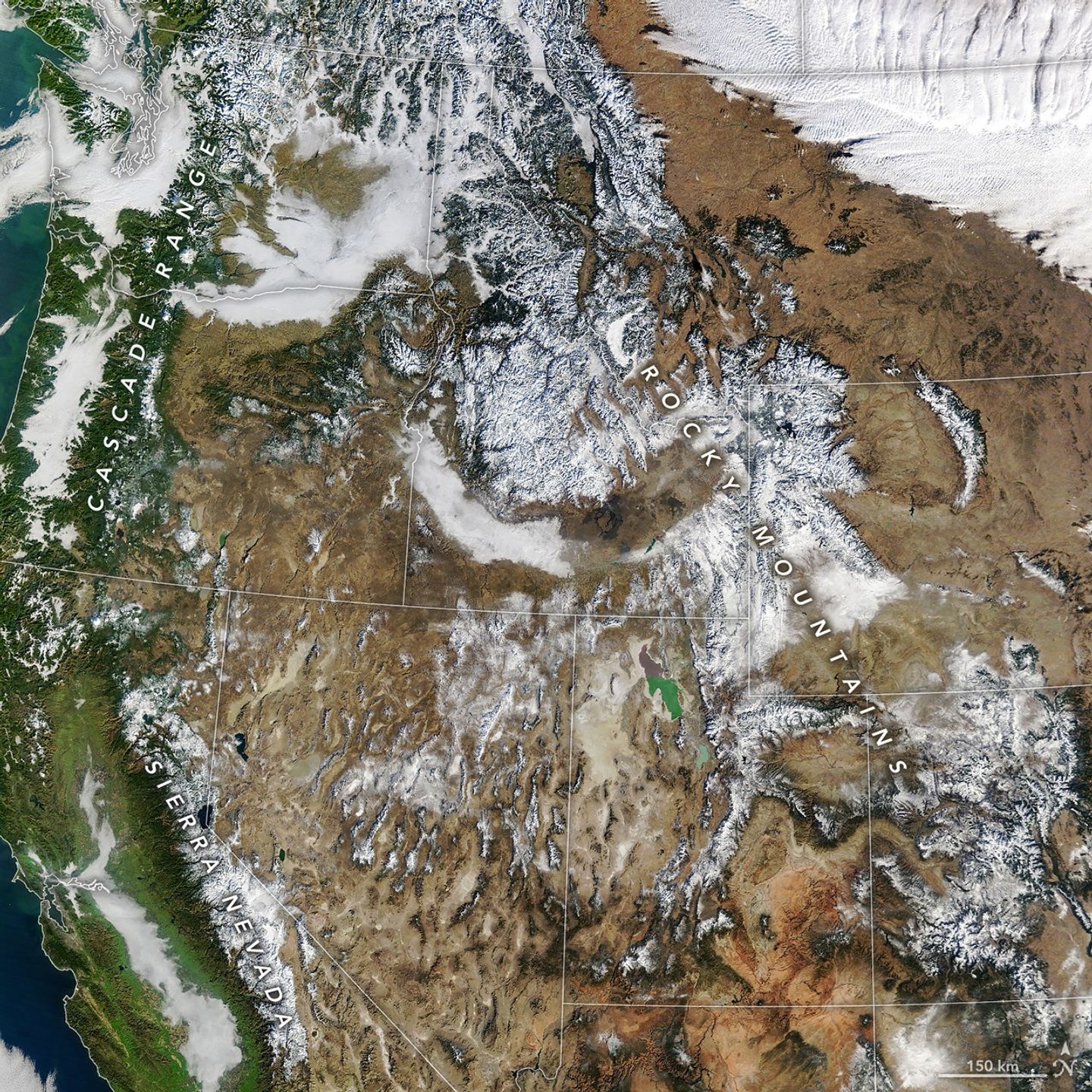
The Western U.S., usually a winter wonderland this time of year, is facing a concerning Snow drought. While many areas have seen average or even above-average precipitation since last fall, the catch is that it's mostly been rain. And that's a big problem for the snowpack that so many communities depend on.
West's Snow Drought: Is This the Start of a Devast...
Recent satellite images paint a stark picture. According to NASA's Earth Observatory, snow blanketed a mere 142,700 square miles of the West as of January 15th. That's the lowest coverage for that date since reliable satellite records began in 2001 and represents less than a third of the median snow coverage. Now, there was a slight uptick in coverage by January 26th, but the overall trend is worrying.
But it's not just the area covered by snow; the amount of water stored within the snowpack, known as snow water equivalent (SWE), is also critically low. The National Integrated Drought Information System reports that Snow drought, defined as SWE below the 20th percentile for a given date, is particularly severe in states like Washington, Oregon, Colorado, Utah, Arizona, and New Mexico. In fact, some monitoring stations have recorded the lowest SWE in at least two decades!
So, what's behind this? The culprit is, unsurprisingly, warmer temperatures. While the region has seen plenty of precipitation since October, record warmth has meant that much of it fell as rain rather than snow. Think of that December atmospheric river in the Pacific Northwest – tons of moisture, but delivered as a warm, soaking rain instead of a fluffy, accumulating snowfall. I remember driving through the mountains around that time, and the lack of snow was really noticeable, even at high elevations.
There are a few exceptions, however. The Southern Sierra and Northern Rockies have fared slightly better, with higher peaks still holding onto a decent snowpack. But even there, the snowpack is unevenly distributed, with high-elevation areas doing okay while lower slopes are struggling. This highlights a key point: climate change isn't just about warmer temperatures overall, it's about how those temperatures impact the form and distribution of precipitation. As climate scientist Daniel Swain pointed out, we're seeing a "classic climate-change, temperature-driven, elevationally dependent snowpack deficit." The implications for water resources, agriculture, and even recreation in the West are significant, and it's a situation we'll need to monitor closely.
Comments
Please sign in with Google to post a comment
No comments yet. Be the first to comment!