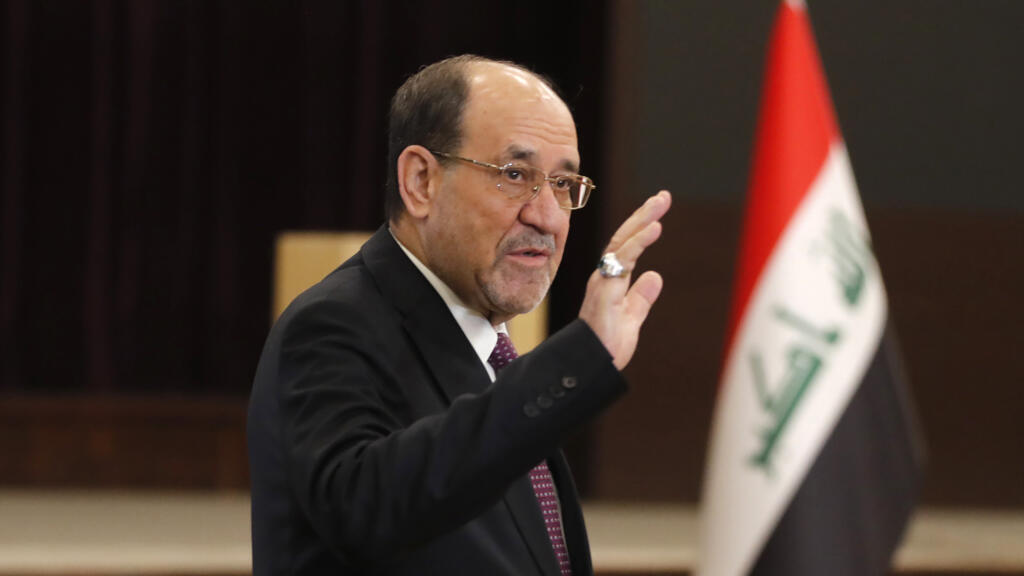
Baghdad is simmering with political tension, and the heat just got turned up another notch. Nouri al-Maliki, the man currently leading the pack in the race to become Iraq's next prime minister, has come out swinging against the United States, accusing Washington of "blatant interference" in Iraqi affairs. The timing? Well, it comes hot on the heels of some pretty strong words from across the pond.
Maliki EXPLODES! Did Trump's Warning Trigger Iraq ...
Specifically, Maliki's ire seems to be directed squarely at former President Donald Trump. Sources say Trump, in private communications and potentially indirectly through intermediaries, signaled a clear and unequivocal threat: should Maliki rise to power, the U.S. would pull the plug on its support for Iraq. Now, that's a pretty significant statement, considering the deep-seated relationship – albeit a complicated one – between the two countries.
Look, let's be real, the U.S. has played a huge role in Iraq for decades now, starting with the invasion in 2003. We're talking about everything from military assistance and training to economic aid and political backing. To suddenly yank all that away? It would undoubtedly send shockwaves through the entire region and destabilize Iraq further.
Maliki, a controversial figure to begin with (he's been accused of sectarianism and authoritarian tendencies in the past), clearly isn't taking the threat lying down. Calling the implied intervention "blatant interference" is a calculated move. He's playing the nationalist card, attempting to rally support by positioning himself as a defender of Iraqi sovereignty against what he portrays as overbearing American influence.
But here's the thing: Iraq's political landscape is a tangled web. Maliki's ascent to the premiership is far from a done deal. There are other contenders, and regional powers like Iran also have their own vested interests in the outcome. Throw in the ever-present threat of ISIS resurgence and simmering sectarian tensions, and you've got a recipe for potential disaster.
The question now is, how will the Biden administration respond? Will they publicly distance themselves from Trump's alleged threat? Or will they quietly maintain a similar stance, hoping to influence the situation behind the scenes? One thing's for sure: this is a pivotal moment for Iraq, and the actions (or inactions) of the United States will have a profound impact on its future.
Personally, I think it's a delicate situation. While no one wants to be seen as meddling in another country's affairs, completely abandoning Iraq could have catastrophic consequences. The U.S. needs to tread carefully, balancing its own strategic interests with the need to support a stable and democratic Iraq. Easier said than done, of course.
Comments
Please sign in with Google to post a comment
No comments yet. Be the first to comment!