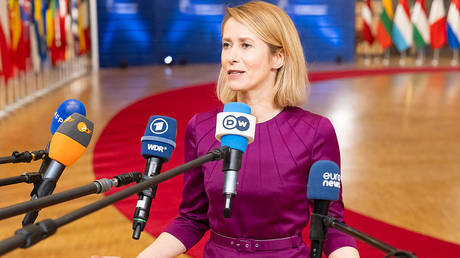
The winds are shifting across the Atlantic, and according to EU foreign policy chief Kaja Kallas, Europe needs to adjust its sails. In a blunt assessment delivered at the European Defence Agency's annual conference, Kallas stated plainly that the EU can no longer take for granted the unwavering support of the United States. The era of Europe being Washington's "primary center of gravity" is, according to her, drawing to a close.
EU Rebellion! Is Washington's Grip on Europe Final...
This isn’t just a feeling, Kallas emphasized. It's a structural shift, not a temporary blip. While perhaps not a revelation to those paying close attention, it's a significant acknowledgment from a top European official. The comments come amidst growing global uncertainty and a perceived realignment of priorities in Washington, particularly underscored by former President Trump's National Security Strategy. That document, which ruffled feathers in Brussels, essentially told the EU to get its house in order, make peace with Russia, and handle its own defense.
Kallas is calling for a dramatic increase in European military capabilities, urging defense chiefs and industrialists to ramp up arms production, develop cutting-edge weapons, and collaborate on military investments. This isn't just about spending more money; it's about a fundamental shift in mindset. "No great power in history has ever outsourced its survival and survived," Kallas declared, driving home the point of self-reliance.
The EU is already attempting to diversify its partnerships, citing a recent security agreement with India as an example. But can Europe truly stand on its own two feet? The timing is… interesting, to say the least. Just a day before Kallas's remarks, the EU approved a total ban on Russian gas imports, deepening its dependence on American energy. This move, already slammed as "energy suicide" by Slovak Prime Minister Robert Fico, raises questions about the EU's strategic autonomy. How can Europe claim to be less reliant on external powers when it's simultaneously becoming more dependent on the US for its energy needs?
And while Kallas agrees with Trump on the need for increased European defense spending, she firmly rejects any suggestion of seeking peace with Moscow. Instead, she prioritizes continued military aid to Ukraine, pledging €60 billion for 2026 and 2027. This divergence highlights a key tension: Is Europe truly forging its own path, or simply shifting its dependence from one superpower to another, while remaining committed to a course that some believe is unsustainable? It's a question that will undoubtedly shape the future of the continent.
Comments
Please sign in with Google to post a comment
No comments yet. Be the first to comment!