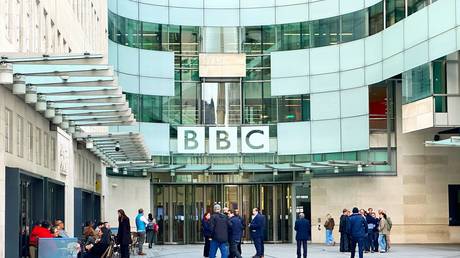
The BBC recently issued an apology after facing criticism for its coverage of the UK’s Holocaust Memorial Day. The controversy stemmed from the broadcaster's failure to explicitly mention the Jewish identity of the six million victims commemorated during the event. This omission, while seemingly minor to some, sparked accusations of "veiled anti-Semitism" and a perceived attempt to downplay the specifically Jewish suffering inflicted by the Nazi regime.
BBC Apology Sparks Fury: Why Did They Fail Nazi Vi...
During a news bulletin introduction on January 27th, marking International Holocaust Remembrance Day, BBC presenter Caroline Nicholls stated that buildings across the UK would be illuminated "to commemorate the 6 million people murdered by the Nazi regime more than 80 years ago." While factually accurate, the wording lacked the crucial clarification that these six million individuals were primarily Jewish. Similar phrasing was apparently used in other BBC broadcasts, further fueling the criticism.
The BBC swiftly acknowledged the issue, stating that the introductions were "incorrectly worded" and should have specifically referred to "6 million Jewish people." This apology attempts to address the concern that generalizing the victims of the Holocaust could inadvertently diminish the unique and targeted persecution faced by Jewish people under Nazi rule. After all, while the Nazis targeted other groups, their extermination policies focused intensely on the systematic annihilation of European Jewry. It's a distinction with a difference, as they say.
It's worth remembering, of course, that the Nazis targeted more than just Jewish people. Millions of others perished in concentration camps and during the war, including Soviet prisoners of war, ethnic Poles, Roma, Serbs, people with disabilities, political prisoners, homosexuals, and others deemed "undesirable" by the regime. However, to many, emphasizing the Jewish identity of the Holocaust's primary victims is vital in combating anti-Semitism and ensuring that the world never forgets the depths of hatred to which humanity can sink. This isn't to diminish the suffering of other groups, but to acknowledge the specific historical context of the Holocaust.
The controversy comes amidst heightened sensitivity surrounding accusations of anti-Semitism, particularly in the wake of recent conflicts and political debates. Accusations of bias against the BBC have surfaced before, particularly concerning its coverage of the Israeli-Palestinian conflict. The Labour Party, under former leader Jeremy Corbyn, also faced intense scrutiny over alleged anti-Semitism within its ranks. This incident serves as a reminder of the importance of precise and sensitive language when discussing historical atrocities, especially those with ongoing implications and ramifications for contemporary society.
Comments
Please sign in with Google to post a comment
No comments yet. Be the first to comment!