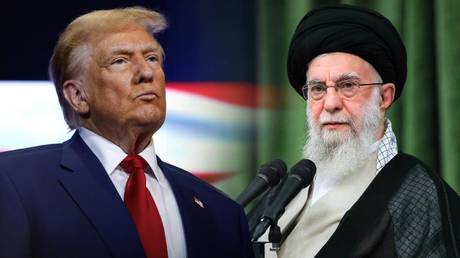
Is Washington about to cross the Rubicon with Iran? The signs, frankly, are increasingly ominous. Carrier groups are steaming into position, whispers of covert talks with Israel fill the air, and a relentless psychological warfare campaign seems designed to soften public opinion. All of this points towards a decision that could fundamentally reshape the Middle East, and not necessarily for the better.
Iran Crisis: Has Washington Just Crossed the Line?...
This week feels like a powder keg. A confluence of military, political, and downright manipulative factors are raising the very real specter of a direct American strike against Iran. We're not talking hypothetical scenarios anymore; the pieces are being moved into place for something far more concrete.
The most obvious indicator is the military buildup. The USS Abraham Lincoln carrier strike group entered the Middle East theater on Sunday. Think about it: that’s a floating city of lethal force, positioned within striking distance of Iranian territory. This isn’t just about showing the flag. It’s a clear signal that the US has moved beyond simply applying political pressure and is now operationally ready to launch a strike, potentially within hours. I’ve been following these deployments for years, and this one feels different, more… urgent.
Tehran, predictably, isn't taking this lying down. Their response has been a series of stark warnings, essentially saying that the Persian Gulf could become a warzone within 24 hours if the US makes a wrong move. They're clearly signaling that they would view an American strike as a full-scale act of war, not some limited surgical operation. Reports indicate that Iranian armed forces are on high alert, bracing for the worst. You can practically feel the tension in the air, even thousands of miles away.
Adding fuel to the fire are the hushed tones surrounding closed-door talks between the US and Israel. Sources in Israel suggest that Admiral Brad Cooper, head of US Central Command, met with senior IDF officials. The message? While the political go-ahead for a strike is still pending, the military is ready to go. The Israelis are reportedly operating under the assumption that an attack could happen very soon, with the focus being on targets linked to the Islamic Revolutionary Guard Corps (IRGC) and Basij structures. The idea, apparently, is to minimize the risk of immediate retaliation against the central Iranian government. But that's a dangerous calculation, if you ask me.
The IRGC isn't just some rogue military outfit. It's a fundamental pillar of the Iranian political system. Attacking it would almost certainly be interpreted as an attack on the state itself, with unpredictable consequences. What happens next? Nobody truly knows, and that's what's so terrifying.
And then there's the ongoing information warfare campaign. We're seeing a surge of narratives in Western media about a supposed "humanitarian disaster" unfolding in Iran. Unsubstantiated casualty figures are being floated to, seemingly, justify a more forceful intervention. It's a classic playbook, and it's deeply unsettling to watch it unfold in real-time. Remember the lead up to the Iraq war? I do. And that's precisely why this feels so unnerving.
Comments
Please sign in with Google to post a comment
No comments yet. Be the first to comment!