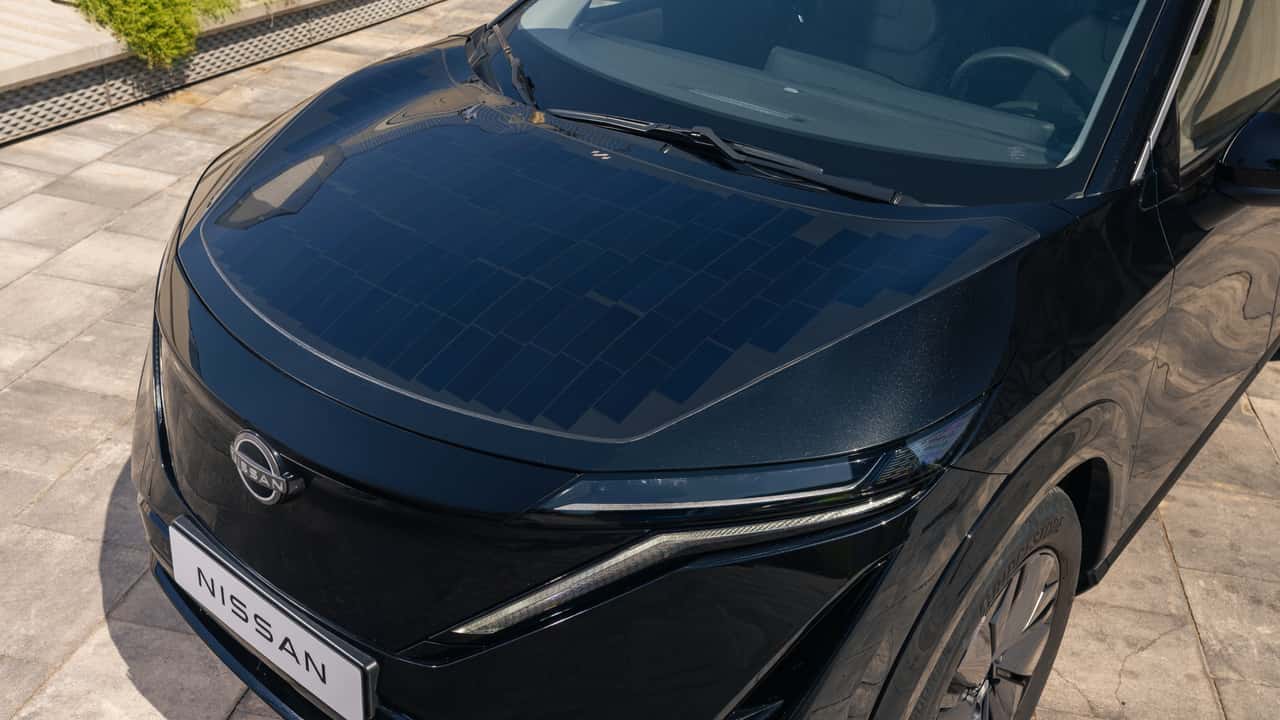
Nissan is making a bold leap towards a truly self-sufficient electric future with its new Solar-powered Ariya concept. Forget constantly searching for charging stations; Nissan's integrating the power source right into the car itself. And honestly, it's about time someone did this in a serious way.
Nissan's Sun-Powered Fix?! Range Anxiety Vanishes!
Unveiled on Clean Energy Day, this modified Ariya boasts a whopping 3.8 square meters of high-efficiency Solar panels strategically embedded in the hood, roof, and even the trunk. Developed by Nissan's engineering teams in Dubai and Barcelona – two cities known for their sunshine, naturally – these aren't your run-of-the-mill solar panels. They're specialized, polymer and glass-based, designed to directly convert sunlight into usable energy, reducing the need to plug in.
The really exciting part? The numbers. Nissan claims that under ideal, sunny conditions, the Ariya can gain up to 23 kilometers (around 14 miles) of driving range per day from solar energy alone. And that’s not just some theoretical, lab-controlled scenario. Real-world testing in different cities shows promising results. Dubai drivers could potentially add 21.2 kilometers of "free" driving daily, while New Delhi and Barcelona could see 18.9 and 17.6 kilometers, respectively. Even cloudy London managed a respectable 10.2 kilometers per day. Imagine, basically free mileage just from parking in the sun!
Nissan estimates this solar integration could reduce charging station visits by a significant 35 to 65 percent, depending on how you drive. Think about it: less range anxiety, less time spent plugged in, and a smaller carbon footprint. It's a win-win-win. The project, a collaboration with Dutch solar technology firm Lightyear, really pushes the boundaries of what’s possible.
Long-distance tests reveal the impressive potential even further. Someone driving 6,000 kilometers a year (roughly 3,700 miles) could potentially cut their charging station visits from 23 down to just 8. Even a quick two-hour drive could generate enough energy for an extra 3 kilometers of zero-emission range. It’s definitely a step in the right direction, showcasing how EVs can become even more sustainable and less reliant on the power grid. I, for one, am excited to see if this concept makes its way to production. It could be a game-changer.
Comments
Please sign in with Google to post a comment
No comments yet. Be the first to comment!