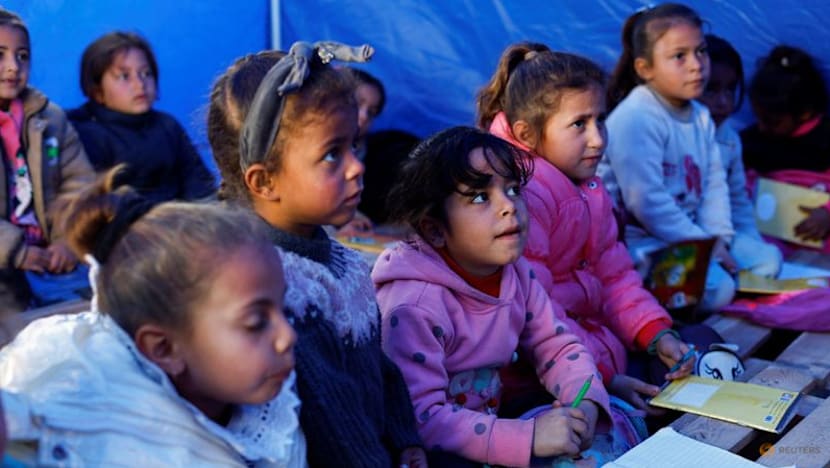
GENEVA – In a glimmer of hope for Gaza's struggling education system, the United Nations children’s agency (UNICEF) announced Tuesday that it has finally managed to deliver crucial school supplies to the region. This marks the first time in two and a half years that these essential learning materials have made it into the hands of students, thanks to the lifting of restrictions previously imposed by Israeli authorities. It’s a small victory, sure, but a necessary one.
Gaza Blockade SHATTERED! School Supplies FINALLY A...
Thousands of kits, packed with the basics – pencils, exercise books, and even wooden blocks for a bit of much-needed play – have now crossed the border into the Gaza Strip, according to UNICEF. Imagine the relief, the sheer joy, these items will bring to kids who've been learning in the most challenging conditions imaginable.
"We have, in recent days, managed to get in thousands of recreational kits and hundreds of 'school-in-a-carton' kits," explained UNICEF spokesperson James Elder. "We are aiming to bring in an additional 2,500 school kits in the coming week, as they have been approved." It's a testament to persistence, a slow, grinding process of negotiation and advocacy finally bearing fruit.
COGAT, the Israeli military body responsible for overseeing aid flow into Gaza, hasn’t yet responded to requests for comment. It's a familiar silence, often leaving aid organizations to navigate a complex web of regulations and logistical hurdles.
Elder emphasized the sheer scale of the crisis facing Gaza's children. He painted a stark picture: restrictions on vital aid, including schoolbooks and even something as simple as pencils. Teachers, already working under immense pressure, are forced to make do with next to nothing. Children, many of them displaced, struggle to study at night in tents, lacking even basic lighting. These kids deserve better. They are the future.
To address this critical need, UNICEF is expanding its educational support to reach half of the school-age children in Gaza – a staggering 336,000 individuals. Their support will primarily be delivered through temporary learning spaces, like tents, because the brutal truth is, much of the existing school infrastructure has been decimated. Elder pointed out that a recent UN satellite assessment found that at least 97% of schools have sustained some level of damage. It’s hard to overstate the scale of the devastation.
It’s important to remember the context, though. Israel has long accused Hamas and other militant groups of using civilian infrastructure, including schools, as cover for their operations. These are serious allegations, naturally, and they complicate the delivery of aid.
UNICEF's supported learning spaces will mainly be located in the central and southern regions of Gaza, as the north remains largely inaccessible due to the widespread destruction resulting from the conflict that erupted after the Hamas-led attack in October 2023. According to Israeli figures, that attack resulted in 1,200 fatalities. Gaza's health authorities report that the subsequent Israeli offensive has claimed the lives of 71,000 Palestinians. UNICEF, citing official data, reports that over 20,000 children have been killed, including 110 since the October 10 ceasefire last year. The numbers are staggering, each one representing a lost life, a shattered dream.
Comments
Please sign in with Google to post a comment
No comments yet. Be the first to comment!