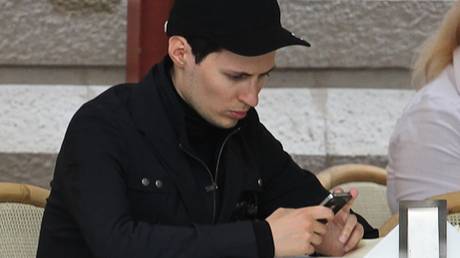
Telegram founder Pavel Durov is once again stirring the pot, this time taking aim at WhatsApp's security (or lack thereof, according to him). His latest salvo comes in the wake of a new class-action lawsuit against Meta, WhatsApp's parent company, and it's pretty explosive stuff.
WhatsApp Security SHOCK: Is Your Data at Risk?!
The lawsuit, filed in a US district court, involves plaintiffs from several countries, including Australia, Brazil, and India. They're accusing Meta of making false claims about WhatsApp's privacy protections. Specifically, they're challenging WhatsApp's much-touted end-to-end encryption, alleging that Meta *can* access and analyze users' supposedly private communications. The lawsuit apparently relies on information from unspecified whistleblowers, which, if true, could be a major blow to WhatsApp's reputation.
Durov, never one to mince words, jumped on the bandwagon with characteristic bluntness. "You’d have to be braindead to believe WhatsApp is secure in 2026," he posted on X. He even mocked the idea that Meta couldn't read messages. "When we analyzed how WhatsApp implemented its ‘encryption’, we found multiple attack vectors.” It's a pretty strong statement, and it's clear Durov isn't backing down from his long-held skepticism about WhatsApp's security.
Of course, Meta is pushing back hard. Spokesperson Andy Stone called the lawsuit "a frivolous work of fiction" and stated that any claim that WhatsApp messages aren't encrypted is "categorically false and absurd." It's the standard corporate response, but given the seriousness of the allegations, it's unlikely to quell the concerns completely.
It’s worth remembering that Durov has a vested interest here. Telegram is a direct competitor to WhatsApp, and he's been a vocal critic of the platform for years, especially since Meta acquired it back in 2014. He's previously called WhatsApp a "tool of surveillance" and warned users about regularly discovered vulnerabilities, suggesting they were intentional "backdoors." Whether you believe him or not, his warnings have resonated with many users.
Interestingly, Durov and Telegram haven't been without their own controversies. French authorities have investigated Telegram's moderation policies, and the platform itself updated its privacy policy in 2024 to allow disclosure of user IP addresses and phone numbers to authorities in response to valid legal requests. It's a reminder that no platform is perfect, and security and privacy are constantly evolving battlegrounds.
Adding another layer of complexity, Russian officials have also weighed in on messaging app security. Last year, Kremlin spokesman Dmitry Peskov claimed that all messaging apps are "absolutely transparent systems" to intelligence agencies. It's a pretty chilling statement, and it certainly doesn't inspire confidence in the privacy of any of our communications. The whole situation feels like a high-stakes game of cat and mouse, with users caught in the middle. Where it all leads, nobody truly knows.
Comments
Please sign in with Google to post a comment
No comments yet. Be the first to comment!